
Ide
Leuciscus idus
Description
How to identify
The ide (Leuciscus idus) is a freshwater fish species belonging to the Cyprinidae family. It is widely distributed across Northern and Central Europe as well as Western Asia.
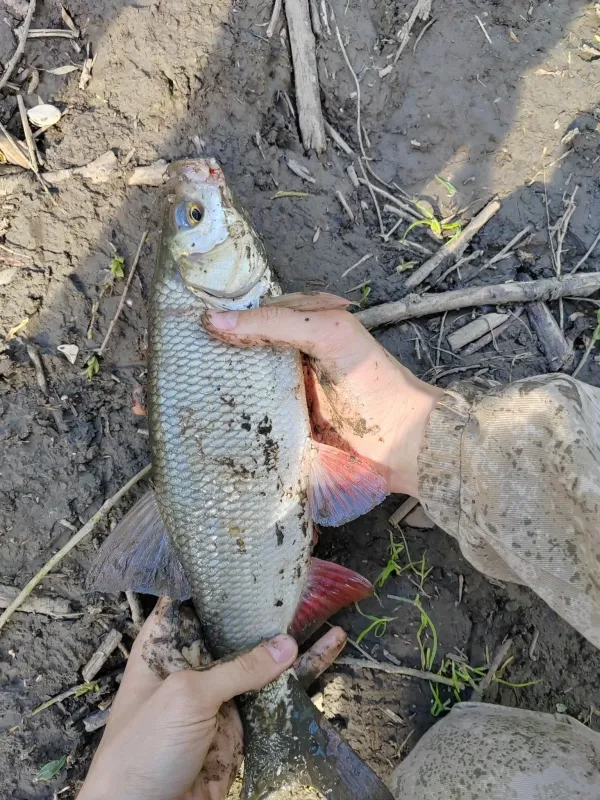
Physically, the ide features a robust body with silver-toned scales, while its fins often exhibit a distinct orange or reddish hue, particularly in older individuals.
This species is highly adaptable, inhabiting slow-moving rivers, lakes, and occasionally entering agricultural water channels or artificial reservoirs.
Ide are omnivorous creatures, feeding on a diverse diet consisting of aquatic insects, mollusks, plankton, and occasionally organic plant material found in the water.
Due to its high environmental tolerance, the ide can thrive in varied habitats, making its presence common in managed water bodies near agricultural areas.
What it damages
While the ide is not traditionally classified as a crop pest, it can cause secondary problems in managed aquaculture or integrated rice-fish farming systems.
The primary concern involves the physical disturbance of the bottom substrate, which increases water turbidity and disrupts the growth of sensitive aquatic plants.
In irrigation ditches, these fish may cause damage to young shoots of plants and contribute to the blockage of mechanical filtration systems through bottom-feeding habits.
The constant stirring of sediment can negatively impact the irrigation water quality, potentially causing issues for downstream crop fertilization and hydration.
However, the damage is usually indirect and limited to specific hydrological conditions where agricultural interests overlap with natural fish habitats.
When it appears
The ide's activity cycle begins in early spring when water temperatures rise, triggering the start of its migration and intense feeding period.
Spawning usually takes place during the spring, which is the time when the fish is most active in shallow near-shore areas, potentially impacting early crop growth.
During the summer months, the ide maintains a high level of activity, continuously moving throughout the water body in search of food resources.
As autumn approaches and water temperatures begin to drop, the fish's metabolic rate decreases, leading it to retreat toward deeper sections of the water.
The winter months are marked by a period of relative dormancy, during which the fish remains in deeper waters to endure cold temperatures without feeding.
Signs of infestation
Visual identification of ide presence includes noticeably increased turbidity in previously clear water sections, caused by the fish searching for food in the mud.
Mechanical damage to young sprouts near the water's edge often serves as a sign that the fish has been foraging in the immediate vicinity of the plants.
Frequent clogging of irrigation intake screens or drainages is a common indicator that organic debris is being stirred up by fish activities.
Observing groups of fish breaking the surface of the water, especially during early morning or evening hours, can indicate a high density of the population.
Chemical analysis of irrigation water might show increased levels of suspended solids, which is often a direct consequence of bottom-dwelling fish activity.
Control measures
Effective control measures focus primarily on preventing the fish from accessing sensitive irrigation channels through the installation of physical barriers.
Good agricultural practices, such as maintaining clean and debris-free irrigation channels, significantly reduce the appeal of these areas to fish species.
- Installing fine-mesh screens on pump intakes
- Routine dredging and clearing of aquatic weeds in channels
- Implementing population management in integrated farm ponds
- Using water level control to limit access to shallow zones
- Regular monitoring of water turbidity and fish density
Integrating biological and physical controls helps balance the ecological health of the water with the requirements of crop cultivation.
Strategic water management ensures that the ide population remains at a level that does not interfere with the functionality of agricultural infrastructure.
Taxonomy
- Latin name
- Leuciscus idus
- Family
- Cyprinidae
- EPPO code
- LECIID
Discussion
No discussions yet — be the first.