
Chub
Leuciscus cephalus
Description
How to identify
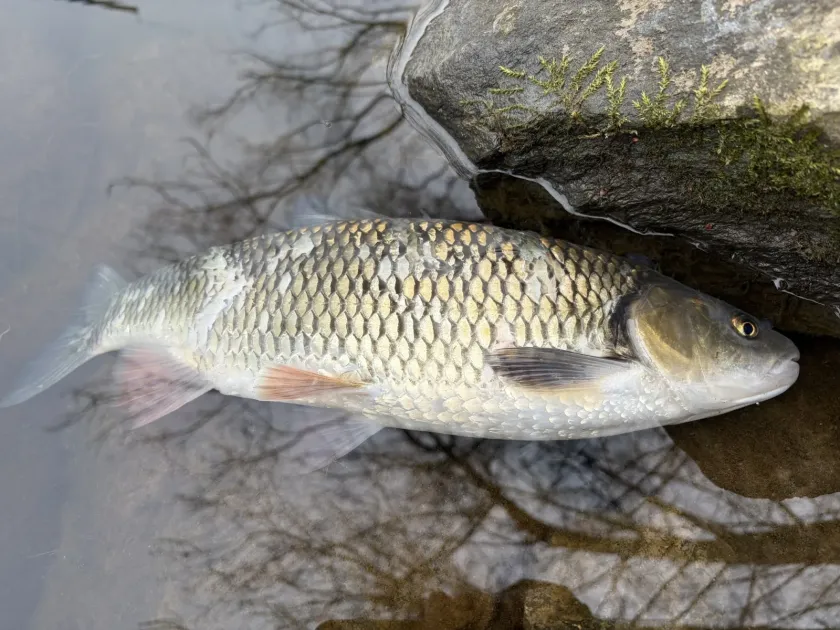
The Chub (Leuciscus cephalus) is a prominent member of the Cyprinidae family and the order Cypriniformes. It is easily recognized by its massive head, broad forehead, and robust, cylindrical body covered with large, thick scales.
Adult specimens possess powerful pharyngeal teeth, enabling them to consume a wide range of food sources. Their dorsal side is dark, while the flanks feature a silvery or golden sheen, complemented by vibrant red or orange fins.
The biology of this species is characterized by remarkable adaptability to various aquatic environments. While preferring fast-flowing rivers, it successfully colonizes lakes and reservoirs, demonstrating both predatory and omnivorous feeding behaviors.
The reproductive cycle involves spring spawning, triggered by water temperatures reaching 12 to 15 degrees Celsius. Eggs are deposited on rocky or sandy substrates, facilitating high survival rates in diverse habitats.
In aquaculture contexts, the Chub is often monitored due to its high competitive nature, which can disrupt the ecological equilibrium of managed water bodies.
What it damages
While the Chub does not directly damage land-based crops, it causes significant harm in aquaculture by preying on the eggs and fry of commercially valuable fish species.
Within irrigation and drainage systems, Chub populations can clog filtration screens and interfere with water flow, causing maintenance issues for agricultural infrastructure.
The activity of these fish near coastal zones can lead to erosion of protective embankments, potentially destabilizing soil structures along water channels.
As an active swimmer, the Chub often introduces various parasites and pathogens into controlled pond environments, threatening the health of local fish populations.
Uncontrolled growth of Chub populations disrupts the food chain in irrigation reservoirs, ultimately reducing the overall efficiency of water-dependent agricultural operations.
Control measures
Effective control measures include the installation of specialized fish exclusion screens at water intake points to prevent the entry of Chub into irrigation systems.
Population management is primarily conducted through professional fishing and monitoring, ensuring that the number of individuals stays within safe ecological limits.
Maintaining clear waterway channels and controlling excessive vegetation can reduce the attractiveness of these areas to Chub, limiting their presence near agricultural facilities.
Biological control methods, such as encouraging larger predators, are employed to manage the population density of the Chub in closed aquaculture systems.
Regular maintenance of infrastructure, including the inspection of filtration grids, is essential to minimize the impact of this species on hydraulic operations.
Taxonomy
- Latin name
- Leuciscus cephalus
- Family
- Cyprinidae
- EPPO code
- LECICE
Discussion
No discussions yet — be the first.