
Lappet moth
Lasiocampa
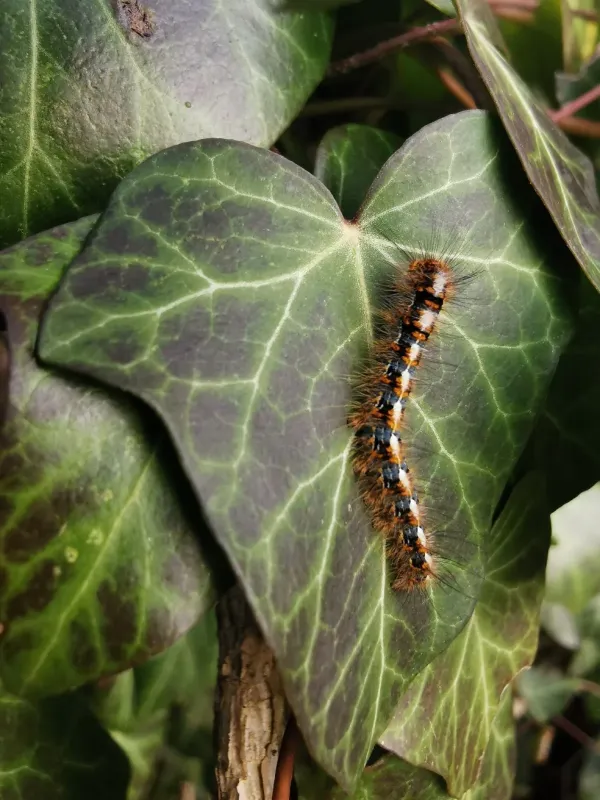
Description
How to identify
The Lappet moth (family Lasiocampidae) is characterized by medium-to-large sized moths with heavy, hairy bodies. Their appearance is often cryptic, resembling dead leaves or bark, which makes them masters of camouflage against predators.
The larvae, known as caterpillars, are covered in dense, often irritating setae. They frequently possess brightly colored spots or patterns, serving as an aposematic signal to deter birds and other insectivores.
Taxonomically, these insects belong to the order Lepidoptera. Many species of Lappet moths live in social colonies during their larval stage, constructing silken tents or webs that provide shelter during development.
Pupation occurs within thick, tough cocoons often attached to twigs or hidden within bark crevices. This cocoon-building behavior is the defining characteristic that gives the family its common name.
The life cycle involves complete metamorphosis: egg, larva, pupa, and adult. Overwintering strategies vary, with some species hibernating as young larvae and others as eggs, ensuring survival through harsh seasons.
What it damages
The primary damage is caused by the caterpillars, which are extremely voracious. They feed on the foliage of various fruit and forest trees, skeletonizing leaves or consuming them entirely, leaving only the midribs.
Target hosts include apples, pears, plums, cherries, as well as oaks and willows. A severe infestation can lead to complete defoliation of the tree canopy within a very short period.
Defoliation disrupts the tree's photosynthetic capability, leading to reduced energy reserves. This weakens the plant, prevents proper fruit development, and reduces the tree's overall vigor and yield.
Young trees are particularly susceptible; repeated defoliation for several seasons can lead to tree death. Mature trees may become predisposed to secondary infections or boring insects.
Since larvae often live in groups, damage is concentrated in specific areas of the canopy. Prompt detection of these feeding clusters is essential for preventing the spread of the population across the orchard.
When it appears
Caterpillar activity typically begins in the spring, coinciding with bud break and leaf emergence. This is the period when they are most active and most vulnerable to control measures.
The adult flight period usually occurs in mid-summer. As nocturnal insects, they are rarely seen during the day and are often attracted to artificial light sources at night.
Autumn is the time for egg-laying, with females depositing clutches on twigs or bark. These eggs remain dormant through the winter, ready to hatch when temperatures rise the following spring.
Depending on local climate conditions, some species may have a one-year or even a two-year generation cycle. This can complicate management if not monitored correctly over several years.
Effective monitoring should begin in late winter or early spring by inspecting branches for overwintering eggs or young larvae hiding in bark crevices or twig forks.
Signs of infestation
The first signs of an infestation are skeletonized leaves that appear as delicate, lace-like structures. This indicates the early feeding stages of young larvae.
The presence of silken nests or webs between leaves or twigs is a strong indicator of a Lappet moth colony. These nests are often tucked deep within the canopy for protection.
Accumulation of frass (caterpillar droppings) on leaves below or on the ground is a sign of high larval density in the upper branches. This is a cue to inspect the canopy for larger larvae.
Old cocoons attached to branches or tree trunks serve as evidence of past generations and potential overwintering sites for the next cohort of pests.
- Premature yellowing or shedding of foliage.
- Clusters of caterpillars found at twig junctions.
- Stunted growth of new terminal shoots.
- Presence of silk threads webbing leaves together.
Control measures
Mechanical control is highly effective for small-scale gardens. This involves manually removing egg masses, cutting out silken nests, and picking off caterpillars by hand.
Installing sticky bands around tree trunks can help catch larvae as they migrate between feeding sites or branches. These bands should be checked and cleared regularly.
Biological control using microbial insecticides based on Bacillus thuringiensis is a safe and highly effective option. It targets larvae specifically and minimizes harm to beneficial insects.
Chemical insecticides should be considered a last resort. If used, select products with low toxicity to non-target species and apply them only when the pest density exceeds economic thresholds.
Promoting local biodiversity by encouraging natural predators such as birds and parasitic wasps is a sustainable long-term strategy for keeping Lappet moth populations under control.
Taxonomy
- Latin name
- Lasiocampa
- Order
- Lepidoptera (butterflies)
- Family
- Lasiocampidae
- EPPO code
- LASCSP
Discussion
No discussions yet — be the first.