
Lagynotomus
Lagynotomus
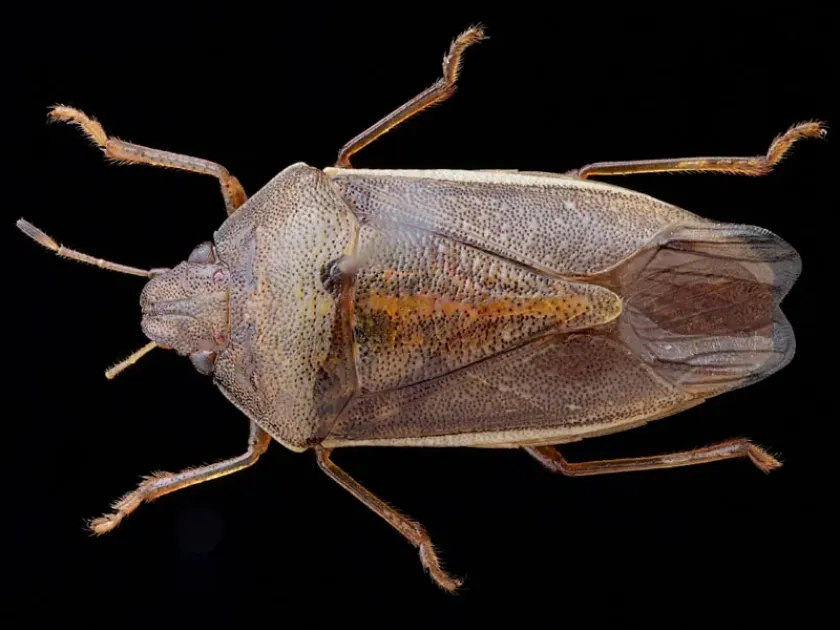
Description
How to identify
Lagynotomus belongs to the shield bug family (Scutelleridae) of the order Hemiptera. These insects typically possess an oval, slightly convex body protected by a sturdy chitinous shell, often exhibiting a metallic or brownish sheen.
Adults are relatively small, usually measuring 10–12 mm. A distinctive feature is the head being closely pressed to the pronotum, which serves as a primary morphological characteristic for field identification.
The lifecycle involves incomplete metamorphosis consisting of the egg, nymph, and adult stages. Nymphs closely resemble adults but lack wings and are smaller in size, gradually maturing through several molting stages.
Eggs are commonly laid in clusters on the underside of leaves or near the spikelets of host plants. These clusters are coated in protective secretions that enhance resilience against fluctuating temperatures and humidity.
Adults typically overwinter under plant debris, in field margins, or in the upper soil layers, providing a strategic defense against harsh winter conditions and allowing for rapid activity in early spring.
What it damages
This pest primarily attacks cereal crops, including wheat, barley, and rye. Wild grasses often serve as alternative hosts, functioning as reservoirs for the population before they migrate to agricultural fields.
Both adults and nymphs cause damage by piercing plant tissues with their proboscis to suck sap. This feeding behavior is particularly harmful during the boot and heading stages of crop development.
Feeding on the generative organs disrupts grain formation, resulting in shriveled kernels and significantly reducing both yield quantity and grain quality (test weight).
The punctures left by the insects provide entry points for opportunistic pathogens, potentially leading to secondary infections that further deteriorate the overall health of the crop.
Under favorable conditions for the pest, significant infestations can result in economic losses, necessitating rigorous monitoring and timely intervention strategies.
When it appears
The emergence of Lagynotomus on crops coincides with the return of stable, warm spring temperatures. Overwintered adults typically migrate from their dormant sites to cereal fields at this time.
Population density typically peaks during the grain-filling period, as the abundance of nutrients in the spike provides an optimal food source for nymphs to complete their development.
The number of generations per year depends on regional climate conditions, with most areas experiencing one or two generations throughout the growing season.
Following harvest, adults migrate away from the fields toward suitable overwintering habitats, such as windbreaks or fallow areas with dense vegetation.
Agronomists monitor these populations using field inspections and sweep-net sampling, typically during the cooler morning hours when insect activity is reduced.
Control measures
Effective crop rotation is the primary preventive measure, as it disrupts the pest's lifecycle and minimizes the presence of suitable host plants in subsequent years.
Post-harvest tillage, including stubble breaking and deep plowing, is critical to destroying overwintering sites and significantly reducing the population of the next generation.
When infestation levels exceed the economic threshold, chemical control using approved systemic or contact insecticides is recommended to protect the crop yield.
Optimal sowing dates help the crop reach critical growth stages before the peak density of the pest, effectively minimizing the impact of potential feeding damage.
Biological control methods, such as encouraging natural predators and parasitoids like egg-parasitizing wasps, help to naturally regulate pest populations within the agroecosystem.
Taxonomy
- Latin name
- Lagynotomus
- Order
- Hemiptera (bugs, aphids, leafhoppers)
- Family
- Pentatomidae
- EPPO code
- LAGYSP
Discussion
No discussions yet — be the first.