
Laccobius sinuatus
Laccobius sinuatus
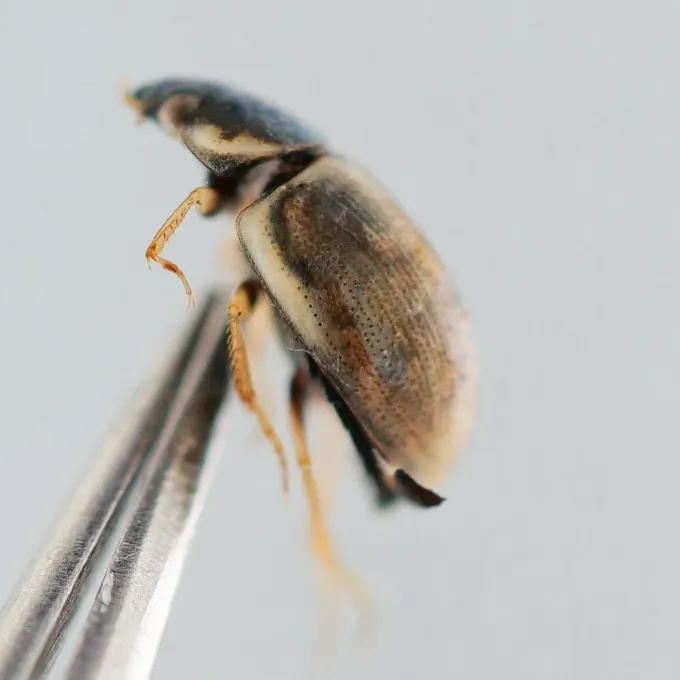
Description
How to identify
Laccobius sinuatus is a small beetle belonging to the family Hydrophilidae (water scavenger beetles) within the order Coleoptera. While often associated with aquatic environments, they frequently inhabit wet soil and irrigated fields.
The adult beetle is typically oval-shaped, measuring approximately 3-4 mm in length. Its body is convex with a brownish-black coloration, often featuring a distinct metallic shimmer and patterns on the pronotum.
The larvae are specialized for moist environments and possess strong mandibles. They are generally found in the soil surface layer where moisture levels remain consistently high throughout the day.
Taxonomically, these beetles are part of the Hydrophilidae group, which includes many species that interact with agroecosystems, particularly in areas with poor drainage or over-irrigation.
Identification requires close inspection of damp soil near the plant base. They can be distinguished from other small soil beetles by their characteristic long, club-shaped palpi.
What it damages
Damage is primarily caused by both larvae and adults feeding on the succulent stems and roots of young vegetable seedlings. This pest can be particularly problematic during the sensitive establishment phase.
The most susceptible crops include vegetables grown in nurseries or fields with high humidity. Excessive moisture makes the plant tissues softer and easier for the beetles to chew.
Feeding damage presents as surface-level scarring or small holes in the stem base. This injury significantly weakens the plant, often leading to stunted growth or total collapse.
These initial wounds serve as entry points for secondary soil-borne pathogens, such as fungi and bacteria, which cause stem rot and complete plant death.
While not a major primary pest, their role as opportunistic feeders means they can significantly reduce crop stands in fields that are not properly managed regarding water levels.
When it appears
The activity of Laccobius sinuatus generally peaks during the spring, following the warming of the soil and the increase in seasonal precipitation or early irrigation.
The life cycle is closely tied to water availability. Females typically deposit eggs in moist substrates, and the larvae require these damp conditions to survive and reach adulthood.
Adult beetles are most active during the early stages of the growing season. Their population density usually fluctuates based on the availability of moist microhabitats provided by crop foliage and irrigation practices.
During the winter, they enter a state of dormancy, hiding in sheltered areas such as deep leaf litter, beneath stones, or within the upper soil layers that provide protection from freezing.
Monitoring should be most intensive during the emergence phase of the crop to prevent early damage that could compromise the final harvest potential.
Signs of infestation
Early warning signs include the appearance of tiny, irregular lesions at the root collar of seedlings. Affected plants may exhibit unexpected wilting despite adequate irrigation.
Observing small, quick-moving beetles scurrying into the soil when the plant base is disturbed is a primary indicator of their presence.
Look for signs of stem tissue degradation, such as softening or discoloration, which indicate that feeding has occurred and potential infection is starting.
Plants damaged by this pest often show reduced vigor compared to healthy neighbors. In severe cases, the affected seedlings will show chlorosis and die within a few days.
Checking the soil surface around the plants in the morning or evening is recommended, as this is when the beetles are most active and visible on the surface.
Control measures
The most effective management strategy is the optimization of irrigation and drainage. Eliminating standing water removes the primary requirement for the beetle's development.
Cultural practices like inter-row cultivation help aerate the soil and reduce surface moisture, which negatively impacts larval development and survival.
Weed control is essential, as dense weed cover creates the high-humidity microclimate that attracts these beetles to the crop area.
If chemical control is necessary, select products labeled for small coleopteran pests, ensuring they are applied to the base of the plant to target the relevant life stages.
- Improve soil drainage systems in low-lying field areas.
- Maintain optimal plant spacing to promote airflow.
- Implement strict sanitation measures to remove potential wintering sites like debris.
Taxonomy
- Latin name
- Laccobius sinuatus
- Order
- Coleoptera (beetles)
- Family
- Hydrophilidae
- EPPO code
- LCCBSI
Discussion
No discussions yet — be the first.