
Bamboo scale
Kuwanaspis
Description
How to identify
Bamboo scale, scientifically known as Kuwanaspis, is a genus of scale insects within the family Diaspididae. These insects are characterized by a hardened, waxy covering known as a scale or shield, which protects the soft-bodied insect and its eggs from environmental stressors and predators.
What it damages
This pest primarily infests various species of bamboo, significantly impacting the aesthetic and physiological health of the plant. By piercing the culms and stems to feed on plant sap, the insect drains vital nutrients, weakening the bamboo and making it susceptible to other environmental stresses.
When it appears
The life cycle of the bamboo scale is highly dependent on climate, with peak activity occurring during warm and humid periods. The crawler stage represents the most mobile phase of the insect, allowing it to migrate across the plant to find suitable feeding sites before secreting its protective waxy layer.
Signs of infestation
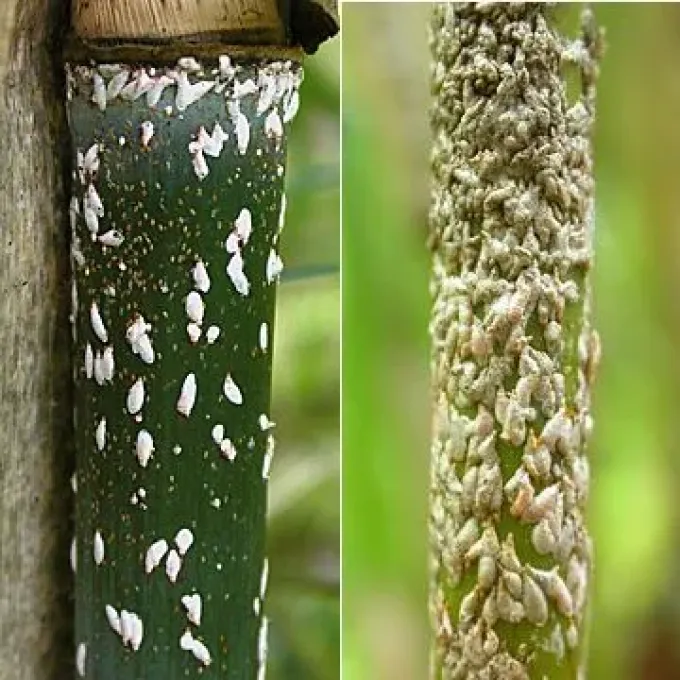
Infestation is visually indicated by the presence of small, elongate, whitish or greyish crust-like spots on the stems of the bamboo. Close inspection will reveal that these spots are distinct, raised structures, often densely clustered, which prevent normal culm development and lead to chlorosis in severe cases.
Control measures
Managing bamboo scale requires persistent monitoring and a combination of control methods. Manual removal of heavily infested culms is advised, followed by the application of systemic insecticides that are absorbed by the plant tissues to reach the pests protected by their hard shields, often supplemented by horticultural oils.
Taxonomy
- Latin name
- Kuwanaspis
- Order
- Hemiptera (bugs, aphids, leafhoppers)
- Family
- Diaspididae
- EPPO code
- KUWASP
Discussion
No discussions yet — be the first.