
Kraussaria angulifera
Kraussaria angulifera
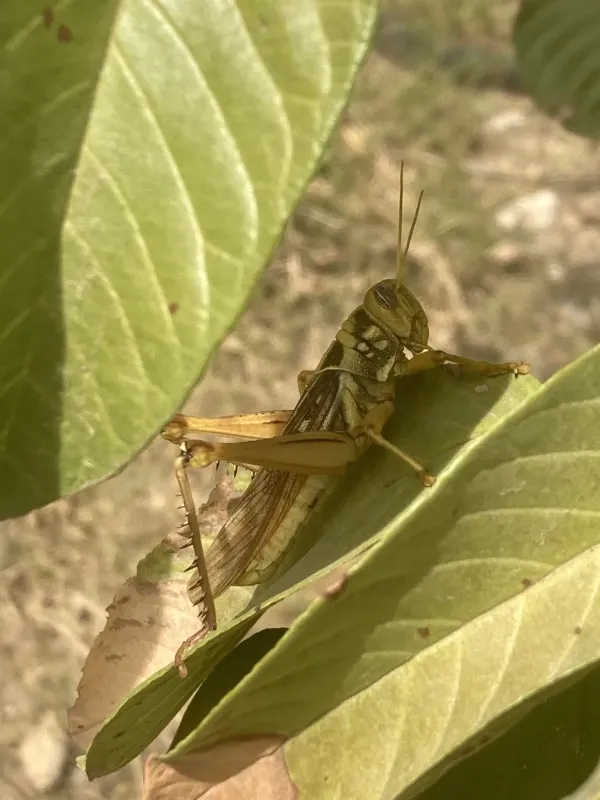
Description
How to identify
Kraussaria angulifera is a large locust species belonging to the family Acrididae, well-known for its potential to cause significant agricultural damage.
The insect possesses a distinctive angular thorax structure, which serves as a key morphological feature for identification in the field.
Adults exhibit a color palette ranging from grayish-brown to yellowish-green, providing excellent camouflage against arid savanna landscapes.
Equipped with powerful hind legs, the species is capable of jumping long distances, while their wings allow for sustained flight during migrations.
Being a gregarious or semi-gregarious species, they can aggregate in large numbers, making them a formidable pest in many tropical and subtropical regions.
What it damages
As a polyphagous pest, Kraussaria angulifera feeds on a vast array of botanical hosts, ranging from wild grasses to cultivated crops.
Cereal crops, particularly sorghum, millet, and maize, are primary targets, with heavy infestations often leading to total yield loss.
In addition to cereal grains, the locust frequently attacks legumes and pastures, significantly impacting local livestock fodder availability.
The damage is characterized by rapid defoliation of the plant, which prevents proper photosynthetic activity and stunts the growth of the crop.
During outbreak years, the economic impact is severe as the locust swarms can devastate entire farming areas in a matter of days.
When it appears
The life cycle of this locust is strictly regulated by rainfall patterns, which determine the availability of fresh green food resources.
Hatching usually occurs at the onset of the rainy season, when the environmental conditions for larval development become optimal.
The transition from nymph stages to adults is rapid, often coinciding with the vegetative stage of staple crops, exacerbating the agricultural damage.
Adult activity peaks during the day when higher ambient temperatures enhance their metabolic rates and foraging efficiency.
Seasonal migrations are triggered by the drying of local vegetation, forcing the swarms to search for more abundant food sources in cultivated fields.
Signs of infestation
Early symptoms of an infestation include the appearance of irregular, chewed leaf margins on crops, often leading to total stripping of the blades.
The presence of large amounts of frass on the soil surface under the canopy is a clear indicator of a significant locust population density.
Observers may notice nymphal bands moving collectively through grasslands or field borders, signaling the start of a potential outbreak.
The auditory signature of a locust swarm, characterized by a persistent rustling and chirping sound, serves as an obvious alert for farmers.
- Skeletal remains of plant foliage.
- Damaged growth points and stems.
- Destruction of flowering heads and developing grain ears.
Control measures
Proactive monitoring of nymph populations during the early stages of development is the most effective approach for management.
Targeted application of approved insecticides on localized outbreaks is necessary to prevent the formation of larger, more destructive swarms.
Deep plowing of fallow land after harvest is a vital cultural practice to expose and destroy egg pods hidden within the soil.
Biological control agents, such as specialized entomopathogenic fungi, are being increasingly utilized to manage populations with minimal ecological impact.
Effective management requires coordination among regional agricultural authorities to provide early warning and community-based control strategies.
Taxonomy
- Latin name
- Kraussaria angulifera
- Order
- Orthoptera (locusts)
- Family
- Acrididae
- EPPO code
- KRSAAG
Discussion
No discussions yet — be the first.