
Korynetes
Korynetes
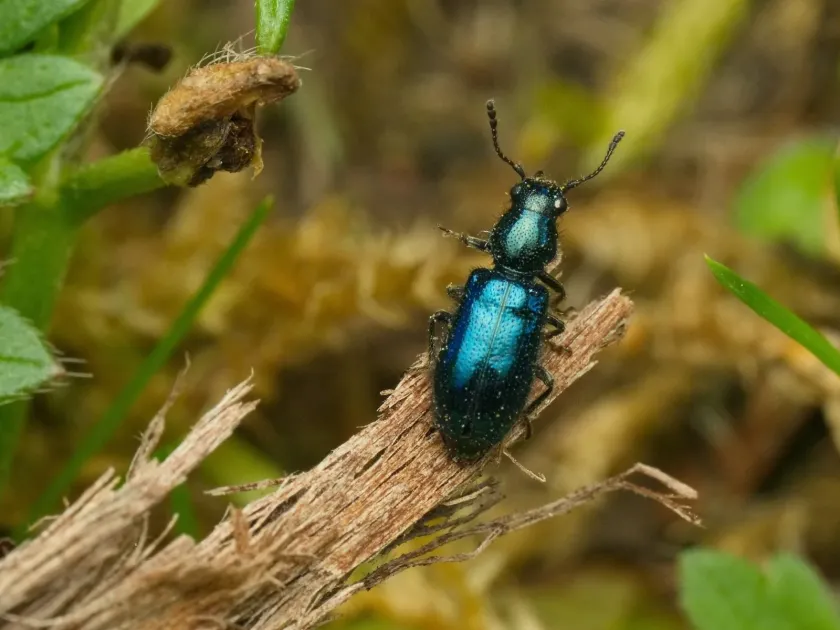
Description
How to identify
Korynetes is a genus belonging to the Cleridae family within the order Coleoptera. These are small beetles characterized by an elongated body and a specific structure of antennae and mouthparts.
Adult beetles typically possess a dark coloration, sometimes exhibiting a metallic sheen. The larvae are highly mobile and have chitinous cuticles adapted for living within the substrates they infest.
Species of the genus Korynetes are frequently found in storage facilities, where they act as either specialized predators or opportunistic pests of stored products.
Identification at the species level is difficult due to their resemblance to other members of the Cleridae family, often requiring microscopic analysis of genital structures.
The insect undergoes a complete metamorphosis, passing through egg, larval, pupal, and adult stages, which is standard for all Coleoptera in this family.
What it damages
The primary food source for Korynetes includes agricultural products of both animal and plant origin stored in warehouses.
The pest most commonly damages dried fish, meat, hides, and grain products, especially if they have been previously infested by other stored product insects.
It is important to note that while many Korynetes species are predatory and feed on larvae of other grain pests, their presence in stocks is considered a contaminant.
Infested products lose their commercial value, suffer weight loss, and are prone to secondary contamination by molds due to the insects' excrement.
In large-scale storage facilities, high population densities of Korynetes can lead to significant economic losses, necessitating immediate sanitation.
When it appears
The activity of Korynetes is strictly dependent on the temperature within storage facilities, as these beetles are thermophilic in nature.
In heated or poorly ventilated warehouses, reproduction can occur throughout the year, with no distinct period of diapause.
Optimal conditions for a rapid life cycle include air humidity above 60% and temperatures ranging from 20 to 25 degrees Celsius.
When temperatures drop below 10 degrees, the development of all life stages significantly slows down or ceases completely until better conditions return.
The spring and summer seasons are marked by the massive emergence of adults, which actively disperse throughout the storage facility to find food and oviposition sites.
Signs of infestation
One of the first signs of infestation is the presence of small holes in product packaging or directly in the stored goods themselves.
On the surface of grain piles or within the stored bulk, one may find shed chitinous larval skins left behind after molting processes.
When inspecting storage areas, characteristic insect droppings can often be found accumulating in corners or cracks of the storage equipment.
A specific odor, resulting from the decomposition of waste and residues from insect activity, often indicates a high level of infestation in the warehouse.
The presence of flying beetles near light sources at night is also a strong indicator that the population is breeding nearby.
Control measures
The primary protection measure involves maintaining high sanitary and hygienic standards in warehouses, including regular cleaning of dust and food residues.
Chemical fumigation of storage rooms is the most effective method for eradicating hidden populations of the pest in hard-to-reach areas.
Using pheromone traps helps monitor population density and allows for timely localized interventions in the event of an outbreak.
Managing the moisture content of stored products is essential, as dry environments are much less attractive for colonization by Korynetes.
- Performing preventive disinfestation of warehouse containers before storing new batches of grain.
- Ensuring the airtightness of storage facilities to prevent the entry of adult beetles from outside.
- Maintaining optimal temperature control to prevent product overheating.
Taxonomy
- Latin name
- Korynetes
- Order
- Coleoptera (beetles)
- Family
- Cleridae
- EPPO code
- KORYSP
Discussion
No discussions yet — be the first.