
Jujubinus
Jujubinus
Description
How to identify
The genus Jujubinus belongs to the family Trochidae (order Trochida). Although these are primarily marine gastropod mollusks, in the context of agronomy, they can occasionally be considered pests of coastal horticultural crops.
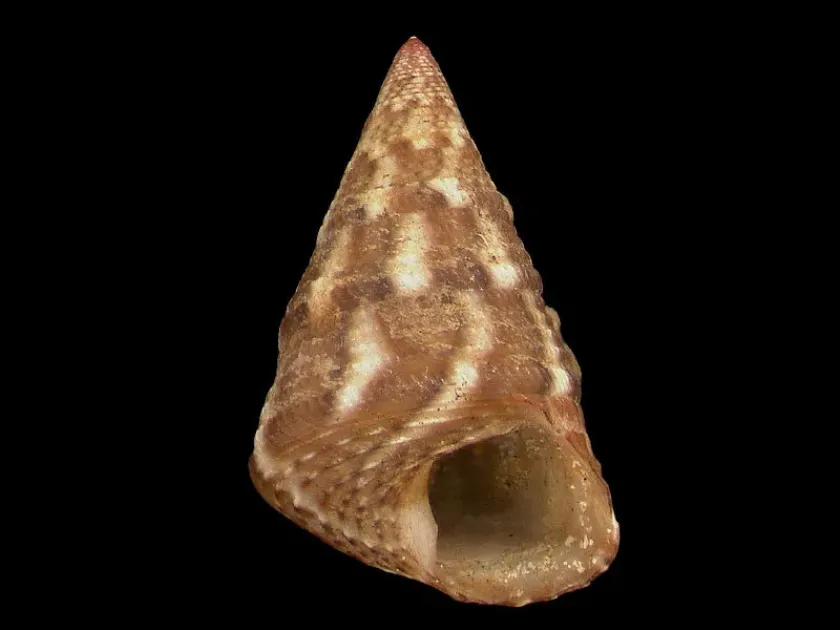
These mollusks have a conical, often spirally coiled shell with a characteristic pattern. Adult individuals rarely exceed 10–15 millimeters, which allows them to hide in dense vegetation.
Their coloration varies from grayish to reddish-brown, providing excellent camouflage against the substrate or plant stems. They possess a well-developed foot, allowing them to move quickly across moist surfaces.
The shell of Jujubinus is distinguished by high durability and prominent ribs. In coastal zones, they are often found in colonies, which increases their potential impact on local vegetation.
For accurate identification, agronomists use magnifying glasses, as the small size of the individuals often leads to confusion with other species of mollusks or tiny insects.
What it damages
The main damage is inflicted on coastal agricultural crops and plants growing in high-humidity zones. These mollusks feed on young shoots, leaves, and the epidermis of stems.
Seedlings and young plants lacking rigid mechanical tissues are the most vulnerable. Damage is often localized but can spread rapidly under favorable conditions.
Jujubinus scrapes off soft plant tissues using its radula, a specialized feeding organ. This disrupts photosynthesis and weakens the plant's overall immune system.
Necrotic spots form in the damaged areas, which can eventually become entry points for secondary infections, such as fungal diseases or bacterial rots.
Severe damage leads to wilting, stunted growth, and, in critical cases, the complete loss of seedlings, necessitating immediate corrective actions.
When it appears
The activity of this species is directly correlated with air and soil humidity. The most dangerous period occurs during spring and autumn months when rainfall is abundant.
During the summer heat, Jujubinus enters a state of diapause or hides deep in shaded, moist areas. The metabolic optimum for these organisms is 15–22 degrees Celsius.
Their development cycle is linked to seasonal migrations from coastal zones into agricultural lands as soil moisture levels rise.
Mollusk reproduction is often tied to periods of moderate temperatures. Egg clutches are usually placed in moist soil rich in organic matter.
Monitoring populations should begin as soon as stable, warm, rainy weather arrives, as this triggers mass emergence on the surface.
Signs of infestation
The primary sign of pest presence is the appearance of characteristic scraping marks on leaves and stems, resembling stripes or small "windows."
The presence of slimy trails on the soil surface and leaves is undeniable evidence of molluscan activity during the night or early morning hours.
Frequent discovery of empty shells or individuals in the root zone indicates a high population density, suggesting that control measures are required.
Gardeners may also notice irregular leaf margins, which differ significantly from damage caused by chewing insects or caterpillars.
The presence of specific excrement in the form of small dark granules near damaged stem areas also indicates the presence of Jujubinus.
Control measures
The basis of control is the agrotechnical method: regular weeding and clearing of coastal debris where mollusks find shelter.
Creating barriers of gravel, wood ash, or lime around beds is effective, as these materials obstruct the movement of pests towards crops.
The use of chemical protection products, such as metaldehyde-based molluscicides, must be conducted strictly according to regulations and only when infestations are severe.
Using traps (e.g., containers filled with beer or fermented juice) is recommended to reduce population numbers in an environmentally friendly manner.
- Regularly inspect plants during early morning hours.
- Optimize irrigation regimes to prevent waterlogging.
- Encourage natural predators such as hedgehogs or certain bird species.
Taxonomy
- Latin name
- Jujubinus
- Order
- Molluscs
- Family
- Trochidae
- EPPO code
- JUJUSP
Discussion
No discussions yet — be the first.