
Grey topshell
Gibbula cineraria
Description
How to identify
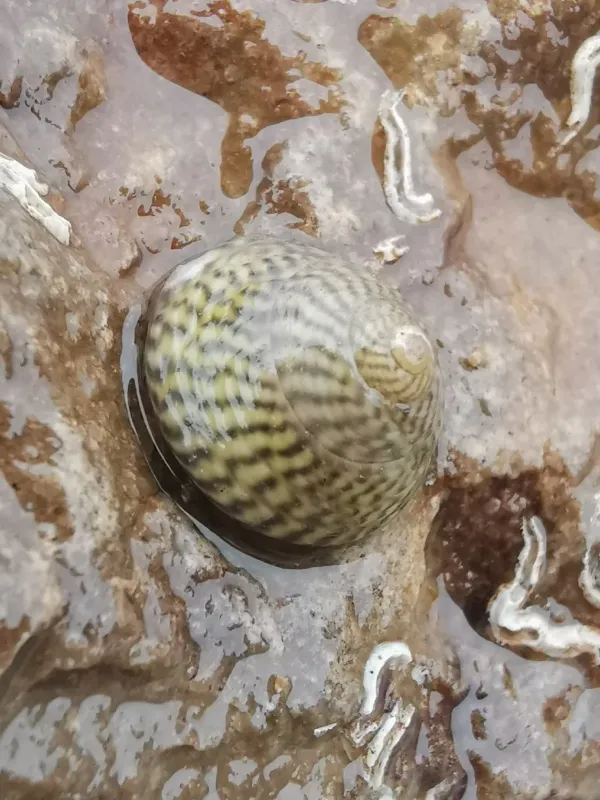
The grey topshell (Gibbula cineraria) is a small marine gastropod mollusk belonging to the family Trochidae. It is characterized by its conical, spiral shell, which typically features a greyish-brown color with fine red or purple radial lines.
The shell size usually reaches between 15 and 20 millimeters. The surface of the shell is relatively smooth or exhibits fine spiral grooves, which are key diagnostic features for identifying this specific species among other gastropods.
This mollusk is equipped with a muscular foot, allowing it to adhere firmly to rocks, seaweed, or other substrates. This physical adaptation is crucial for its survival in tidal and coastal environments.
Sensory organs, including specialized tentacles, allow the grey topshell to navigate its environment and locate food sources efficiently. They are highly responsive to environmental changes such as salinity and moisture levels.
Taxonomically, the species is classified under the order Trochida. It serves as an example of a species that can transition from its native marine environment into managed coastal agricultural or aquaculture settings.
What it damages
The damage caused by the grey topshell primarily involves the scraping of plant tissues. Using its radula—a tongue-like structure with tiny teeth—the mollusk abrades the epidermis of young plants and succulent stems.
This mechanical feeding leads to weakened plant health, stunted growth, and a compromised immune system. Such wounds often facilitate the entry of secondary pathogens, leading to necrosis and tissue decay.
In high-density populations, the grey topshell can significantly impact the quality of crops grown in coastal systems. Plants may show signs of severe leaf stripping and irregular holes, which reduce their market value.
Seedlings and young transplants are particularly vulnerable to these mollusks. Constant grazing at the base of the plant can cause it to collapse or fail to develop further, leading to total yield loss in localized areas.
The presence of these mollusks can also disrupt the balance in controlled agricultural environments, forcing growers to implement protective measures to save sensitive crops from further infestation.
When it appears
Activity levels of the grey topshell are heavily influenced by temperature and water conditions. During the spring and summer months, as temperatures rise, the mollusk increases its metabolic rate and feeding activity.
Reproductive success is closely linked to warmer water temperatures, which allow for a rapid increase in the number of individuals on a site. This coincides with the prime growing season for many agricultural products.
As autumn approaches and temperatures drop, the mollusk reduces its activity. It begins to seek shelter in crevices, under debris, or within substrate layers to prepare for the slower winter period.
Winter survival is dependent on the availability of protected micro-habitats. During this time, they stay in a state of dormancy, limiting their movement to conserve energy until environmental conditions improve.
Spring marks the beginning of a new activity cycle. As the ground and water warm, individuals emerge from their shelters to resume feeding, which is when preventative monitoring is most essential for crop protection.
Signs of infestation
The most evident sign of a grey topshell infestation is the appearance of distinct scraping patterns on leaves and stems. These trails look like miniature gouges or scratches caused by their rasping feeding mechanism.
Slimy trails left behind on soil or plant surfaces are another primary indicator. These trails are often shiny when wet and leave a tell-tale white, translucent film upon drying in the sun.
Direct observation of the mollusks themselves, particularly during humid mornings or late evenings, is the most accurate way to confirm their presence. They typically aggregate at the base of plants or in cool, damp spots.
Yellowing leaves and overall plant wilting, unrelated to soil nutrient issues, frequently result from the cumulative stress of persistent mollusk grazing. The plant's inability to transport water effectively leads to these symptoms.
The presence of empty shells or fragmented remains near the base of the crop is a strong indicator of an established population. This suggests that the area has been occupied for a significant duration.
Control measures
Hand-picking remains the most straightforward and effective method for small-scale operations. Regular inspections during the peak activity times help in keeping the population under control without chemical usage.
Physical barriers, such as copper tape, crushed eggshells, or coarse sand, create a difficult environment for the mollusks to cross. This prevents them from reaching the vulnerable parts of the plants.
Biological control involves maintaining a healthy ecosystem that supports natural predators. Many shore birds, crabs, and predatory insects naturally feed on these mollusks and help keep their numbers in check.
When necessary, commercial molluscicides, particularly those based on iron phosphate, provide an environmentally responsible solution. These baits are effective and generally safe for use in professional crop management.
A good agricultural practice includes reducing excess moisture in the growing zone and ensuring proper drainage. By eliminating damp, stagnant conditions, the habitat becomes much less hospitable for the grey topshell.
Taxonomy
- Latin name
- Gibbula cineraria
- Order
- Molluscs
- Family
- Trochidae
- EPPO code
- GBBLCI
Discussion
No discussions yet — be the first.