
Gibbula
Gibbula
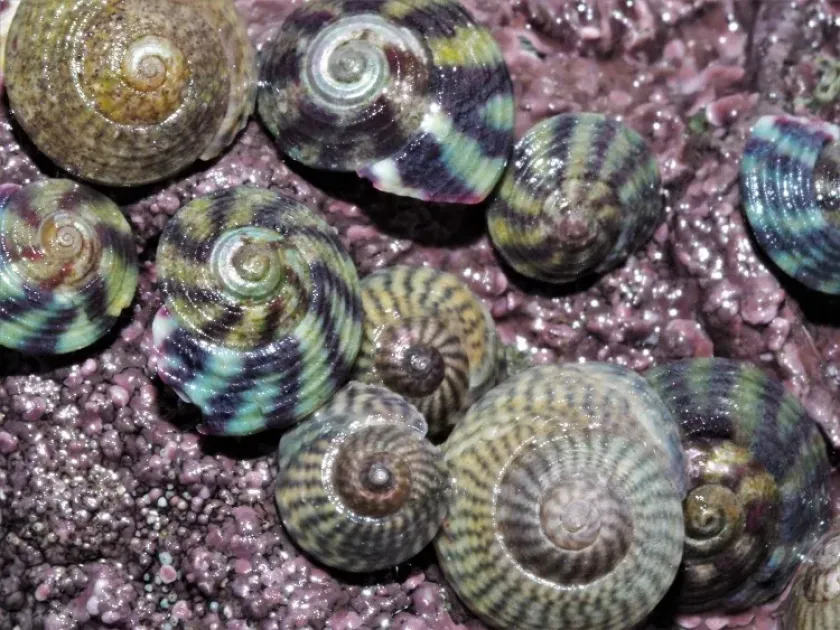
Description
How to identify
Gibbula is a genus of marine gastropod mollusks belonging to the family Trochidae. While primarily marine organisms, certain species can infiltrate coastal agricultural fields, especially when organic marine fertilizers are applied.
These mollusks are characterized by a conical shell with distinct whorls, typically measuring between 10 and 25 millimeters in diameter. The shell texture ranges from smooth to finely spirally ribbed.
The coloration of the shell is generally muted, appearing in shades of grey, brown, or greenish, which provides natural camouflage among foliage and soil debris.
Biologically, they possess an operculum, a trapdoor-like structure that seals the shell, allowing them to survive periods of desiccation or exposure to air outside their natural aquatic habitat.
They are primarily introduced into inland agricultural zones via contaminated organic waste or during extreme tidal flooding events near coastal properties.
What it damages
Gibbula acts as a pest by grazing on the succulent tissues of young vegetable plants and leaf crops. Vegetables such as lettuce, cabbage, and young seedlings are particularly susceptible to their feeding habits.
Damage manifests as skeletalizing of leaves or the creation of irregular holes in the foliage. Their rasping mouthparts, known as the radula, effectively scrape away plant tissue, weakening the plant's growth.
High population densities can lead to the total loss of seedlings, as these mollusks can rapidly consume tender tissues, causing significant economic losses for coastal vegetable growers.
The mucus trail left by the snails on the foliage is highly undesirable, as it reduces the market value of fresh produce and serves as a breeding ground for opportunistic fungi and bacteria.
Secondary infections often follow their feeding activity, as damaged leaves become vulnerable to soft rot and other soil-borne plant diseases triggered by the introduced pathogens.
When it appears
Their activity levels are heavily dependent on humidity and soil moisture. They are most prevalent during cool, rainy springs and damp autumn months, which favor their physiological activity.
During the daylight hours, they seek shelter in moist soil or under organic debris to avoid dehydration, while their feeding activity peaks during the night and early morning hours.
If conditions become too dry or hot, Gibbula retreats into its shell, sealing it tightly to survive until the return of favorable moisture levels. This makes them difficult to eradicate in arid conditions.
Population spikes are frequently observed following coastal storm surges or excessive rainfall, which wash these mollusks into agricultural zones and provide the necessary moisture for their survival.
Constant monitoring of wet, shaded areas of the field is crucial during the active growing season to detect early signs of infestation and prevent colonization.
Signs of infestation
The most visible sign of an infestation is the presence of shiny, dried mucus trails on the soil surface, plant stems, or leaves, which become prominent as the moisture evaporates.
The discovery of either inhabited or empty conical shells near the base of plants or inside damp clods of soil is a definitive indicator of their presence on the property.
Damage to foliage appears as ragged-edged bites or irregular patches where the surface of the leaf has been scraped off, differing from the clean edges caused by many insect species.
Large aggregations can often be found beneath boards, plastic mulching, or dense weed patches during the daytime, where they seek refuge from direct sunlight and predators.
- Dried, shimmering mucus trails on the ground and plant leaves.
- Presence of small conical shells near the plant base.
- Irregular holes and scraped plant surfaces.
- Concentrations of snails under moist organic debris.
Control measures
Effective management begins with improving soil drainage and reducing excessive humidity, which is necessary for their survival in terrestrial environments.
Mechanical barriers, such as copper tape, grit, or crushed eggshells placed around plant beds, can successfully discourage the mollusks from crossing into the cropping area.
Good sanitation practices, such as the removal of weeds and plant debris, are essential to deprive the pests of daytime shelters, significantly reducing their population density.
Chemical control involving iron phosphate-based molluscicides is recommended for significant infestations. These are generally considered safer for the environment than traditional metaldehyde baits.
Encouraging natural predators such as frogs, toads, and birds in the garden provides a sustainable biological control method that keeps the population of these gastropods in check.
Taxonomy
- Latin name
- Gibbula
- Order
- Molluscs
- Family
- Trochidae
- EPPO code
- GBBLSP
Discussion
No discussions yet — be the first.