
Plum moth
Illiberis pruni
Description
How to identify
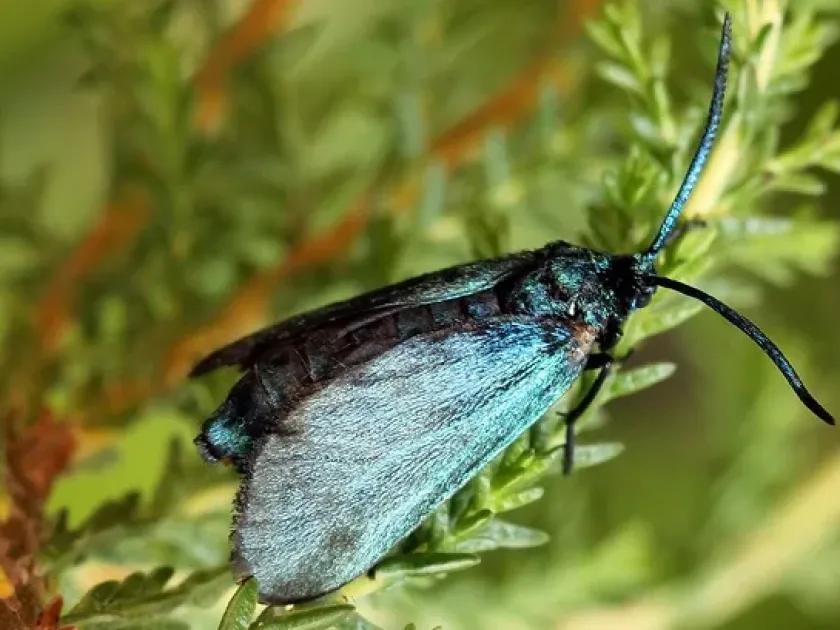
The Plum moth (Illiberis pruni) is a member of the Zygaenidae family, within the order Lepidoptera. The adult is a small moth with dark, metallic, or bluish-tinted wings.
The moth's body is covered in sparse hairs, giving it a distinctive appearance. With a wingspan typically between 20 and 25 millimeters, these insects are often elusive among the dense foliage.
The larvae, or caterpillars, are characterized by their yellowish-green color, longitudinal stripes, and tufts of hair on their backs, which serve as a primary identification feature.
This species completes one generation per year. Larvae overwinter in dense silk cocoons, which are strategically placed in bark crevices or among plant debris under the tree canopy.
Pupation occurs in early spring, and adult moths emerge during the budding or flowering phase of host plants, allowing them to start feeding immediately after emergence.
What it damages
This pest is a specialized phytophage, primarily attacking stone fruit species such as plum, cherry, apricot, and sometimes ornamental plants in the Rosaceae family.
In high-density populations, the Plum moth can cause significant economic losses in commercial orchards by reducing fruit quality and yield potential.
The caterpillars are the most destructive stage, feeding aggressively on leaves, which reduces the plant's photosynthetic surface area and weakens its overall physiological state.
Caterpillars also target young buds in the early spring, leading to the destruction of reproductive organs and preventing proper fruit set on affected branches.
Chronic infestation weakens the trees, making them susceptible to secondary infections and decreasing their overall winter hardiness and resilience to environmental stress.
Signs of infestation
The primary sign of infestation is skeletonized leaves, where caterpillars have eaten the soft tissues while leaving the larger veins intact, often leading to ragged margins.
Early season damage is visible as failed or hollowed-out buds that show signs of gnawing and eventually wither or fall off before they can properly bloom.
During the dormant season, finding old, weathered silk cocoons tucked into bark ridges or tree trunk splits is a reliable indicator of a previous or persistent pest presence.
The presence of larvae on the underside of leaves, especially during the early morning hours, confirms an active infestation requiring immediate monitoring.
Accumulated frass, or insect droppings, found on leaf surfaces or bark below feeding sites is another clear behavioral sign indicating the presence of the caterpillars.
Control measures
Cultural control methods include scrubbing tree trunks to remove dead bark and applying whitewash to stems, which eliminates potential overwintering sites for the larvae.
Proper sanitation, such as removing fallen leaves and pruning debris from under the tree canopy, significantly reduces the population of overwintering cocoons.
Biological control using microbial insecticides based on Bacillus thuringiensis can be very effective against young larvae while sparing beneficial predatory insects.
In cases of severe infestation, chemical control with systemic or contact insecticides should be applied according to local agricultural regulations and thresholds.
Promoting a healthy garden ecosystem by encouraging natural enemies, such as birds and predatory wasps, provides long-term suppression of the Plum moth population.
Taxonomy
- Latin name
- Illiberis pruni
- Order
- Lepidoptera (butterflies)
- Family
- Zygaenidae
- EPPO code
- ILLIPR
Discussion
No discussions yet — be the first.