
Yellow bullhead
Ictalurus natalis
Description
How to identify
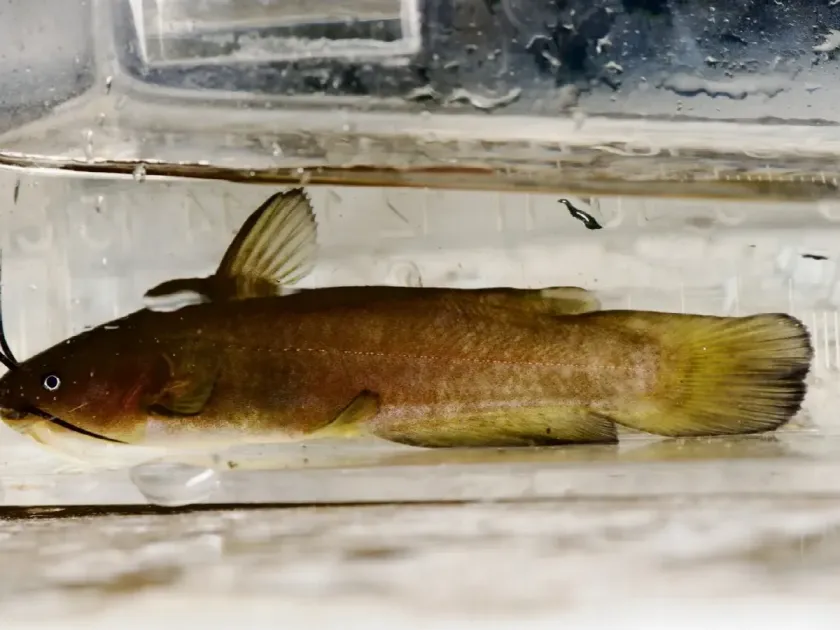
The yellow bullhead (Ictalurus natalis) belongs to the Ictaluridae family. It is easily identified by its yellowish-brown body, smooth scaleless skin, and long sensory barbels around the mouth area.
A key physical characteristic is the rounded to square-shaped tail fin, which differentiates it from other catfish species. They typically reach lengths of 20 to 50 centimeters as mature individuals.
These fish possess sharp, serrated spines in their pectoral and dorsal fins. These are primarily used for defense and can inflict painful wounds on humans or predatory animals that attempt to catch them.
They are highly adaptable to various aquatic environments, including those with low oxygen levels or high silt content. This hardiness allows them to thrive in places where other fish species struggle to survive.
The yellow bullhead is known for its reproductive success and parental care. The males protect the nest and the young, which significantly increases the survival rate of the offspring in colonizing new areas.
What it damages
In aquaculture, the yellow bullhead acts as a significant pest by competing for food and consuming the eggs and fry of valuable commercial species like carp, trout, and bass.
Their presence in irrigation networks often leads to infrastructure damage. They tend to enter water intake pipes and pump systems, where they clog filters and screens, interrupting water supply for crops.
By constantly stirring up the bottom sediments, these catfish increase water turbidity. This prevents necessary sunlight penetration, which hinders the growth of beneficial phytoplankton in managed ponds.
In agricultural watersheds, their feeding habits disrupt the natural balance of the food chain. They consume high volumes of aquatic invertebrates, depriving native fish populations of their primary food source.
Financial losses occur due to decreased yields in fish farms and the high maintenance costs associated with clearing irrigation equipment of fish carcasses and debris.
When it appears
The activity of the yellow bullhead is temperature-dependent. They emerge from winter dormancy as water temperatures rise in the spring, typically starting around 12 to 15 degrees Celsius.
The spawning period in late spring and early summer is when they are most aggressive. During this time, they occupy specific nesting sites and may expand their range within the irrigation channels.
Summer is the peak feeding season. High temperatures increase their metabolic rate, leading them to consume significantly more resources, which translates to a higher level of economic damage for farmers.
As autumn approaches and temperatures drop, bullheads prepare for winter. They often migrate toward deeper, stable waters in irrigation channels to wait out the cold weather, sometimes causing localized blockages.
During the winter months, they remain dormant at the bottom of the water bodies, often buried in the mud, which makes them difficult to catch or remove until the following spring.
Control measures
The primary control method for fish farms is the total draining and liming of ponds. This procedure is essential to sanitize the environment and eliminate all stages of the bullhead life cycle.
Mechanical exclusion is highly effective for irrigation systems. Installing fine-mesh screens at the entrance of channels and pump stations prevents the entry of both adult fish and juveniles.
Biological control methods include the introduction of predatory game fish that feed on bullhead fry. This keeps the population density low and maintains a balanced predator-prey ratio in the water system.
Targeted trapping is a sustainable way to manage their population during the peak season. Using baited hoop nets or traps in high-density areas can significantly reduce the number of breeding adults.
Regular inspection and cleaning of hydraulic infrastructure are necessary to prevent issues. Proactive management ensures that early signs of yellow bullhead colonization are detected before they become a major problem.
Taxonomy
- Latin name
- Ictalurus natalis
- Family
- Ictaluridae
- EPPO code
- ICTANA
Discussion
No discussions yet — be the first.