
Brown bullhead
Ameiurus
Description
How to identify
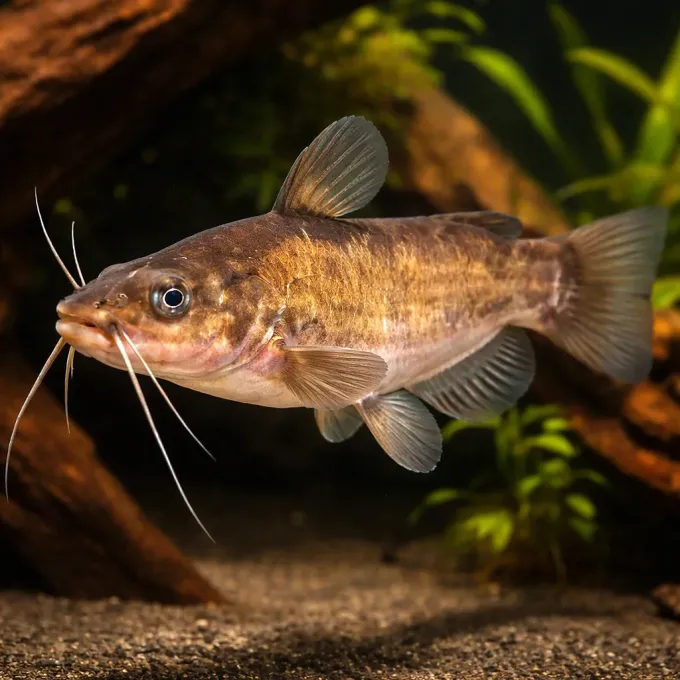
The brown bullhead (genus Ameiurus) is an invasive species of freshwater fish belonging to the family Ictaluridae. It is easily recognized by its broad, flattened head, lack of scales, and eight sensitive barbels surrounding its mouth.
These fish are known for their exceptional hardiness, capable of surviving in waters with low oxygen levels and across a wide range of temperatures. Their skin is typically dark, brownish-olive, providing excellent camouflage against muddy pond bottoms.
A distinctive physical feature is the presence of sharp, serrated spines on their pectoral and dorsal fins. These spines are equipped with a mild toxin, which serves as a potent defense against predators and makes handling or netting these fish difficult.
Adult bullheads typically grow to 20–30 cm in length, though they can reach larger sizes under ideal conditions. Their high fecundity and habit of guarding their nests ensure a rapid expansion of their population in new aquatic environments.
In the context of aquaculture, the brown bullhead is considered a major nuisance. Its presence leads to the displacement of native species and overall degradation of the pond's environmental health, resulting in lower farm productivity.
What it damages
Brown bullheads cause direct economic harm to aquaculture by predating on the eggs and fry of valuable commercial species like carp or trout. They act as aggressive food competitors, consuming the same high-quality feed provided for farm-raised stocks.
As omnivores, they consume benthic organisms, aquatic vegetation, and organic detritus. While foraging, they constantly stir up the silt, which reduces water clarity and inhibits the light penetration necessary for essential phytoplankton growth.
Large populations of bullheads lead to overcrowding, which induces stress in cultivated fish, causing stunted growth and increasing susceptibility to secondary infections. Controlling this pest in commercial ponds requires extensive effort and resources.
In addition to direct predation, bullheads often serve as vectors for parasites and infectious diseases. This increases the risk of massive outbreaks, threatening the health and survival of the primary fish population in the pond.
In many regions, the brown bullhead is classified as an invasive species. Its entry into natural waterways can cause irreversible damage to local aquatic ecosystems by suppressing native fish populations through competition and predation.
When it appears
The activity of the brown bullhead begins as water temperatures rise in the spring, typically reaching 10–12 degrees Celsius. After overwintering, they emerge from the mud to feed intensely and prepare for the breeding season.
Spawning occurs in late spring or early summer, coinciding with the peak growing period for commercial fish fry. During this time, adults are highly territorial and aggressive, guarding their nests dug into the pond substrate.
The summer months represent the peak period of damage, as the fish's metabolic rate increases with the heat. They actively consume available feed resources, creating intense competition with commercial species during their critical development stage.
As water temperatures drop in the autumn, brown bullheads continue to feed aggressively to accumulate energy reserves for the coming winter. This tenacity allows them to thrive while other species might be slowing down their feeding behavior.
During the winter, brown bullheads enter a state of dormancy by burrowing into the pond silt. This survival mechanism allows them to outlast harsher conditions that might cause mortality among less resilient species.
Control measures
The most effective method for controlling bullheads is the complete draining and liming of pond beds. This practice destroys eggs and larvae hidden in the silt and effectively resets the pond environment for the next cycle.
Regular harvesting using fine-mesh nets can help reduce the population density, though this requires consistent monitoring and repeated effort throughout the production cycle to achieve significant results.
Biological control methods include the introduction of predatory fish like pike or zander, which may feed on juvenile bullheads. However, this is only successful if the pond environment is also suitable for the predator species.
Strict biosecurity measures, including the inspection of all stock fish, are essential to prevent the introduction of brown bullheads into clean ponds. Prevention remains the most cost-effective management strategy.
- Draining and liming of pond bottoms.
- Systematic netting of adult individuals.
- Introduction of natural predators.
- Rigorous inspection of incoming fish stock.
Taxonomy
- Latin name
- Ameiurus
- Family
- Ictaluridae
- EPPO code
- AMEISP
Discussion
No discussions yet — be the first.