
Black bullhead
Ameiurus melas
Description
How to identify
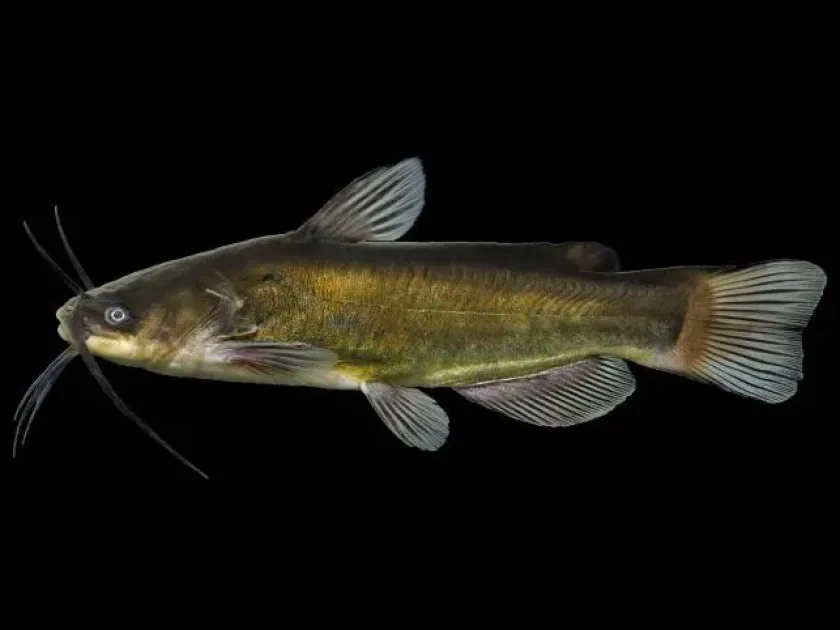
The black bullhead Ameiurus melas is a species of catfish in the Ictaluridae family. It is recognized by its stout body, large head, and long, dark-colored barbels.
The skin is scaleless, dark brown to black in color, often fading to a lighter gray or white on the underside. Its fins contain sharp spines capable of delivering painful punctures.
This species is highly resilient, capable of surviving in hypoxic (low oxygen) and polluted water conditions where more sensitive fish species would fail to thrive.
As an invasive species, it colonizes stagnant or slow-moving waters rapidly, often outcompeting native fish species for space and food resources.
Black bullheads are primarily bottom-dwelling fish, exhibiting both diurnal and nocturnal activity patterns depending on environmental conditions.
What it damages
In commercial fish farming, the black bullhead is considered a pest because it preys on the eggs and fry of valuable species like carp and crucian carp.
They act as significant food competitors, consuming valuable feeds intended for target fish stocks, which leads to reduced productivity and economic losses for the fishery.
In natural water bodies, overpopulation of black bullheads disrupts local ecosystems by depleting the forage base necessary for indigenous fish populations.
The presence of these fish complicates pond management practices, including selective breeding and the production of high-quality stocking material.
Due to their hardy nature and opportunistic feeding habits, they often overwhelm and dominate aquatic environments, leading to the collapse of local biodiversity.
When it appears
The active period for the black bullhead generally begins in mid-spring when water temperatures rise to approximately 10–12 degrees Celsius.
Spawning takes place in late spring or early summer, with the fish building nests on the bottom to protect the developing eggs and larvae.
Throughout the summer months, these fish remain active and feed voraciously, accumulating energy reserves to ensure survival during the colder months.
As autumn approaches and temperatures drop, their activity levels decrease, though they remain active until ice cover restricts movement in the water column.
During the winter, the black bullhead enters a state of low activity, aggregating in deep, muddy sections of the pond to survive the dormant season.
Control measures
Complete drainage of ponds followed by disinfection of the bottom substrate is the most effective way to eliminate black bullhead populations from farming systems.
The use of fine-mesh netting during harvest allows operators to sort out the bullheads and prevent their further spread to other water bodies.
Biological control methods include the introduction of predatory fish like northern pike, which can naturally reduce the density of bullhead fry.
- Installing fish screens at water inlets to prevent accidental introduction.
- Performing routine population surveys to monitor bullhead density.
- Using targeted trapping techniques during the peak spawning season.
Maintenance practices such as removing dense aquatic vegetation and debris reduce the availability of suitable nesting sites, effectively lowering recruitment rates.
Taxonomy
- Latin name
- Ameiurus melas
- Family
- Ictaluridae
- EPPO code
- ICTAME
Discussion
No discussions yet — be the first.