
Silver carp
Hypophtalmichthys molitrix
Description
How to identify
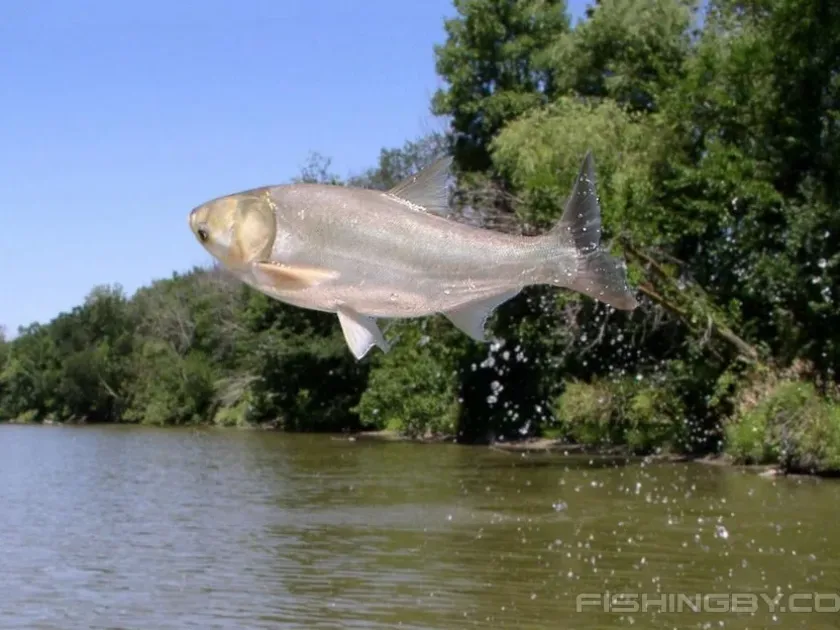
The silver carp (Hypophthalmichthys molitrix) belongs to the order Cypriniformes and the family Cyprinidae. It is a large freshwater fish that can reach lengths of up to 1 meter and weigh over 20 kg.
The fish is characterized by low-set eyes positioned below the body's midline and a broad head, which gives the species its distinctive appearance.
Silver carp have fine silver scales and a body compressed laterally. A unique diagnostic feature is a sharp keel extending from the throat to the anus.
The mouth is superior, adapted for active water filtering, which serves as a highly efficient mechanism for consuming phytoplankton in large quantities.
In the wild, this species is gregarious, preferring warm, slow-moving waters or standing water habitats where phytoplankton is abundant.
What it damages
In an agricultural and water management context, the silver carp is often classified as an invasive species that can negatively affect water bodies used for irrigation.
Excessive populations lead to a rapid depletion of phytoplankton biomass, which disrupts the natural trophic chain in artificial and natural water reservoirs.
The reduction in phytoplankton causes a deficiency in organic matter, which is critical for maintaining the productivity of closed aquatic systems.
When entering irrigation canals, silver carp can cause mechanical damage to hydraulic structures and mesh filters intended for water purification before crop application.
Competition for food resources displaces native fish species, which decreases biodiversity and reduces the stability of ecosystems supplying agricultural water.
When it appears
The biological activity of the silver carp is directly dependent on the water temperature of the environment in which it resides throughout the year.
The most intense feeding and growth period for the fish occurs during the spring and summer, when water temperatures reach 20–25 degrees Celsius.
Spawning occurs in late spring or early summer when water temperatures rise above 18–20 degrees Celsius in flowing water conditions.
During the autumn, as temperatures decline, the fish migrate to deeper parts of the water body, entering a state of reduced metabolic activity.
In winter, silver carp almost completely cease feeding and concentrate in deep wintering pits, minimizing their impact on the aquatic environment.
Signs of infestation
The primary sign of an excessive presence of this species is unnaturally clear water, caused by intense grazing on microscopic algae by the fish population.
The presence of the fish can be detected visually by specific splashing and leaping behaviors above the water surface, typical of younger individuals seeking food.
A drop in dissolved oxygen levels during the night can also indicate an ecological imbalance in phytoplankton levels due to large populations of silver carp.
Increased siltation on the bottom of reservoirs is associated with fish waste, which degrades the overall quality of water intended for agricultural irrigation.
Frequent damage to pump equipment in irrigation systems is a common sign of juvenile fish entering the irrigation channels and pipe networks.
Control measures
The primary method of population control is the strict regulation of fish stocking in water bodies where the silver carp is not a target aquaculture object.
Installing fine-mesh filters on water intake structures prevents juvenile fish from entering irrigation systems used for watering agricultural fields.
Population management is achieved through professional commercial harvesting, carried out according to established quotas and ecological standards.
Biological reclamation and the maintenance of a natural species balance help to suppress the uncontrolled reproduction of invasive populations in open water.
In cases of large-scale overpopulation of reservoirs, selective fishing methods using gear adapted to the size characteristics of the species are employed.
Taxonomy
- Latin name
- Hypophtalmichthys molitrix
- Family
- Cyprinidae
- EPPO code
- HPHTMO
Discussion
No discussions yet — be the first.