
Snow flea
Hypogastrura nivicola
Description
How to identify
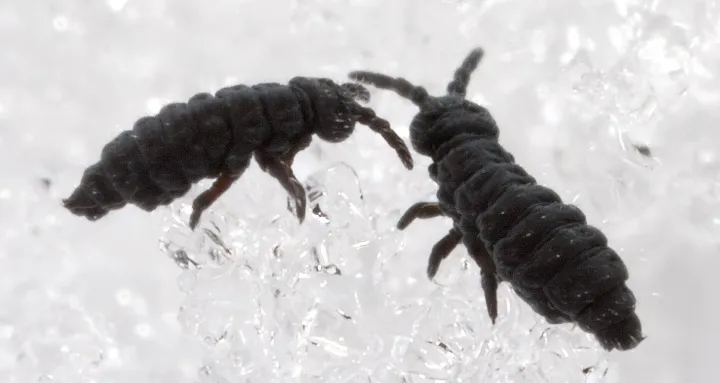
The snow flea (Hypogastrura nivicola) is a small arthropod belonging to the order Collembola, commonly known as springtails. These insects measure only 2 to 3 mm in length.
They are characterized by a dark blue or black color and possess a unique organ called the furcula, which allows them to jump several centimeters when disturbed.
Their bodies are covered in hydrophobic hairs, which provide protection against excessive moisture and allow them to thrive in damp environments like melting snow.
When massed together, these insects often appear as a dark, ash-like layer on the surface of the soil or snow, making them easily identifiable to the naked eye.
They are primarily soil-dwelling organisms but exhibit migratory behavior that makes them highly visible when environmental conditions favor their emergence.
What it damages
Snow fleas primarily consume decaying organic matter, fungi, algae, and microscopic debris within the soil surface, acting as decomposers.
However, when their populations are high and food sources are scarce, they may feed on young plant roots, causing damage to seedlings and sensitive transplants.
Feeding damage to the roots can weaken plants, leading to stunted growth, nutrient deficiency symptoms, and poor development of the vegetative parts.
The tiny lesions created by their feeding can serve as entry points for secondary pathogens like fungi and bacteria, which often result in root rot.
In greenhouses, they pose a significant threat to delicate greenhouse starts if the growing medium is kept overly damp with organic debris.
When it appears
As their name suggests, they are most active during the spring thaw, often appearing in large numbers on top of melting snow or wet spring soil.
They tolerate cold temperatures well and utilize the layer of melting water to migrate in search of areas with higher concentrations of nutrients.
In indoor environments like greenhouses, their life cycle can continue throughout the year provided that the humidity levels remain consistently high.
During the warmer and drier months, they retreat deep into the soil profile to avoid desiccation, making them invisible during summer seasons.
Optimal environmental conditions for their activity include temperatures near or slightly above freezing and high soil moisture levels.
Signs of infestation
A primary sign of a snow flea infestation is the presence of soot-like patches on the soil surface, particularly near the base of potted plants or seedlings.
When disturbed, these dark patches will scatter rapidly due to the jumping ability of individual springtails, which is a classic diagnostic symptom.
Yellowing leaves on seedlings despite regular watering often indicate that the plant's root system is being compromised by soil pests.
Visible presence of mold or algae on the surface of the soil is often linked to the presence of snow fleas, as they feed on these organisms.
Plants in infested soil may show signs of wilting or slow growth, especially when the soil remains continuously damp and lacks aeration.
Control measures
The most effective cultural control is to manage soil moisture; allowing the top layer of the growing medium to dry out will usually eliminate the population.
- Reduce irrigation frequency to ensure the soil surface is dry.
- Improve soil aeration by mixing in perlite or light organic amendments.
- Remove excess decaying organic matter from the surface.
- Apply a light dusting of wood ash or diatomaceous earth on the soil.
- Use sterile growing media to prevent the introduction of eggs or larvae.
For high-density populations in greenhouses, application of bio-insecticides or standard insecticides targeting soil insects may be necessary.
Sanitation practices, such as disinfecting planting trays and tools, are essential to stop the spread of these pests in professional growing operations.
Monitoring the soil moisture levels and avoiding overwatering is the cornerstone of preventing future outbreaks of snow fleas in sensitive crops.
Taxonomy
- Latin name
- Hypogastrura nivicola
- Family
- Hypogastruridae
- EPPO code
- HYPGNI
Discussion
No discussions yet — be the first.