
Hypogastrura
Hypogastrura
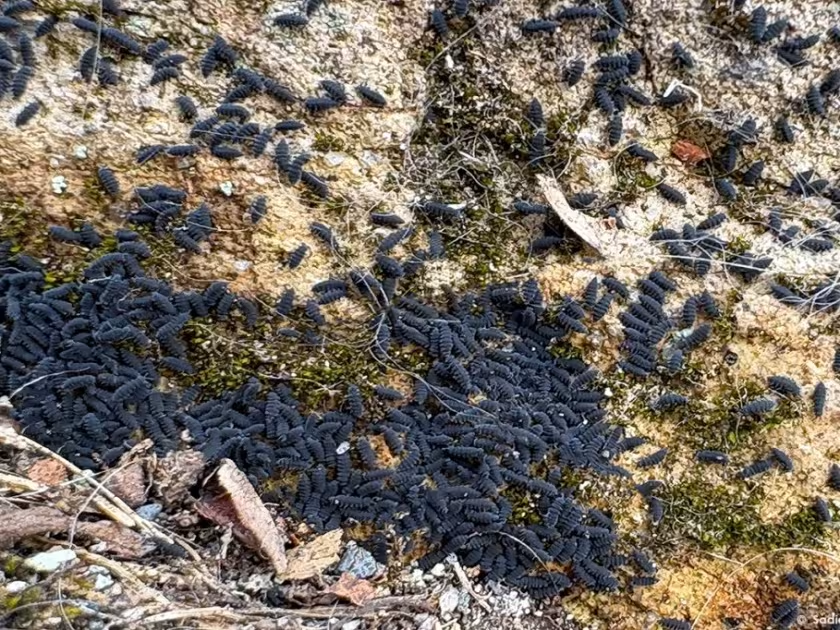
Description
How to identify
Hypogastrura belongs to the order of springtails or Collembola, specifically the family Hypogastruridae. These are tiny arthropods, typically measuring between 0.5 and 2 mm in length.
Physically, they resemble miniature insects and often display a grey, bluish, or nearly black coloration. Their bodies are covered in specialized setae, and they possess a unique jumping organ on the abdomen known as a furcula.
Both adults and nymphs share the same habitat and habits. They thrive in damp substrates rich in organic matter, where they can aggregate in massive numbers, forming ash-like patches on the surface.
Their biology is closely tied to moisture levels: they retreat into deeper soil layers when the surface dries and emerge in large numbers when the substrate is over-watered.
The life cycle of Hypogastrura is remarkably rapid, allowing them to establish multi-generational populations within just a few weeks under warm and humid conditions.
What it damages
Significant damage occurs primarily in greenhouses, nurseries, and on houseplants. Hypogastrura feed on young seedlings, germinating seeds, and delicate root tissues.
Plants with weakened root systems or those grown in waterlogged soil containing poorly composted peat are the most susceptible to infestation.
As they feed on the roots, these pests create micro-lesions that serve as entry points for various soil-borne pathogenic fungi and bacteria, leading to rot.
Plants affected by springtails show stunted growth, yellowing leaves, and in severe cases, the collapse of seedlings due to complete root system destruction.
They are particularly hazardous to sensitive crops like cucumbers, tomatoes, and ornamental flowers grown via direct seeding in humus-rich soil.
Signs of infestation
The first indicator of an infestation is the presence of numerous jumping "tiny dots" on the damp soil surface immediately after irrigation.
During visual inspection, plants appear generally sickly or stunted, even though there are no visible pests on the foliage or stems.
When carefully inspecting the roots, one may notice that root tips appear eaten away, discolored to a brown shade, or showing signs of fungal decay.
A thin white or grey film often forms on the soil surface, which, upon closer inspection, reveals itself to be a mass concentration of Hypogastrura individuals.
A distinctive sign is the "jumping" reaction of the soil surface particles when the container wall is gently tapped.
Control measures
The primary control strategy involves strict irrigation management and allowing the top layer of the substrate to dry out, which renders the environment inhospitable for reproduction.
It is strongly recommended to use sterilized potting mix free of uncomposted organic residues to prevent attracting these pests initially.
For chemical protection, soil drenching with systemic insecticides, such as those containing imidacloprid, can be effective when used according to label instructions.
Biological control through the introduction of entomopathogenic nematodes is a highly effective way to suppress pest populations within the soil substrate.
- Optimize air and soil moisture levels.
- Replace the top layer of soil with fresh, heat-treated sand.
- Use specialized insecticidal soil tablets or granules.
- Employ potato slice traps buried slightly in the soil to monitor and reduce populations.
Taxonomy
- Latin name
- Hypogastrura
- Family
- Hypogastruridae
- EPPO code
- HYPGSP
Discussion
No discussions yet — be the first.