
Hypogastrura armata
Hypogastrura armata
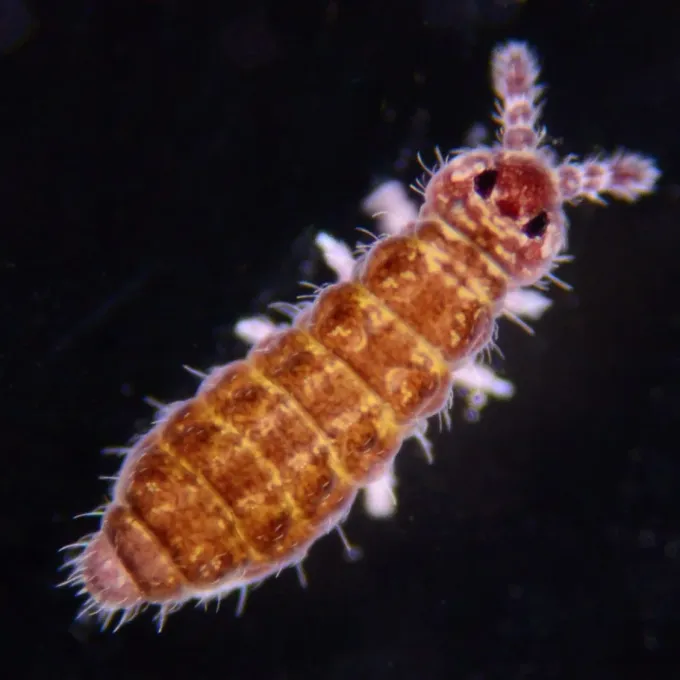
Description
How to identify
Hypogastrura armata is a species of springtail belonging to the order Poduromorpha within the class Collembola. These tiny arthropods are ubiquitous in soil ecosystems.
They measure approximately 1 to 2 mm in length and typically exhibit a dark grey or blackish coloration, making them distinguishable from other soil fauna.
The name "armata" refers to the presence of specific anal spines located at the posterior end of their body, a key diagnostic feature for identification under magnification.
Like other collembolans, they possess a furcula, a spring-like appendage used for jumping, which allows them to move rapidly when disturbed or when soil moisture changes.
They thrive in environments rich in organic matter and high humidity, where they reproduce rapidly, often forming dense colonies in nursery trays or moist greenhouse soils.
What it damages
These springtails primarily feed on decaying organic matter, but in high densities, they cause significant damage to the roots and stems of young seedlings.
They target germinating seeds, fragile roots, and the hypocotyl area of plants, leading to weakened growth, stunted development, and eventual seedling death.
Greenhouse-grown crops such as cucumbers, tomatoes, and ornamental flowers are particularly vulnerable, especially in the early stages of growth under intensive irrigation.
The physical damage caused by their feeding creates entry points for soil-borne pathogens like Pythium and Rhizoctonia, causing damping-off disease.
Large populations can destroy entire seed flats, leading to substantial economic losses for growers and requiring comprehensive replanting or remediation efforts.
When it appears
Activity is highest during the spring and early summer when moisture levels in both outdoor soil and greenhouse environments are optimal for their proliferation.
In greenhouses, where irrigation is frequent and temperatures remain stable, Hypogastrura armata can be present and damaging throughout the entire year.
High levels of autumn rainfall often trigger a resurgence in their activity as they move into the upper soil layers to feed and prepare for overwintering.
The developmental cycle is temperature-dependent, with the period between 15°C and 25°C being the most conducive for rapid maturation and reproduction.
During dry spells, they retreat deeper into the soil profile to stay moist, reappearing quickly once soil moisture is replenished through watering or rain.
Signs of infestation
Visible symptoms include small, irregular holes on cotyledons and subterranean stem necrosis, often mimicking the effects of fungal root rot.
When soil is saturated, a tell-tale sign is the appearance of a dusty, greyish layer moving across the surface, representing a mass emergence of springtails.
Affected plants exhibit symptoms of nutrient deficiency and wilting, despite the soil being moist, due to the destruction of their functional root hairs.
Checking the root zone of wilted seedlings often reveals a lack of root vigor, brown discoloration, and potential colonization by secondary rot organisms.
In infested pots, the soil surface may show small pits or eroded channels where the springtails have been feeding on damp organic particles and plant tissues.
Control measures
The most effective cultural control is irrigation management; avoiding oversaturation and ensuring proper drainage significantly reduces springtail survival.
Sterilizing potting media before use, either through heat or steam, is a highly recommended preventative measure to eliminate eggs and active stages of the pest.
Regular aeration of the topsoil layer helps it dry out more efficiently, creating an inhospitable environment for Hypogastrura armata development.
- Applying a thin layer of dry sand or ash on the soil surface can act as a physical barrier against their movement.
- Using appropriate insecticides labeled for greenhouse soil-borne pests if infestation thresholds are exceeded.
- Biological control through the introduction of predatory mites or insect-pathogenic fungi can help suppress their numbers naturally.
Maintaining high standards of greenhouse hygiene, including the prompt removal of crop residues, is essential to deprive them of their primary food sources.
Taxonomy
- Latin name
- Hypogastrura armata
- Family
- Hypogastruridae
- EPPO code
- HYPGAR
Discussion
No discussions yet — be the first.