
Hypogastrura manubrialis
Hypogastrura manubrialis
Description
How to identify
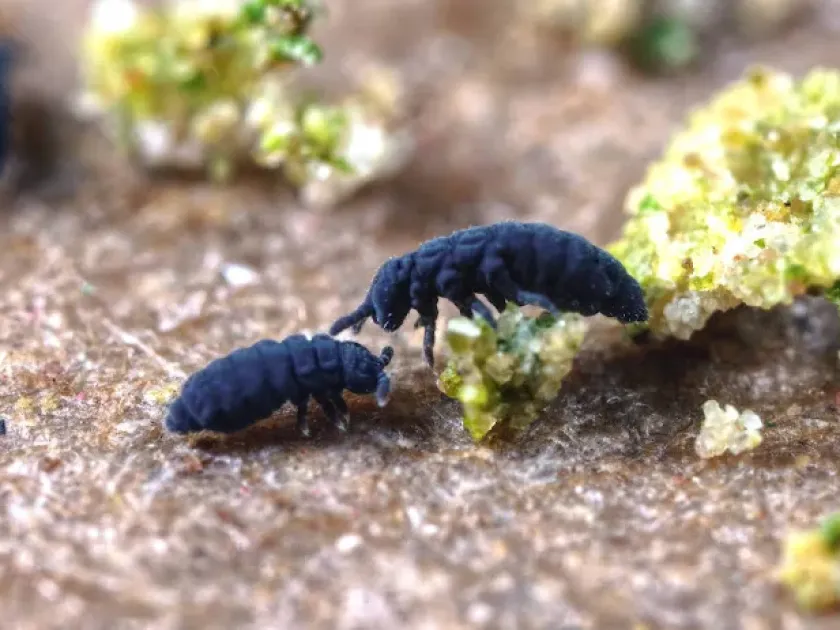
Hypogastrura manubrialis is a species of springtail belonging to the family Hypogastruridae. These are minute hexapods, typically measuring between 1 and 2 millimeters in length.
The body is cylindrical and generally colored dark grey or bluish-grey, which helps them blend into moist soil environments. They are wingless and possess a unique organ called the furcula.
The furcula is a forked jumping apparatus located under the abdomen that allows the springtail to propel itself into the air when disturbed, hence the common name "springtail."
Their life cycle involves several molting stages, and they thrive in humid conditions. They are primarily saprophagous but can become pests when their natural food source is scarce.
They are widely distributed and can be found in a variety of habitats, though they are most common in agricultural soils rich in organic matter and in greenhouse substrates.
What it damages
Hypogastrura manubrialis is known to cause damage to germinating seeds, tender seedlings, and the roots of young vegetable and ornamental plants.
In greenhouses, these insects often feed on the delicate hypocotyls of young seedlings, causing them to wilt or collapse shortly after emergence, leading to stand reduction.
Mushroom cultivation is also significantly affected, as these springtails feed on the mycelium and the fruiting bodies of mushrooms, resulting in pitted and damaged produce.
Beyond direct feeding, the wounds caused by their mouthparts serve as entry points for various soil-borne pathogens, including bacteria and fungi that cause root rot.
High populations of this pest can cause serious economic damage, particularly in nursery settings where young, sensitive plants are grown in controlled environments.
When it appears
These pests are most active during periods of high humidity, such as early spring or during heavy rainfall, which keep the soil surface moist.
In protected greenhouse environments, the pest can remain active throughout the entire year, provided that soil moisture and organic matter levels remain constant.
The peak period of damage occurs during the germination phase, when seeds and early seedlings provide a highly accessible and nutritious food source for the population.
While they are cold-tolerant, their metabolic activity and reproduction rates decrease significantly in winter, only to accelerate rapidly as temperatures rise in the spring.
Periods of extreme heat or dryness lead to a reduction in activity near the surface, as the pests retreat into deeper, moisture-retaining layers of the soil.
Signs of infestation
Signs of an infestation often include the appearance of small, round pits or holes on the leaves and stems of young seedlings located near the soil level.
An easy identification method involves observing the soil surface after a heavy watering or irrigation, when large numbers of the pests may be visible on the top layer.
If you disturb the soil surface with your finger, the sudden, mass jumping of tiny, grey-colored dots is a definitive indicator of a springtail infestation.
Slow growth of transplants that are otherwise provided with adequate light and nutrients often suggests root damage caused by these insects.
In mushroom beds, symptoms include irregular surface damage and the appearance of small cavities on the mushroom caps, which may be covered in "dust-like" debris.
Control measures
The most effective management strategy is to maintain proper soil moisture levels, as excessive dampness creates the ideal environment for population explosions.
Strict sanitation practices, such as the removal of decomposing organic waste and the sterilization of potting mixes, can significantly reduce the potential for outbreaks.
Applying soil-applied insecticides can be highly effective when initial damage is observed on the seedlings, particularly using products registered for soil pest management.
Biological control options, including the use of predaceous mites (e.g., Hypoaspis miles) or entomopathogenic fungi, have shown promise in greenhouse vegetable and mushroom production.
- Ensure optimal drainage in pots and beds.
- Use pasteurized soil for starting seeds.
- Avoid over-watering greenhouse crops.
- Use sticky traps for monitoring adult presence.
- Rotate crops to break the life cycle of soil-dwelling pests.
Taxonomy
- Latin name
- Hypogastrura manubrialis
- Family
- Hypogastruridae
- EPPO code
- HYPGMA
Discussion
No discussions yet — be the first.