
Brown stink bug
Hymenarcys nervosa
Description
How to identify
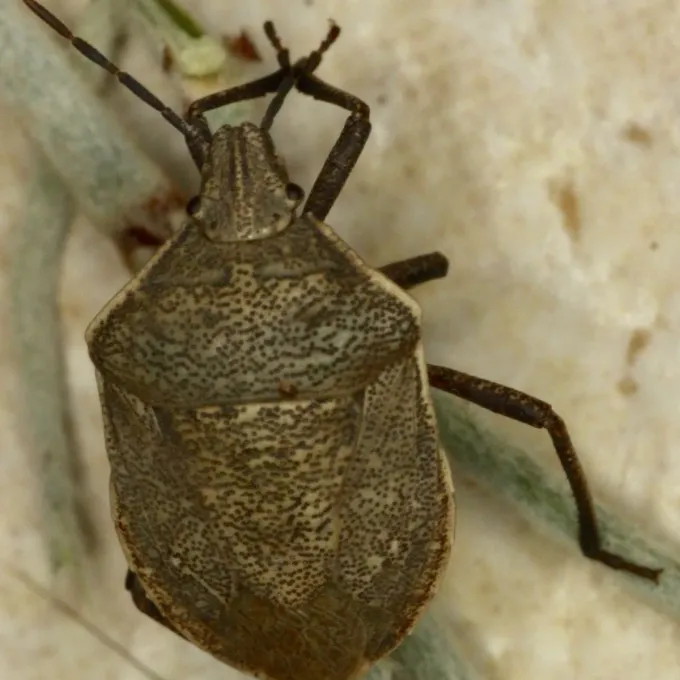
The brown stink bug (Hymenarcys nervosa) is a member of the Pentatomidae family, commonly known as stink bugs. These insects are characterized by their shield-shaped body, which is typically brown or tan in color.
Adults possess leathery wings folded flat over their backs and a prominent scutellum (shield). They have a specialized rostrum (mouthpart) used to pierce plant tissues and extract nutrients.
The texture of their cuticle is often pitted or rough, which provides excellent camouflage against soil, bark, or decaying organic matter in fields.
Their life cycle includes egg, nymph, and adult stages. Nymphs undergo several instars, gradually increasing in size and developing wing pads before reaching maturity.
During the mating season, females lay clusters of eggs on the underside of leaves, which protects them from environmental extremes and many natural predators.
What it damages
This pest primarily attacks various grain crops, including wheat, barley, and rye. In addition to cereals, it can also feed on various vegetable crops and herbaceous weeds.
As a sap-sucking insect, the brown stink bug injects salivary enzymes into plant tissue. These enzymes disrupt internal physiological processes, causing cell death at the feeding site.
Significant damage occurs during grain formation. Feeding on developing kernels leads to shriveled grain, reduced test weight, and compromised milling or baking quality.
Vegetative damage on younger plants manifests as stunted growth, yellowing, and deformation, which reduces the overall photosynthetic capacity of the plant.
In high populations, these bugs can cause severe economic losses, particularly when their feeding period coincides with sensitive stages of crop development.
When it appears
Adults typically emerge from hibernation sites in the spring when temperatures consistently rise, moving to fields to search for emerging food sources.
Population peaks generally occur in mid-summer, aligning with the grain-fill stage of crops. This is when the insect is most active and most destructive.
The number of generations per year is heavily dependent on regional climate, with warmer environments supporting multiple overlapping life cycles.
As autumn approaches and temperatures drop, adults seek shelter in crop residues, leaf litter, or soil crevices to survive the winter season in a state of diapause.
Understanding these seasonal dynamics is crucial for scouting programs and determining the appropriate timing for intervention strategies.
Signs of infestation
The most direct sign of an infestation is the presence of the bugs themselves, often visible on the stems or heads of plants during the early morning or late evening.
Feeding sites are identified by small, whitish, or necrotic spots on leaves and grain. These punctures often remain as permanent discolored lesions on the plant surface.
Kernels may appear dented, shrunken, or chalky due to the insect's enzyme injections during the development phase, significantly impacting grain quality.
Localized patches of stunted or stressed plants in a field are strong indicators of stink bug activity, warranting a closer inspection of the area.
Secondary fungal infections often occur at the site of insect feeding punctures, leading to further decay of the plant tissues and potential reduction in yield.
Control measures
Integrated Pest Management (IPM) is the most effective approach, starting with crop rotation to disrupt the insect's habitat and life cycle.
Good sanitation practices, such as removing crop residues and controlling weeds around field margins, reduce the availability of overwintering sites.
Chemical control should be reserved for instances where scouting confirms that pest populations exceed established economic injury thresholds.
- Scouting fields using sweep nets or visual observation during grain filling.
- Targeted application of insecticides with contact and systemic activity.
- Preservation of natural enemies and predatory insects in the ecosystem.
- Managing field borders to eliminate host weeds that attract bugs.
Consistent monitoring and the selective use of insecticides help maintain bug populations below levels that would cause significant economic damage to the harvest.
Taxonomy
- Latin name
- Hymenarcys nervosa
- Order
- Hemiptera (bugs, aphids, leafhoppers)
- Family
- Pentatomidae
- EPPO code
- HYMNNE
Discussion
No discussions yet — be the first.