
Hymenarcys stink bug
Hymenarcys
Description
How to identify
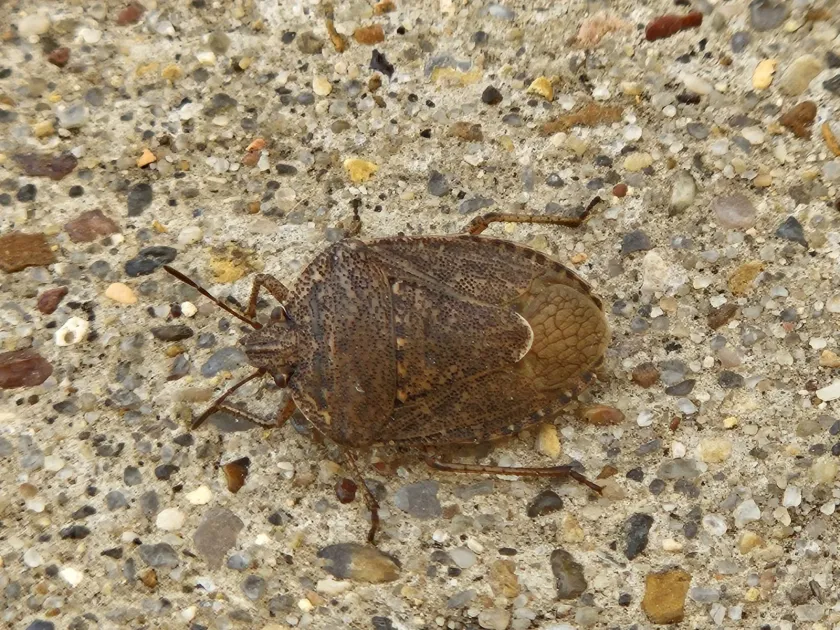
The genus Hymenarcys belongs to the Pentatomidae family, commonly known as stink bugs. These insects possess a characteristic shield-shaped body and are typically brown or gray, which helps them camouflage effectively within vegetation and crop debris.
Adult bugs generally reach sizes between 8 and 12 mm. They have a flattened head with distinct indentations and a pronotum with specific edge configurations. Nymphs resemble adults but are smaller, lack fully developed wings, and often exhibit brighter or more intricate color patterns.
Their life cycle involves incomplete metamorphosis. Females typically lay eggs in clusters on the undersides of leaves or along plant stems. Warm, stable temperatures are crucial for the development of their eggs and nymphs throughout the growing season.
Overwintering usually occurs in the adult stage. During the cold months, they seek shelter in leaf litter, dense grass, or under soil debris. As spring temperatures rise, they emerge to search for host plants and begin their reproductive cycle.
Depending on the climatic zone, Hymenarcys populations may undergo one or two generations per year. Peak activity is usually observed during the summer months when crops are in the most susceptible stages of development.
What it damages
Stink bugs of the genus Hymenarcys are polyphagous, meaning they feed on a diverse array of plants. Their ability to switch between crops and wild weeds makes them a persistent challenge for farmers throughout the growing season.
Corn and various cereal crops are particularly vulnerable to these pests. When feeding on developing kernels, the bugs inject enzymes that disrupt grain formation, often leading to shriveled or deformed seeds that significantly reduce yield quality.
Soybeans and other legumes are also frequent targets. The insects pierce pods to feed on the developing seeds, which causes aborted growth, discoloration, and structural damage to the beans inside, impacting both market value and seed viability.
Beyond direct damage, the puncture wounds created by their mouthparts serve as entry points for secondary pathogens. Bacterial and fungal infections often follow, potentially destroying plant tissues that the bugs themselves did not directly consume.
Heavy infestations can result in substantial economic losses, especially when the pest density reaches a threshold that threatens the overall plant health and grain filling processes during late-season crop development.
Signs of infestation
Initial signs of infestation often include wilted patches or discolored spots on foliage. Tissue at the feeding site loses turgor pressure quickly and may dry out or exhibit necrotic lesions due to the digestive enzymes injected by the bugs.
In cereal crops, look for thin, underdeveloped ears and shriveled grains. If feeding occurs early, entire kernels may fail to fill, leaving the ear partially empty, which is a clear indicator of localized pest activity in the field.
On legumes, symptoms manifest as pod abortion or brown spots on the pod surface. When pods are opened, the seeds may appear wrinkled, malformed, or infected with mold, indicating that the bugs have been feeding on the internal contents.
Detecting Hymenarcys can be difficult due to their excellent mimicry. Frequent visual inspections of the undersides of leaves or the use of sweep nets in the early morning or late evening are the most effective methods for confirmation.
Accumulations of excrement, appearing as small, dark, pinpoint-like spots on stems and leaves, are also reliable indicators of their presence. These spots often cluster in areas where the insects have been resting or feeding for extended periods.
Control measures
The primary control strategy involves crop rotation to disrupt the insect's life cycle. Maintaining clean fields by eliminating host weeds is essential, as these weeds often serve as a bridge for the bugs before they move onto primary crops.
Agrotechnical practices, such as deep fall plowing, can help destroy overwintering sites and reduce the survival rate of adults. Removing harvest residues immediately after the season helps minimize the habitat available for the next generation.
Biological control methods include the conservation and release of natural enemies, such as egg parasitoids. These beneficial insects can significantly suppress populations if managed correctly within an integrated pest management (IPM) program.
When economic thresholds are exceeded, chemical control via insecticides is necessary. Effective compounds often include pyrethroids, but they must be applied according to label guidelines, focusing on the timing of nymph development for maximum efficacy.
Monitoring using pheromone or light traps is recommended to determine the optimal timing for intervention. Early detection allows for targeted treatments, which reduces the need for broad-spectrum insecticide application across the entire field.
Taxonomy
- Latin name
- Hymenarcys
- Order
- Hemiptera (bugs, aphids, leafhoppers)
- Family
- Pentatomidae
- EPPO code
- HYMNSP
Discussion
No discussions yet — be the first.