
Great silver water beetle
Hydrous
Description
How to identify
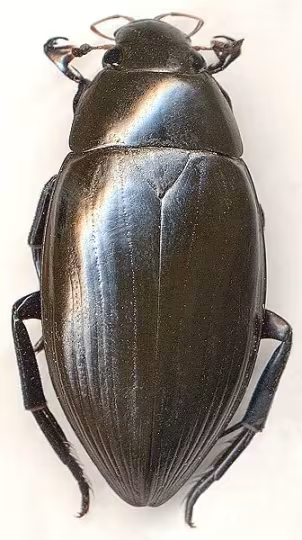
The great silver water beetle (Hydrous aterrimus) is one of the largest aquatic beetles, with adults reaching lengths of 40 to 50 mm. Its body has an oval, convex shape and a deep black color with a subtle metallic sheen.
A distinctive feature of the imago is the presence of long maxillary palps, which are often mistaken for antennae. On the underside of the thorax, there is a prominent keel that ends in a sharp spine extending backward.
The larvae of this beetle differ significantly from the adults; they have a massive, slightly curved body of grey or brownish color. Their heads are equipped with powerful jaws, adapted for a predatory lifestyle.
The lifecycle consists of four distinct stages: egg, larva, pupa, and imago. The female lays her eggs inside a protective silk-like cocoon, which floats on the water surface or is attached to aquatic plants.
Pupation occurs not in the water, but in the soil on the bank of the pond, where the larva digs a specialized chamber. This transition period makes the population vulnerable to environmental disruption.
What it damages
The primary damage caused by the great silver water beetle occurs in specialized fish farming ponds and hatcheries. While the adults are largely herbivorous, the larvae are active predators.
These larvae pose a direct threat to fish fry and small fingerlings inhabiting artificial ponds. They are capable of attacking and consuming young fish, leading to significant losses in stock density.
In ponds with excessive aquatic vegetation, high beetle populations can reduce overall productivity. This is particularly problematic for farms focusing on high-value species that are vulnerable during their early development.
Although adults feed mainly on decaying plant matter and algae, high densities of beetles may cause damage to young aquatic shoots, impacting the pond's ecological balance.
In natural ecosystems, the beetle acts as a scavenger, but within intensive aquaculture systems, it is classified as an undesirable pest that necessitates population management.
When it appears
The active life cycle begins in spring when the water temperature in the pond's littoral zone reaches sufficient levels for the beetles to emerge from their wintering sites.
The peak activity and breeding period occur during June and July. During this time, mass egg-laying happens, and the development of the first larval generation takes place in the warm water.
By mid-August, the larvae complete their development and migrate to the land for pupation. Their activity within the water decreases significantly during this phase of the season.
Adult beetles remain active until late autumn. As water temperatures drop, they relocate to bottom sediments or mud to enter diapause, where they overwinter until the following spring.
The duration of each developmental stage is highly dependent on regional climatic conditions and the thermal profile of the pond water.
Signs of infestation
The first indicator of a large beetle population is the visual sighting of large black beetles swimming near the surface during the warm morning or evening hours.
The presence of egg cocoons floating on the water or attached to the stems of aquatic plants confirms active breeding and a high infestation risk within the pond.
In fish farming, an unexpected increase in fry mortality in the coastal zones of the pond, without evidence of pathogenic diseases, often points to predation by beetle larvae.
Searching through pond sediment or vegetation during pond maintenance can reveal the presence of larvae, indicating a high level of colonization by this species.
Observations of chewed plant stems or damaged aquatic greenery can serve as an indirect sign of high imago activity within the pond's ecosystem.
Control measures
Effective management begins with proper pond maintenance. Regular clearing of excessive aquatic vegetation removes critical egg-laying sites and larval habitats.
Draining and drying the pond bed during the off-season is a highly effective control measure, as it leads to the desiccation and death of larvae and pupae residing in the soil.
Biological control, such as introducing fish species that feed on beetle larvae, can help maintain the beetle population below economic damage thresholds.
Light traps can be utilized during the nights in peak season to attract and remove adult beetles from the pond area, effectively reducing the number of breeding pairs.
Chemical control measures are generally avoided in aquaculture to ensure water quality and fish health, making physical and agrotechnical management the preferred strategies.
Taxonomy
- Latin name
- Hydrous
- Order
- Coleoptera (beetles)
- Family
- Hydrophilidae
- EPPO code
- HYOSSP
Discussion
No discussions yet — be the first.