
Hydrochus elongatus
Hydrochus elongatus
Description
How to identify
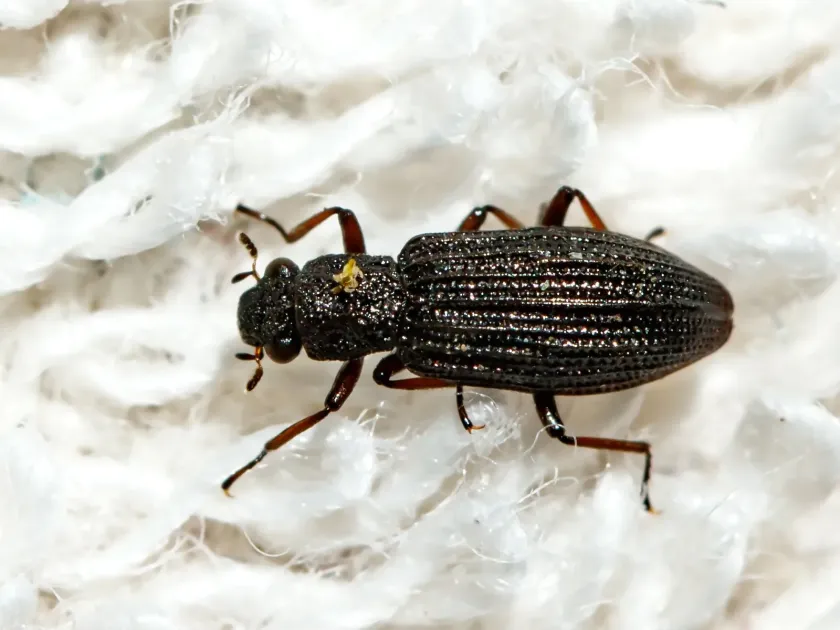
Hydrochus elongatus is a small water beetle belonging to the family Hydrochidae (formerly part of Hydrophilidae) within the order Coleoptera. It is recognized for its elongated body, typically measuring between 3 and 4 millimeters in length.
The physical appearance of this beetle is defined by coarse puncturing on the pronotum and elytra. The surface of its body often has a dull or brownish coating, which allows it to camouflage effectively against the muddy or vegetated environment of its habitat.
Its head is closely attached to the pronotum, and the antennae are short with a clubbed tip, designed to capture small air bubbles from the water surface for respiration. This adaptation is critical for its semi-aquatic lifestyle.
These beetles are slow-moving, often observed crawling along submerged plant stems. They thrive in standing or slow-moving water bodies, including irrigation ditches and drainage canals that may run adjacent to agricultural fields.
While they are primarily inhabitants of natural aquatic systems, their ability to colonize man-made water structures makes them a potential risk for crops that require flooding or constant high moisture levels.
What it damages
Damage caused by Hydrochus elongatus is primarily observed in riparian zones and fields with intensive irrigation. Both adult beetles and their larvae can inflict direct damage on young seedlings of aquatic or semi-aquatic crops.
Adult beetles feed on the plant epidermis, leading to the creation of holes or necrotic spots that hinder photosynthesis and overall plant vitality. This feeding activity is particularly dangerous during the early stages of plant development.
The larvae are even more damaging as they burrow into plant stems. This internal feeding weakens the structure of the plant, stunts its growth, and can result in the entire plant collapsing or failing to reach maturity.
Furthermore, the physical injury caused by the larvae serves as an entry point for various secondary infections, including fungal and bacterial pathogens. These pathogens often cause significantly more damage to the crop than the insects themselves.
In regions where agricultural land is integrated with water management systems, outbreaks of these beetles can lead to measurable yield losses if not identified and managed promptly.
When it appears
The life cycle of Hydrochus elongatus is linked to seasonal temperature fluctuations. Adult activity commences in early spring as soon as water temperatures reach 10–12°C, marking the start of their feeding and mating season.
Females deposit their eggs within the tissues of aquatic plants, a strategy that protects the developing embryos from predators and provides the larvae with an immediate food source upon hatching.
The larval stage lasts approximately 3 to 5 weeks, depending on environmental temperatures. Once completed, the larvae move to moist soil or stem debris in the coastal zone to undergo pupation.
The new generation of adults typically emerges during the summer months. They continue to feed actively throughout the warm season to store energy for the winter months ahead.
With the approach of autumn, the beetles retreat into the silt at the bottom of water bodies or seek refuge in soil crevices, where they enter a period of dormancy, awaiting the return of spring conditions.
Signs of infestation
The presence of this pest is first indicated by irregular feeding patterns on leaves near the water line, such as small "windows" or circular holes. These patterns are often accompanied by signs of wilting in the affected foliage.
A closer inspection of the stems near the root zone may reveal longitudinal scars or exit holes, which are characteristic of larval burrowing activity. Such damage is a clear signal of an internal infestation.
Plants affected by the pest often display a yellowish discoloration. This nutrient deficiency is caused by the disruption of the plant's vascular system, preventing water and minerals from reaching the upper leaves.
An unpleasant smell of decaying tissue near the base of the plant often indicates that secondary pathogens have colonized the tunnels created by the larvae, accelerating the decline of the crop.
Observation of the adult beetles on the underside of leaves during the morning hours provides the most direct evidence of the pest's presence and justifies the implementation of control measures.
Control measures
Management begins with cultural practices, such as the regular maintenance of irrigation channels and the removal of excess aquatic vegetation, which serves as both a breeding ground and a food source for the beetles.
Chemical control should be used sparingly, as these beetles inhabit delicate aquatic ecosystems. Applications must be targeted and ideally restricted to environments where the risk to aquatic life and local fisheries can be minimized.
Biological control, including the use of specific microbial agents or natural predators, represents a more sustainable approach. However, the efficacy of these methods is highly dependent on environmental conditions.
Field monitoring, including the use of mesh nets for sampling water populations, is essential for timing interventions. Detecting the pest early allows for the use of spot-treatments rather than widespread application.
Finally, crop rotation and the selection of varieties that are more tolerant to moisture can help reduce the overall impact of Hydrochus elongatus on agricultural productivity in vulnerable areas.
Taxonomy
- Latin name
- Hydrochus elongatus
- Order
- Coleoptera (beetles)
- Family
- Hydrophilidae
- EPPO code
- HYCHEL
Discussion
No discussions yet — be the first.