
Homoxyrrhepes punctipennis
Homoxyrrhepes punctipennis
Description
How to identify
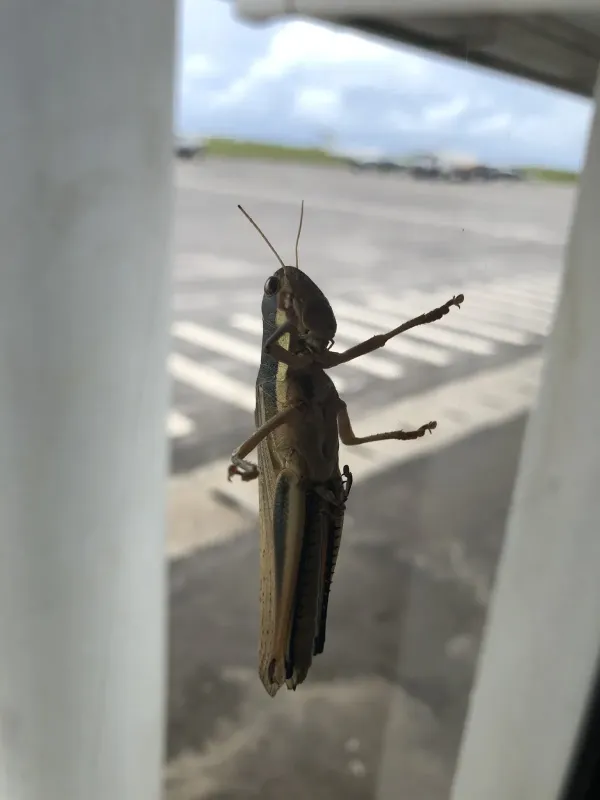
Homoxyrrhepes punctipennis is a species of grasshopper belonging to the family Acrididae. These insects are characterized by their robust bodies, well-developed hind legs adapted for jumping, and functional wings capable of long-distance movement.
Their coloration is typically a mix of green, brown, and tan tones, providing excellent camouflage within grasslands and cereal crops. The defining feature that gives the species its name is the presence of distinctive dark punctate markings on the wings and body.
Females are generally larger than males and possess a strong ovipositor. This organ is specialized for depositing egg pods into the soil or suitable plant tissues, which ensures the protection of the offspring during developmental stages.
Nymphs resemble smaller, wingless versions of the adults. As they mature through several instars, they gradually develop full wings and reproductive organs, becoming more mobile and destructive with each stage.
These grasshoppers are highly active during daylight hours, especially in warm, sunny conditions. They thrive in open habitats and often migrate from uncultivated areas to dense crop fields in search of succulent food sources.
What it damages
The primary economic impact of this species is associated with its feeding habits on various agricultural crops. Cereal grains, legumes, and certain technical crops are particularly susceptible to heavy infestation during their active growth phase.
Both nymphs and adults consume large quantities of foliage. Intense feeding can lead to severe defoliation, which severely hinders the plant's photosynthetic capacity, resulting in stunted growth and significant yield losses.
Beyond leaf tissue, the insects often attack reproductive structures, such as flower buds, panicles, and developing grain heads. This damage directly affects the harvest potential of the crop, sometimes rendering the yield unusable.
During periods of drought, these grasshoppers are forced to migrate from dried-out pastures to irrigated farmland. This behavior often leads to localized, high-density infestations that can devastate crop margins within a very short period.
Feeding wounds created by the insects also serve as entry points for various phytopathogens, including fungi and bacteria. Consequently, even mild infestations can trigger broader disease outbreaks within the crop.
When it appears
The life cycle of Homoxyrrhepes punctipennis is highly seasonal, dictated by ambient temperature and moisture levels. The species typically overwinters in the egg stage, with pods buried in the soil to survive the winter cold.
Springtime warming triggers egg hatching. The emerging nymphs begin feeding immediately, posing a threat to early-season crop development. This stage is critical for assessing future population levels.
Adults emerge mid-to-late summer, which is the period of peak mobility and dispersal. Mass migrations often occur as adult populations expand their territory, searching for better nutrition to support mating and egg production.
Depending on the climatic zone, the species may complete one or more generations annually. In regions with long growing seasons, the rapid turnover of generations can make population control significantly more difficult.
As autumn temperatures drop, adults become less active. Females invest energy into laying eggs, ensuring the next generation is well-distributed in the soil before the adults die off at the end of the season.
Signs of infestation
The most immediate sign of an infestation is the ragged appearance of leaf edges. Grasshoppers characteristically feed from the margins or midribs of leaves, leaving behind jagged, uneven patterns compared to the cleaner cuts made by some other pests.
The presence of grasshopper frass (excrement) on the ground or on the lower leaves of plants is a strong indicator of an active population. Close observation during the early morning is recommended to identify the insects themselves.
- Localized patchiness or "thinning" of the crop canopy.
- Noticeable damage to grain heads and panicles.
- Audible stridulation (chirping) from males in the field.
- Discovery of egg pods in the topsoil along fence lines or field edges.
Infestations often originate at field borders adjacent to grasslands. Farmers should monitor these margins regularly to catch the presence of nymphs before they move into the interior of the crop field.
If large numbers of insects are observed jumping as people or machinery move through the field, this is a clear sign that the threshold for intervention may have already been crossed.
Control measures
Cultural control, such as deep tillage of fields after harvest, is an effective strategy to destroy egg pods stored in the soil. This prevents the next generation from reaching the surface in the following spring.
Managing weeds and maintaining clean field borders helps reduce the primary habitat where these grasshoppers survive and multiply before invading crops. Removing alternative hosts limits their ability to build up large populations.
Chemical intervention remains a necessary tool for large outbreaks. Insecticides should be applied during the early nymph stages when insects are more vulnerable and less mobile, targeting the areas where they congregate.
Biological control, including the use of entomopathogenic fungi or natural predators like birds and parasitic wasps, can help manage populations in an integrated pest management (IPM) framework.
Consistent monitoring and scouting are essential for effective management. By tracking population growth and timing applications of control measures, farmers can prevent significant economic damage and ensure crop protection.
Taxonomy
- Latin name
- Homoxyrrhepes punctipennis
- Order
- Orthoptera (locusts)
- Family
- Acrididae
- EPPO code
- HMXRPP
Discussion
No discussions yet — be the first.