
Hippiscus ocelote
Hippiscus ocelote
Description
How to identify
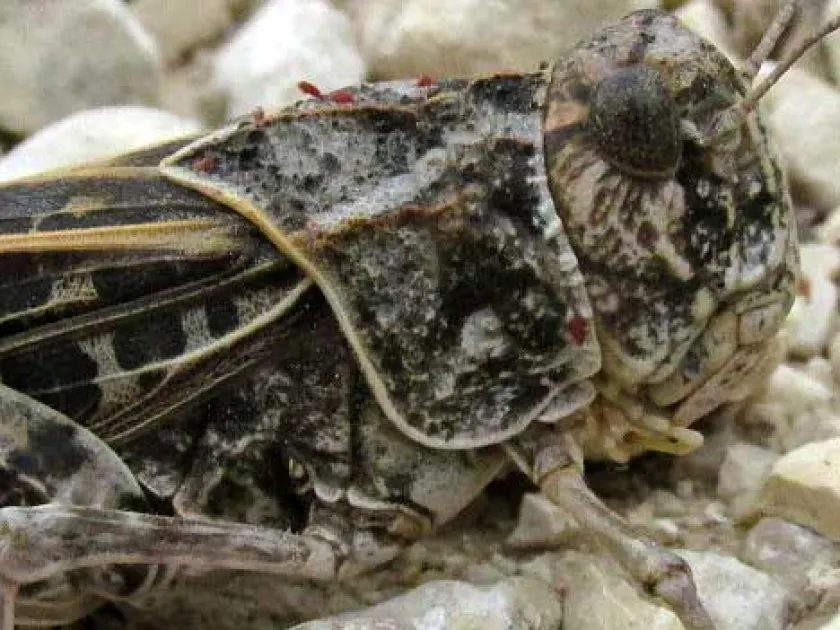
Hippiscus ocelote belongs to the family Acrididae (grasshoppers) within the order Orthoptera. This species is easily recognized by its robust body and cryptic coloration, which features mottled brown and grey patterns that mimic the skin of an ocelot, providing excellent camouflage.
Adults typically measure between 3 and 5 centimeters in length. They possess powerful hind legs designed for jumping and well-developed wings, often decorated with dark, irregular spots that are characteristic of this specific taxon.
The life cycle involves incomplete metamorphosis, progressing through egg, nymph (five instars), and adult stages. Nymphs resemble adults but are smaller and lack fully functional wings until the final moult.
Highly sensitive antennae and large compound eyes allow these grasshoppers to detect vibrations and movement rapidly, making them difficult to approach or trap manually in the field.
Various color morphs exist within the population, often correlated with the specific habitat conditions, such as the color of the local soil and surrounding dry vegetation.
What it damages
As a polyphagous insect, Hippiscus ocelote poses a significant threat to a wide range of agricultural crops, including cereals like wheat, barley, and maize, where they voraciously consume the leaf blades.
Beyond cereal crops, this pest also targets leguminous plants and various vegetable crops, often moving into cultivated areas when wild vegetation becomes scarce or dries up.
The damage is caused by both adults and late-stage nymphs, which possess strong mandibles capable of tearing through tough plant tissues, leading to reduced photosynthetic capacity and stunted growth.
In high population densities, these insects can defoliate entire fields, leaving only structural stems behind. Such outbreaks can lead to complete yield loss if not mitigated in time.
Furthermore, they often target the reproductive parts of plants, such as ears and panicles, directly impacting the quality and quantity of the grain harvest.
When it appears
The life cycle of this pest is heavily influenced by seasonal temperature fluctuations. Eggs overwinter in the soil within protective pods, which are buried to ensure survival during harsh winter months.
Hatching typically begins in the spring when soil temperatures rise sufficiently, allowing the nymphs to emerge and immediately start feeding on young, tender vegetation.
Adult activity peaks during the mid-summer months, typically June and July. During this time, the grasshoppers are most mobile and capable of spreading across vast agricultural landscapes.
By late summer and early autumn, mating occurs, and females lay eggs back into the soil, completing the yearly cycle. Understanding these timing windows is crucial for successful pest management.
Climate patterns can shift these cycles slightly, so field monitoring should commence as soon as primary crops germinate to catch early nymph stages.
Signs of infestation
The most common sign of an infestation is the presence of irregular, notched feeding marks along the leaf margins. Unlike some other pests, this grasshopper creates ragged, uneven edges on foliage.
Small, dark, granular fecal droppings found at the base of plants or on leaves are a reliable indicator that Hippiscus ocelote is present in the vicinity.
Massive jumping activity when walking through the field is a classic sign of high population density. The sudden movement of many grasshoppers away from the path is impossible to miss.
Overall crop health declines rapidly during an outbreak, with plants appearing stressed, yellowed, and visibly thinner, leading to noticeable gaps in the crop stand.
During the quiet periods of dawn and dusk, the rhythmic chirping or stridulation of males is often audible, helping to locate the center of an infestation.
Control measures
Effective control strategies start with cultural methods, such as deep autumn ploughing, which disturbs egg pods in the soil, exposing them to environmental elements and natural predators.
Maintaining clear field borders and managing weeds are essential, as these areas often serve as initial breeding grounds and reservoirs for the grasshopper population.
Chemical control involving approved insecticides is necessary when the population exceeds the economic threshold, preferably targeting nymphs before they reach the highly mobile adult stage.
Promoting a healthy ecosystem that supports natural predators, such as insectivorous birds and parasitic wasps, can provide long-term biological suppression of the pest.
- Deep soil cultivation (ploughing).
- Regular field monitoring for early nymphs.
- Weed management on field margins.
- Judicious use of contact insecticides.
- Encouraging natural predator populations.
Taxonomy
- Latin name
- Hippiscus ocelote
- Order
- Orthoptera (locusts)
- Family
- Acrididae
- EPPO code
- HPSCOC
Discussion
No discussions yet — be the first.