
Hippiscus
Hippiscus
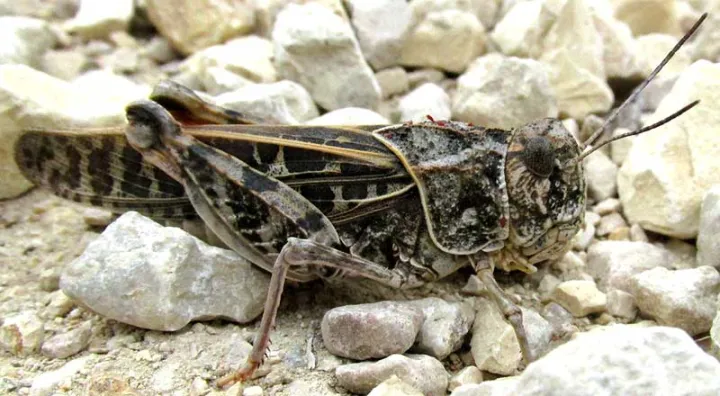
Description
How to identify
Hippiscus is a genus of band-winged grasshoppers belonging to the family Acrididae. These insects are characterized by a robust, stocky body, often featuring a textured surface and cryptic coloration that allows them to blend seamlessly with bare soil or dry vegetation.
Morphologically, they are distinguished by their relatively large size and the specific structure of the pronotum. Many species within this genus possess hind wings with bright, vivid colors that serve as a startling defense mechanism, suddenly revealed during flight to deter potential predators.
The nymphs (immature stages) resemble smaller, wingless versions of the adults. Their development involves several instars, during which the insect undergoes a series of molts, progressively increasing in size as they transition toward adulthood.
Systematically, this genus is part of the subfamily Oedipodinae, known for species capable of rapid population growth under favorable climatic conditions. They are primarily ground-dwelling insects, rarely perching high above the soil surface.
Studying members of this genus is critical for understanding the population dynamics of grasshoppers in regions dominated by steppe and arid ecosystems, where they can exert significant pressure on local vegetation and agricultural resources.
What it damages
This pest prefers a wide range of herbaceous plants, including wild grasses and forage crops. During periods of high population density, they can cause significant damage to pastures by consuming young green shoots down to the soil level.
Damage to cereal crops during early vegetative stages is particularly critical. By gnawing on the tender tissues of young seedlings, these insects can lead to thinning stands and overall suppression of plant growth and development.
Beyond cultivated cereals, the diet includes various weed species, making Hippiscus quite polyphagous. This dietary flexibility complicates population control, as the pest can easily shift between food sources within and around the field.
The primary damage manifests as mechanical destruction of leaf blades and stems, reducing the plant's photosynthetic surface area. In cases of mass outbreaks, complete defoliation of field sections can occur, leading to substantial yield losses.
Furthermore, the physical wounds inflicted by the insects' mouthparts often create entry points for secondary infections—bacterial and fungal pathogens—which further weaken the crop and contribute to overall stress.
When it appears
The activity of adults and late-instar nymphs typically peaks during the middle and late summer months. During this period, feeding is most intensive as the insects accumulate the resources necessary for reproduction and overwintering.
The life cycle is closely tied to soil temperature regimes. Eggs are deposited in the upper layers of the soil, where the next generation enters a state of diapause to survive unfavorable winter conditions.
In spring, as the soil warms, nymph emergence begins. Early developmental stages are confined to the egg-laying sites, after which the insects begin active migration in search of rich, abundant feeding grounds.
The peak of damage intensity usually coincides with the active growth phases of agricultural crops. The lifespan of a single generation spans one full calendar year, with the species typically following a monocyclic development pattern.
Climatic anomalies, such as prolonged droughts, often trigger population outbreaks, as dry conditions facilitate the survival of egg clutches and successful transition through nymphal instars.
Signs of infestation
The first sign of infestation is the appearance of jagged, "bitten" leaf edges on crop plants. Damage often manifests as large, irregular holes or complete removal of leaf tissues, leaving only the veins intact.
During daylight hours, walking through the field often triggers characteristic flushing, where the insects suddenly take flight, revealing their colorful hind wings, before landing abruptly a few meters away.
The presence of droppings in the form of small, dry, granular pellets on leaves and beneath plants is another indirect indicator of active grasshopper feeding within the affected area.
In cases of high-density infestations, a distinct stridulation (chirping) sound is audible, especially noticeable during the cooler morning and evening hours when the insects are most active.
Inspecting field margins and abandoned fence rows helps identify emergence hotspots, where the density of nymphs per square meter may significantly exceed the established economic threshold for pest control.
Control measures
Integrated pest management includes agrotechnical methods designed to create unfavorable conditions for egg deposition. Deep plowing and disking of identified egg-laying sites are effective ways to significantly reduce the survival rate of the upcoming generation.
Early-stage monitoring is paramount. Timely detection of nymphal aggregations allows for targeted, localized insecticide applications, which is more cost-effective and environmentally safer than large-scale broad-spectrum treatments later in the season.
Biological control agents, such as entomopathogenic fungi or bacteria, can be an effective means of suppressing population density while preserving beneficial predatory insect populations.
Chemical protection involves the use of contact-stomach insecticides registered for use against orthopteran pests. It is essential to strictly follow application guidelines to minimize negative impacts on non-target pollinators, such as bees.
Maintaining field sanitation by removing host weeds eliminates off-season food reservoirs, making the agroecosystem less attractive and harder to colonize for grasshopper populations.
Taxonomy
- Latin name
- Hippiscus
- Order
- Orthoptera (locusts)
- Family
- Acrididae
- EPPO code
- HPSCSP
Discussion
No discussions yet — be the first.