
Eye gnat
Hippelates collusor
Description
How to identify
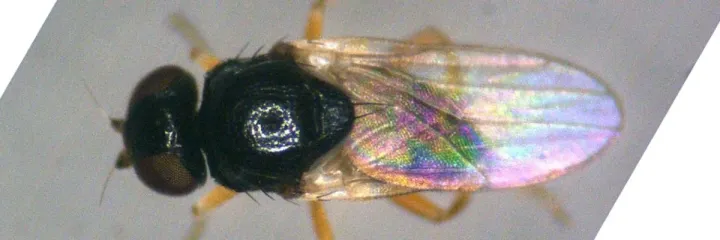
The eye gnat (Hippelates collusor) belongs to the family Chloropidae. These are tiny insects, typically about 1.5 to 2 mm long, characterized by their shiny black appearance and yellow legs.
Adult gnats possess specialized mouthparts used for lapping up liquids. They are highly attracted to moist surfaces, including plant sap, decaying organic matter, and eye secretions of animals.
The larvae are small, legless, and cream-colored, typically found in soil rich in decomposing organic debris, which provides the necessary nutrition for their development.
The life cycle includes egg, larval, pupal, and adult stages. Under favorable warm conditions, the population can increase rapidly, completing several generations within a single growing season.
They are primarily found in regions with warm climates and are often associated with areas of high soil moisture or poor drainage.
What it damages
Eye gnats cause significant agricultural damage by feeding on young plant seedlings, which leads to stunted growth, wilting, and in severe cases, plant death.
The larvae damage the underground parts of stems and roots, creating entry points for secondary bacterial and fungal pathogens that rot the plants.
Adult gnats act as vectors for various plant diseases, spreading pathogens throughout the field as they move between healthy and damaged plants.
In high-density populations, eye gnats are considered a nuisance to agricultural workers, potentially impacting the efficiency and safety of fieldwork during the peak season.
The economic impact is most severe in early spring when young crops are particularly vulnerable to the initial wave of the pest population.
When it appears
Activity typically peaks during the warmer months, beginning when soil temperatures rise consistently. They are most active during the day when the air temperature is suitable.
Periods of high humidity or excessive irrigation favor the proliferation of the pest, as moist soil is essential for the development of the larval stage.
The seasonal dynamics are closely linked to agricultural practices, particularly those involving heavy irrigation or accumulation of mulch and debris.
Gnats become significantly less active during cooler night temperatures, seeking shelter in the soil or within dense vegetation to survive.
Constant monitoring using sticky traps is recommended during the sensitive seedling stage to identify the presence and density of the local population.
Signs of infestation
The most common sign of infestation is the unexplained wilting and collapse of young seedlings, often appearing in patches across the field.
Soil inspections may reveal the presence of small, cream-colored larvae in the top layers, especially near decomposing plant residues or organic fertilizers.
Visible clouds of small black flies hovering near the field surface or around water sources indicate a high population level that requires immediate action.
Secondary symptoms include the appearance of rot or lesions on the roots and stems of affected plants, often caused by pathogenic fungi introduced by the gnat.
Planting emergence counts showing gaps or thinning rows are typical long-term indicators of significant larval feeding damage.
Control measures
Cultural control is the most effective approach; this includes the removal and destruction of crop residues where larvae are known to overwinter or breed.
Deep plowing in the autumn helps to disrupt the larval environment and bury pupae, reducing the population emergence in the following spring.
Maintaining proper field sanitation and avoiding excess soil moisture helps create an unfavorable environment for the gnat's life cycle.
- Using systemic insecticidal seed treatments to protect young plants.
- Deploying pheromone or sticky traps to monitor and reduce adult population density.
- Implementing strict crop rotation to break the gnat's reproductive cycle.
When populations exceed economic thresholds, the application of registered insecticides is recommended, targeting areas with the highest gnat activity.
Taxonomy
- Latin name
- Hippelates collusor
- Order
- Diptera (flies)
- Family
- Chloropidae
- EPPO code
- HIPECO
Discussion
No discussions yet — be the first.