
Eye gnat
Hippelates
Description
How to identify
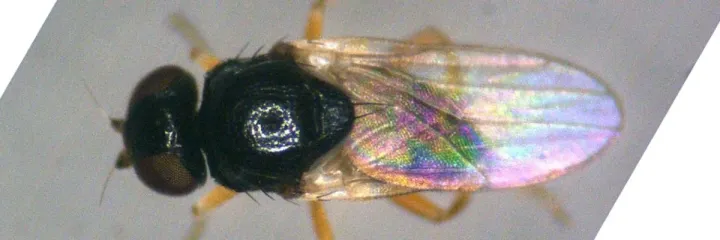
The eye gnat (genus Hippelates) belongs to the family Chloropidae (frit flies) of the order Diptera. These are tiny insects, typically measuring between 1.5 and 2.5 mm in length, with a black or dark-brown appearance.
Adult gnats are known for their persistent behavior in swarming around the eyes, nose, and mouth of animals and humans, searching for moisture and proteinaceous secretions.
The larvae are small, legless, and white or yellowish, typically inhabiting organic-rich soils where they feed on decaying plant material and microscopic organisms.
Their life cycle consists of egg, larval, pupal, and adult stages, with development times highly dependent on soil moisture and ambient temperature conditions.
Hippelates flies are highly active fliers and can easily disperse across agricultural fields, making them challenging pests to contain once they become established.
What it damages
The primary agricultural damage caused by the eye gnat is linked to their role as vectors for various bacterial pathogens that infect both livestock and vegetation.
By feeding on plant sap or landing on tender tissues, adults create small wounds that serve as entry points for harmful bacteria, leading to tissue necrosis and rot.
Larval stages can negatively impact crop health by feeding on young roots or stems of seedlings, which can cause stunted development and reduced plant vigor.
Economic losses are often compounded by the secondary infection of crops, which lowers the market quality and shelf life of vegetables and fruits.
Their presence on farms also creates significant health concerns for workers and livestock, as they can transmit various eye-related infections and diseases.
When it appears
Eye gnat activity typically peaks during late spring and throughout the summer months, correlating with periods of warm weather and moderate to high humidity.
They are most abundant on sunny, calm days and are particularly attracted to irrigated fields where moist soil conditions promote larval development.
The total duration of the life cycle is relatively short, allowing for multiple overlapping generations to occur throughout a single growing season.
Population surges are often observed following rainfall or irrigation, which brings the larvae closer to the surface and triggers mass emergence of adults.
As temperatures drop during the fall, adult activity declines, and the species successfully overwinters as pupae embedded within the topsoil layer.
Signs of infestation
The most obvious sign of an infestation is the sudden appearance of swarms of small black flies around crops, farm animals, or people working in the fields.
Visual inspections of affected plants often reveal small, sunken lesions or spots on stems and leaves, often accompanied by discoloration or tissue decay.
Seedlings may show signs of wilting or chlorosis (yellowing), which often indicates that larvae have compromised the root structure or lower stem area.
Visible sticky or necrotic drainage on plant surfaces often marks the site where gnats have been feeding and where secondary bacterial colonization is occurring.
- Visible swarms of gnats in the field.
- Necrotic spots on tender plant tissues.
- General failure of seedlings to thrive.
Control measures
Cultural control is the most effective strategy, focusing on regular tillage to disrupt soil environments and the removal of plant debris that harbors larvae.
The use of chemical insecticides targeting adult gnats can be effective during peak emergence periods, though it must be balanced with integrated pest management practices.
In greenhouse settings or high-value crop areas, adhesive traps containing specific attractants can significantly reduce adult populations without broad-spectrum chemical use.
Maintaining proper field sanitation and eliminating standing water or manure piles near crops can discourage adult gnats from laying eggs in the area.
Biocontrol agents, such as certain soil-dwelling predators or parasitic wasps, can play a role in limiting the larval population in integrated farming systems.
Taxonomy
- Latin name
- Hippelates
- Order
- Diptera (flies)
- Family
- Chloropidae
- EPPO code
- HIPESP
Discussion
No discussions yet — be the first.