
Rice grasshopper
Hieroglyphus nigrorepletus
Description
How to identify
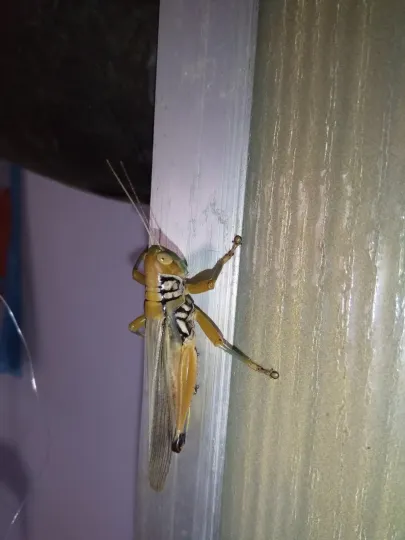
The rice grasshopper (Hieroglyphus nigrorepletus) belongs to the Acrididae family. Adult insects are robust with a green or brownish body, often featuring distinctive dark markings or stripes on the pronotum and hind femur.
The coloration of these grasshoppers varies based on their environment, aiding in camouflage within the rice canopy. Their strong hind legs allow for powerful jumping, while their wings enable them to travel between fields in search of food.
Nymphs resemble smaller, wingless versions of adults. The life cycle consists of the egg stage, five nymphal instars, and the adult stage, following a hemimetabolous development process typical for this family.
They prefer high-humidity environments, especially rice paddies and surrounding tall grass areas. They are most active during the day, particularly when temperatures are moderate, feeding on lush vegetation.
Field identification is primarily based on their physical appearance and the distinct damage patterns left on the host plants, which makes them recognizable for agricultural monitoring purposes.
What it damages
The rice grasshopper primarily targets rice (Oryza sativa), but it is also a significant pest for maize, sorghum, and sugarcane. Both nymphs and adults consume plant tissues, causing extensive damage to leaves and stems.
Feeding often begins at the leaf margins, creating ragged edges. Under heavy infestations, grasshoppers can strip leaves down to the midrib, severely reducing the plant's capacity for photosynthesis.
Perhaps the most devastating impact is the damage to the panicles. Grasshoppers bite through the peduncles and feed on developing grains, which can lead to significant yield losses and lower quality of the harvest.
Weakening of the stems through constant feeding makes the crop prone to lodging, especially during high winds or heavy rainfall. This physical damage also creates entry points for various bacterial and fungal pathogens.
Economic losses can be substantial, sometimes exceeding 40-50% in untreated fields. Consequently, early detection and intervention are crucial to protecting the crop's productive potential.
When it appears
The life cycle is closely synchronized with the rainy season and the rice growing period. Eggs are laid in the soil in egg pods, where they remain in diapause through the dry or cold season.
Nymph hatching is triggered by the onset of rain or irrigation, coinciding with the early stages of rice germination. This ensures a steady food supply for the developing nymphs as they emerge from the soil.
The nymphal stage typically lasts for several weeks, during which they grow through five successive instars. Each molt represents a period of rapid growth requiring increased nutritional intake.
Adults emerge mid-season, characterized by intense feeding and reproductive activity. They disperse across fields, spreading the infestation to healthy crops while preparing for the next generation's egg-laying.
There is typically one generation per year. Once the eggs are deposited in the soil, the adult population declines, completing the annual cycle as the crop reaches maturity and the fields dry out.
Signs of infestation
Initial signs of infestation include small notches on leaf margins. As the population grows, these notches transform into large, irregular feeding areas that span entire leaves.
- Presence of dark, pellet-like frass on the leaves and soil.
- Visible damage to the panicles, with missing or broken spikelets.
- Rapid decline in crop density within specific localized spots in the field.
- Sudden jumps and movement within the canopy when a person walks through the crop.
In highly infested areas, patches of the rice field may appear thinned or yellowish, indicating significant grazing pressure. These spots should be prioritized for scouting and treatment.
Regular visual scouting and sweep-net sampling are essential to track the number of nymphs per square meter, helping farmers decide the optimal timing for control measures.
Control measures
Cultural control is the first line of defense. Deep plowing of fields after harvest destroys egg pods in the soil, preventing them from hatching in the following season.
Maintaining clean field borders and eliminating tall grasses around irrigation channels reduces the available habitat for the grasshoppers to thrive and reproduce.
Chemical control involving insecticides is necessary when the pest density exceeds the economic threshold. Treatments are most effective when applied during the early nymphal stages before the grasshoppers become fully mobile.
Biological control options, such as using entomopathogenic fungi, are becoming increasingly viable in integrated pest management programs, offering a more sustainable way to suppress populations.
Continuous monitoring throughout the season ensures that interventions are timely and localized, minimizing the overall need for broad-spectrum pesticides while protecting the rice harvest.
Taxonomy
- Latin name
- Hieroglyphus nigrorepletus
- Order
- Orthoptera (locusts)
- Family
- Acrididae
- EPPO code
- HIEGNI
Discussion
No discussions yet — be the first.