
Heteropsylla psyllid
Heteropsylla
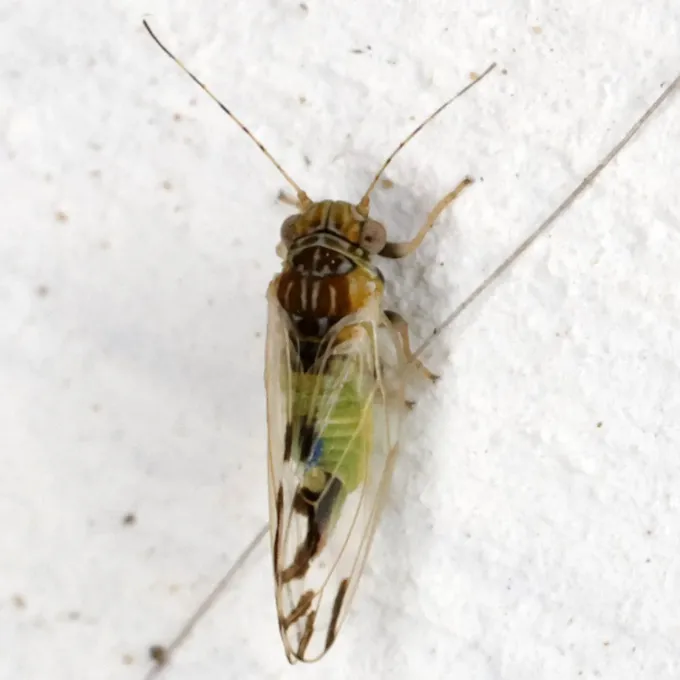
Description
How to identify
The Heteropsylla psyllid (scientific name: Heteropsylla cubana) belongs to the family Psyllidae, commonly known as jumping plant lice. These tiny insects are highly specialized pests that feed exclusively on the phloem sap of young plant tissues.
Adult psyllids are approximately 1-2 mm long, characterized by a pale yellow to brownish color. They possess well-developed hind legs, allowing them to jump away when disturbed, which makes them difficult to monitor in the field.
Nymphs are flattened, sessile, and often difficult to spot as they cluster tightly within the folds of young leaves and dormant buds. They often secrete a waxy, sticky substance that protects them from external environmental pressures.
The life cycle of the Heteropsylla psyllid is notably short, often completing a generation in as little as 15 to 20 days under warm, tropical conditions. This rapid turnover leads to massive population explosions in a short period.
The insects reproduce sexually, and a single female can produce hundreds of eggs during her lifetime. These eggs are laid on fresh, tender growth, ensuring that larvae have immediate access to high-nutrient food sources upon hatching.
What it damages
The primary host plant for this pest is the Leucaena tree (Leucaena leucocephala). The feeding activity disrupts the plant's vascular system, leading to severe stunted growth and reduced biomass production.
Signs of infestation
The most visible sign of an infestation is the curling and yellowing of the foliage. Infested leaves eventually become necrotic and fall off prematurely, leading to severe defoliation of the trees.
The presence of honeydew secreted by the nymphs is a clear indicator of infestation. This sweet, sticky substance encourages the growth of sooty mold, which covers the leaves in a black, powdery layer.
Terminal buds often stop growing, leading to the formation of distorted, thickets-like branches, commonly referred to as "witches' brooms." This symptom significantly impacts the commercial value of the crop.
Severe infestations can cause dieback of the branches. If left unmanaged, chronic feeding stresses the host plant, making it susceptible to secondary pathogens and eventual mortality in young saplings.
Control measures
Biological control is the most effective long-term strategy. The introduction of natural predators, such as ladybird beetles and parasitic wasps, has successfully managed populations in many affected regions.
Cultural control practices include the systematic pruning of affected branches to reduce the insect population density. It is also recommended to maintain plant vigor through balanced fertilization and proper water management.
Chemical control can be utilized as a last resort, particularly in nursery settings. Systemic insecticides are preferred as they penetrate the plant tissues, effectively targeting the nymphs that feed internally.
Planting resistant varieties is the foundation of sustainable protection. Ongoing research focuses on developing hybrids that are less palatable to the psyllid, effectively discouraging infestation.
- Use yellow sticky traps to track population density.
- Promote biodiversity within the crop field to attract beneficial insects.
- Implement early detection programs to prevent massive outbreaks.
Taxonomy
- Latin name
- Heteropsylla
- Order
- Hemiptera (bugs, aphids, leafhoppers)
- Family
- Psyllidae
- EPPO code
- HETYSP
Discussion
No discussions yet — be the first.