
Heterogenea asella
Heterogenea asella
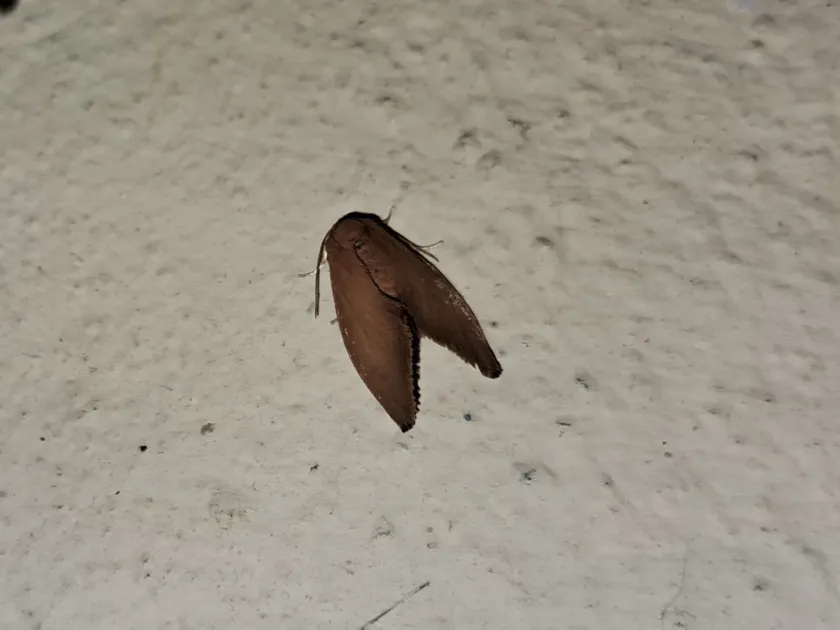
Description
How to identify
Heterogenea asella, commonly known as the Triangle or simply a slug moth, belongs to the family Limacodidae. The adult moth has a wingspan of approximately 20–25 mm with distinctive brown to ochre forewings.
The larvae are unique, resembling small, legless slugs with a flattened body. Their movement is fluid-like, which is a signature characteristic of this specific family of Lepidoptera.
The caterpillars are typically greenish, providing excellent camouflage against the foliage of their host trees. They remain relatively inconspicuous during their development.
Pupation occurs within a tough, hard-walled cocoon, which is often constructed on the bark of host trees or the undersides of leaves. This structure protects the developing pupa through winter.
These moths are primarily nocturnal, which, combined with their excellent camouflage, makes adult specimens difficult to spot in the field without specific monitoring tools.
What it damages
The larvae of Heterogenea asella feed on the leaves of various deciduous trees. Their primary hosts include beech, oak, lime, and members of the Rosaceae family such as apple and cherry.
Caterpillars feed by skeletonizing the leaves, creating irregular holes as they consume the soft tissue between the veins. This feeding pattern can be quite destructive if left unchecked.
Heavy infestations lead to significant leaf loss, which reduces the photosynthetic capacity of the tree. This stress can weaken the tree, making it more susceptible to environmental factors.
In orchards, the damage caused by these larvae can reduce the overall health and vigor of fruit-bearing trees, potentially impacting the quality and volume of the fruit crop.
While often considered a secondary pest, in favorable years, their population can surge, leading to noticeable defoliation across specific sectors of the orchard or wooded area.
When it appears
The adult moths are typically active during the summer months, specifically from June through July. This is the period when mating and egg-laying occur within the tree canopy.
The larvae emerge in mid-to-late summer, reaching their peak activity levels from July to September. During this time, they are most ravenous and cause the most visible damage.
By autumn, the caterpillars complete their growth cycle and construct their cocoons. They overwinter in the pupal stage, awaiting the return of warmer temperatures in the spring.
Their life cycle is highly synchronized with the host plant's growth, ensuring that the larvae have access to nutritious foliage as soon as they hatch from the eggs.
Understanding these seasonal milestones is crucial for agricultural professionals, as timing control measures correctly is the key to preventing significant economic loss.
Signs of infestation
The most common indicator of an infestation is the presence of irregular, window-like holes in the foliage where only the leaf veins remain intact after feeding.
Leaves affected by the caterpillars may start to yellow and dry out prematurely. These damaged leaves often drop earlier than healthy ones, signaling a health issue for the tree.
Although difficult to spot, close inspection of the leaf undersides may reveal the slow-moving, slug-like larvae nestled along the central veins or leaf margins.
During the dormant season, one can look for the hard, smooth cocoons attached to branches or bark crevices. Finding these is a clear sign that the pest was present during the summer.
Severe infestations often reveal themselves through patchy defoliation of the crown, where specific branches appear thinner or more damaged than the rest of the tree.
Control measures
Mechanical control involves the removal and destruction of visible cocoons during winter pruning, which helps reduce the population of the next generation of moths.
Biological control using Bacillus thuringiensis (Bt) has proven effective against young larvae without causing harm to beneficial predatory insects or the surrounding ecosystem.
In cases of significant population density, targeted application of environmentally friendly insecticides during the early larval stage can provide necessary suppression.
Encouraging the presence of natural predators, such as birds and parasitic wasps, is a highly effective way to manage Heterogenea asella naturally in diverse landscapes.
Ongoing monitoring using pheromone traps can help track the adult moth flight patterns, allowing for precise and timely intervention only when thresholds are exceeded.
Taxonomy
- Latin name
- Heterogenea asella
- Order
- Lepidoptera (butterflies)
- Family
- Limacodidae
- EPPO code
- HETNAS
Discussion
No discussions yet — be the first.