
Corn cyst nematode
Heterodera zeae
Description
How to identify
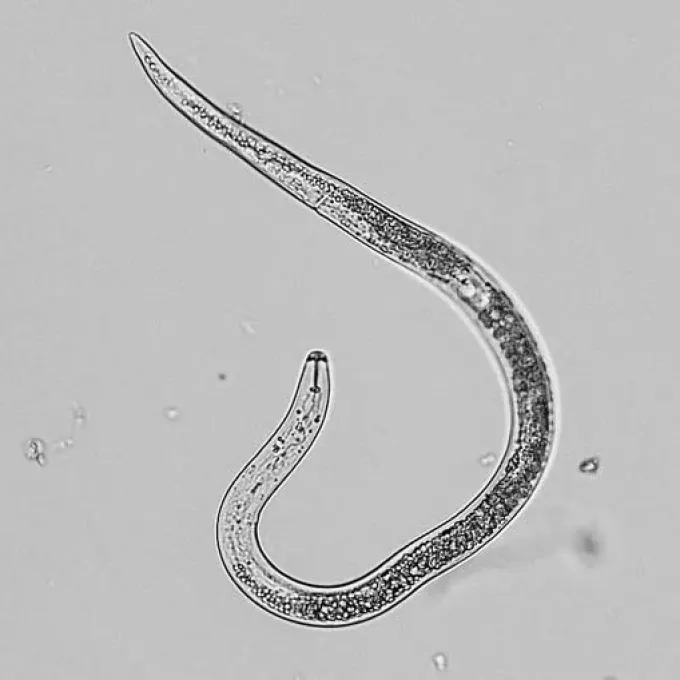
The corn cyst nematode (Heterodera zeae) is a microscopic soil-borne phytoparasite belonging to the order Tylenchida and the family Heteroderidae. It is a highly specialized pathogen that primarily targets the root systems of maize and related cereal crops.
Identification requires professional laboratory diagnostics. Because the nematodes are invisible to the naked eye and localized in the soil, soil sampling and root analysis using microscopic methods or molecular markers (PCR) are essential to confirm the presence of cysts.
The biological cycle of Heterodera zeae involves a larval stage (J2) which is the infectious stage. Once these larvae penetrate the roots, they establish a permanent feeding site. Adult females eventually swell, turn into lemon-shaped cysts, and rupture the root epidermis.
The cyst itself is the most crucial part of the lifecycle; it is a toughened, dark-brown cuticle of the dead female that protects hundreds of eggs from environmental stress, allowing them to remain viable in the soil for several years even in the absence of a host.
This nematode species is considered a major threat in many temperate and tropical regions, and international trade regulations often strictly manage soil movement from infested areas to prevent its further spread.
What it damages
Heterodera zeae parasitizes maize, wheat, barley, and rice. The damage occurs directly in the roots, where the nematode disrupts the vascular tissues responsible for transporting water and nutrients to the aerial parts of the plant.
The mechanical damage to the roots, combined with the metabolic stress caused by the parasite's feeding, leads to poor plant vigor, chlorosis, and severe yield reductions. In cases of high population density, stunted growth and plant death are common outcomes.
Plants infested with this nematode often display excessive secondary root formation. The plant attempts to compensate for the lost root function, leading to a distorted, bushy, and fragile root system that is highly susceptible to decay.
The presence of nematodes creates patches of suppressed growth in a field. These areas usually spread over time as the nematode populations increase through successive generations during the growing season.
Economic damage is further compounded by the nematode's ability to act as a vector or an entry point for other root-rotting fungi and bacteria, leading to a complex disease scenario that is difficult to treat with simple fungicides.
When it appears
The activity of the corn cyst nematode begins in the spring when soil temperatures reach optimal levels (typically between 15°C and 25°C). This environmental trigger causes the eggs to hatch, and the larvae migrate toward the host roots.
The most vulnerable period for the host crop is the early seedling stage. If the soil is heavily infested at planting, the young root system can be severely compromised before the plant has a chance to establish itself properly.
Multiple generations can occur within a single growing season. The length of the life cycle is temperature-dependent; during hot summer months, the turnover of generations can be quite rapid, leading to a massive increase in the cyst population in the soil.
As the harvest approaches and temperatures drop, the remaining nematode population transitions into the dormant cyst stage. These cysts persist in the soil throughout the winter, protected from freezing and desiccation.
Under irrigation, the nematode's activity window may be significantly extended, as the presence of adequate soil moisture promotes both root growth and nematode mobility, maintaining a higher level of infestation risk.
Signs of infestation
Visible signs often manifest as irregular patches of stunted, yellowing plants in the field. These symptoms are frequently confused with nutrient deficiencies, particularly nitrogen or phosphorus deficiencies, due to poor root uptake.
Upon careful excavation, the roots may show tiny, white to yellow globose structures—these are the immature females. Once they mature into cysts, they turn a darker brown and become harder to distinguish from soil particles.
Plants show reduced tolerance to moisture stress. During dry spells, infested plants wilt faster than neighboring healthy crops because their root systems are unable to supply water at an adequate rate.
The overall stand may appear uneven, with gaps where seedlings died shortly after emergence or remained so underdeveloped that they failed to reach maturity.
- Stunted growth and poor overall vigor.
- Yellowing (chlorosis) of the lower leaves.
- Reduced ear size and uneven grain filling.
- Extensive, brittle, or necrotic root systems.
- High mortality in young seedlings.
Control measures
Crop rotation remains the most effective management tool. By planting non-host crops for 3 to 5 years, the population of cysts in the soil will naturally decline as the eggs hatch in the absence of a food source and fail to survive.
The use of resistant or tolerant maize hybrids is strongly recommended in infested regions. These hybrids are bred to limit nematode reproduction and maintain yield levels despite the presence of the pathogen.
Good agricultural practices include thorough weed control, as many common weeds serve as reservoir hosts for Heterodera zeae, allowing the population to persist even when maize is not grown.
Chemical control involving soil-applied nematicides at planting is possible but often economically prohibitive and environmentally sensitive. Precision application is required to ensure effectiveness while minimizing chemical footprint.
Biological control agents, such as nematode-trapping fungi or specific soil bacteria, are being integrated into modern management programs to suppress nematode populations in an environmentally friendly and sustainable manner.
Taxonomy
- Latin name
- Heterodera zeae
- Order
- Nematodes
- Family
- Heteroderidae
- EPPO code
- HETDZE
Discussion
No discussions yet — be the first.