
Clover cyst nematode
Heterodera trifolii
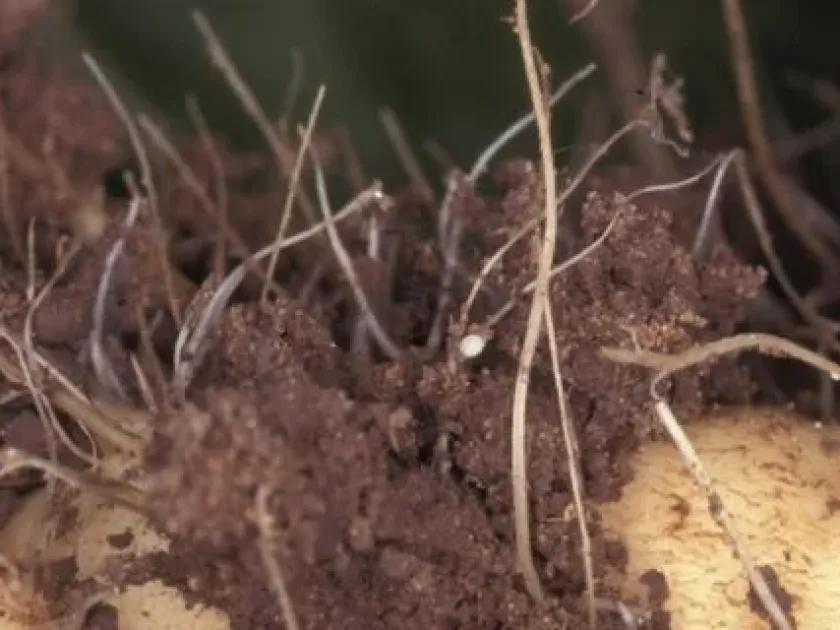
Description
How to identify
The clover cyst nematode (Heterodera trifolii) is a member of the order Tylenchida and the family Heteroderidae. It is a microscopic roundworm that poses a significant threat to legume production worldwide.
The adult female develops into a lemon-shaped cyst, which serves as a protective casing for the eggs. This cyst can remain viable in the soil for several years without a host plant, making it a persistent agricultural pest.
What it damages
This parasite primarily targets members of the Fabaceae family, causing substantial damage to clover, alfalfa, and vetch. It infects the root system, causing severe physiological stress to the host plants.
By damaging the root cortex and disrupting vascular tissues, the nematode hinders nutrient and water uptake. This interference significantly reduces the plant's ability to fix atmospheric nitrogen, leading to stunted growth.
When it appears
The life cycle of the clover cyst nematode is temperature-dependent, with activity typically beginning when soil temperatures reach favorable levels in the spring. Larvae emerge from cysts to locate roots and initiate the infection process.
Multiple generations can occur throughout the growing season if environmental conditions remain optimal. As temperatures drop or host plants senesce, the nematode shifts into the quiescent cyst stage to survive winter months.
Signs of infestation
Symptoms in the field often appear as patches of stunted, chlorotic, and unthrifty plants. Upon closer inspection of the root system, you can see tiny, white-to-brown, cyst-like structures attached to the root hairs.
Root morphology is typically compromised, showing reduced branching and signs of secondary decay. Heavily infested crops exhibit reduced vigor, which is most noticeable in poor soil conditions or during periods of drought.
Control measures
Integrated pest management (IPM) is essential for controlling this nematode. A strict crop rotation plan, avoiding susceptible legume crops for several years, is the most effective cultural practice.
- Ensure the use of certified, nematode-free seeds to prevent field contamination.
- Maintain strict field sanitation to prevent the spread of soil infested with cysts.
- Manage weed populations that act as alternative hosts for the nematode.
- Promote soil health through organic amendments that encourage natural nematode predators.
Taxonomy
- Latin name
- Heterodera trifolii
- Order
- Nematodes
- Family
- Heteroderidae
- EPPO code
- HETDTR
Discussion
No discussions yet — be the first.