
Soybean cyst nematode
Heterodera sojae
Description
How to identify
The Soybean cyst nematode (Heterodera sojae) is a member of the Heteroderidae family within the Tylenchida order. It is an obligate parasite that requires the roots of soybean plants to complete its complex biological cycle.
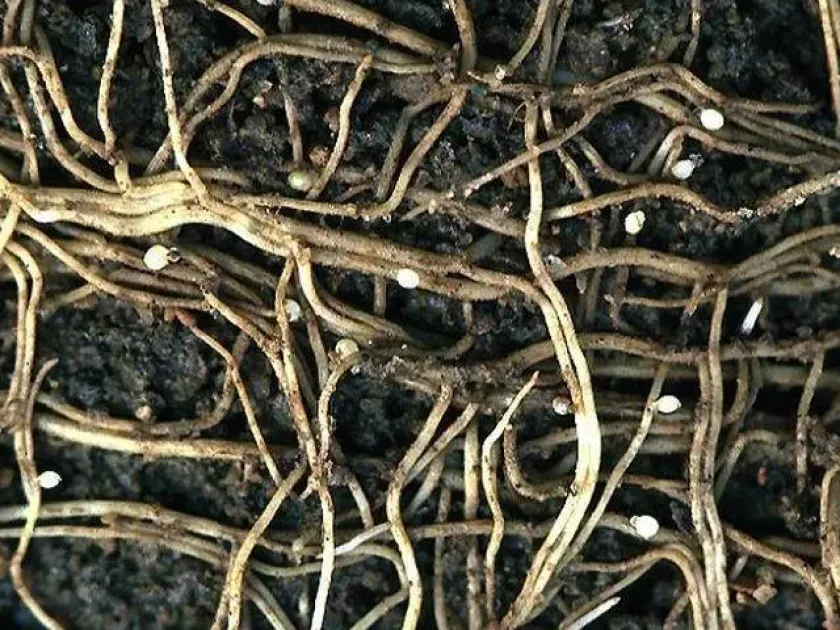
Female nematodes develop a lemon-like shape while feeding on the roots. Once they die, their bodies harden and darken, forming cysts that protect the eggs inside. These cysts can persist in the soil for years, making the pest extremely difficult to eradicate completely.
The life cycle involves egg, larval, and adult stages. Second-stage juveniles are the infectious form, moving through the soil film to find suitable host roots. Upon finding a root, they inject enzymes to initiate the formation of specialized feeding sites.
These feeding sites, known as syncytia, are giant cells that provide the nematode with the nutrients required for maturation. The disruption of vascular tissues by these cells directly impacts the plant's ability to transport water and minerals.
Temperature is a key driver for the lifecycle of Heterodera sojae. As soil temperatures warm, multiple generations can emerge during a single growing season, leading to an exponential increase in the population density of the nematode.
What it damages
Heterodera sojae specifically targets soybean crops. By diverting photosynthates and nutrients for its own reproduction, the parasite severely limits the plant's capacity to develop healthy beans, pods, and canopy biomass.
Root damage is the most critical consequence of infection. The restricted root system is unable to extract sufficient moisture, causing plants to wilt during dry spells much earlier than healthy plants in the same field.
Infection significantly reduces the formation and efficacy of nitrogen-fixing root nodules. This leads to a nitrogen deficiency, which limits plant growth and decreases seed protein content, directly lowering the overall harvest quality.
Yield losses due to Heterodera sojae are highly variable but can be devastating, sometimes exceeding 50% in heavily infested areas. The reduction in yield is often compounded by the plant's weakened state, making it susceptible to opportunistic pathogens.
Patches of stunted plants are common symptoms of heavy infestation. These plants often fail to reach full maturity, and in severe cases, the entire cluster may die prematurely, leaving bare spots in the middle of a dense field.
Signs of infestation
Initial field symptoms are often subtle and consist of yellowing leaves and reduced plant height. Because these signs mimic nutrient deficiencies, such as nitrogen or potassium stress, farmers often misdiagnose the issue until the infestation is severe.
Visual confirmation of Heterodera sojae involves carefully digging up root systems. The presence of small, white, yellow, or brown cysts attached to the roots is a definitive sign of infection for those familiar with the visual appearance of these structures.
Field patterns typically appear in patchy distributions. The most stunted plants are usually located at the center of these patches, while plants at the edges of the infestation zone may show intermediate signs of growth suppression.
Root architecture is significantly stunted, lacking the fibrous appearance of healthy soybean roots. The presence of the cysts, which are about the size of a grain of sand, provides the most reliable field-level identification.
Laboratory diagnosis is essential for confirming the species. Specialists use soil extraction techniques to count the number of eggs and cysts per unit of soil volume, which helps determine the management approach for the next season.
Control measures
Crop rotation is the foundation of nematode management. Rotating soybeans with non-host crops like corn or wheat for several seasons helps deplete the soil population of Heterodera sojae effectively.
Utilizing resistant soybean varieties is the most effective genetic defense. These varieties prevent the nematode from successfully establishing feeding sites within the roots, significantly reducing population growth.
Sanitation is crucial to prevent the spread of cysts between fields. Always clean farming equipment, especially tractors and tillage tools, before moving them from infested land to clean, disease-free areas of the farm.
Maintaining soil health through appropriate nutrient management and organic matter incorporation can improve the plant's ability to withstand nematode pressure, mitigating the yield impact of moderate infestations.
- Application of nematicides if local regulations permit and populations are high.
- Regular soil sampling and testing to monitor population trends.
- Removal of volunteer soybeans and weeds that may host the parasite.
- Using cover crops that act as natural suppressants or bio-fumigants.
Taxonomy
- Latin name
- Heterodera sojae
- Order
- Nematodes
- Family
- Heteroderidae
- EPPO code
- HETDSJ
Discussion
No discussions yet — be the first.