
Cereal cyst nematode
Heterodera oxiana
Description
How to identify
The cereal cyst nematode (Heterodera oxiana) is a parasitic roundworm belonging to the order Tylenchida and the family Heteroderidae. It is a specialized soil-borne pathogen that targets the root systems of various grass species.
Adult females are lemon-shaped and develop into protective cysts upon death, which serve as a dormant stage. These cysts can survive in the soil for several years, protecting the eggs from environmental stress and chemical treatments.
In the presence of suitable host crops, second-stage juvenile larvae hatch from the cysts and migrate through the soil. They are attracted to host roots by chemical exudates released by the growing plant.
Males are vermiform and do not feed; their primary function is to locate and fertilize the sedentary females embedded in or attached to the roots of the host plant.
Morphological identification requires microscopic examination of the cyst stage, as they are extremely small and easily overlooked without specific diagnostic protocols.
What it damages
The primary host range includes major cereal crops such as oats, barley, and wheat. In susceptible areas, continuous cropping of these grains leads to a rapid build-up of the nematode population in the soil.
As the nematodes feed, they induce the formation of specialized nutrient-rich cells within the roots. This process disrupts the plant's vascular system, hindering the uptake of essential nutrients and moisture.
The resulting damage often facilitates secondary infections by soil-borne fungi and bacteria, which lead to accelerated root rot and decreased plant vigor throughout the vegetative stage.
The impact on the crop is most severe during the early stages of plant development and periods of drought, where damaged roots are unable to sustain the plant's metabolic needs.
Yield losses can be substantial, often ranging from moderate reductions in grain quality to total failure of crop patches within infested fields, significantly impacting agricultural profitability.
Signs of infestation
Infested fields typically exhibit patchy growth, characterized by clusters of stunted, chlorotic plants that stand out against the backdrop of healthier, vigorous crop sections.
Stunting is accompanied by a pale green to yellow discoloration of the foliage, especially in the lower leaves, reflecting the plant's inability to transport nitrogen and other nutrients efficiently.
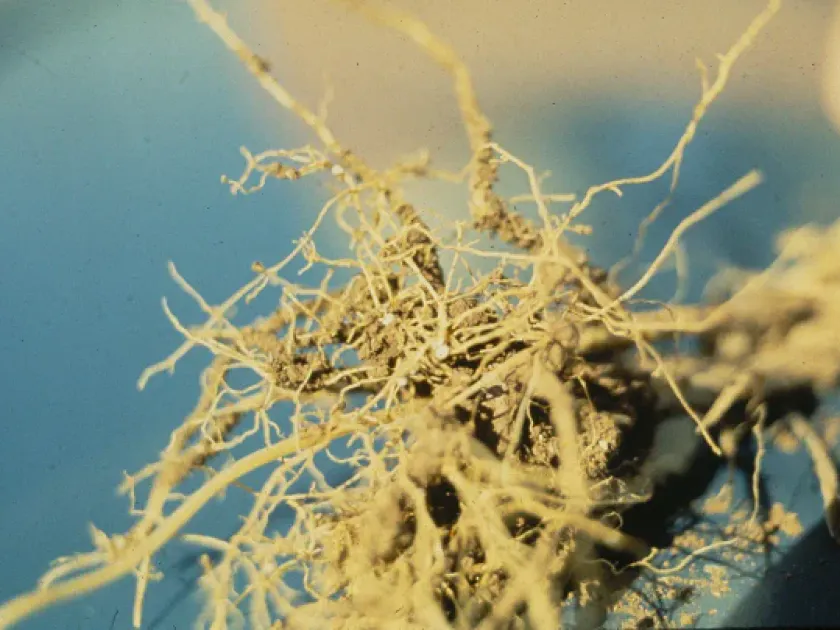
Examination of the roots reveals a lack of healthy development. The root systems are often characterized by excessive branching and a dense, matted appearance, commonly described as a "beard" of roots.
Close inspection of these root masses may reveal the presence of small, globular structures—the cysts—which appear as white or brown granules attached to the root surface.
At maturity, infested plants produce fewer tillers, resulting in thin stands, reduced ear size, and shrivelled, low-weight grain that fails to meet market quality standards.
Control measures
The primary strategy for management is the implementation of a diversified crop rotation, including non-host species like legumes or brassicas, which break the nematode's life cycle.
Rigorous sanitation measures, including the cleaning of machinery and equipment between fields, are essential to prevent the spread of soil containing viable cysts.
Planting resistant or tolerant cereal varieties is the most effective long-term solution, as these varieties reduce the rate of nematode reproduction and mitigate yield loss.
Soil testing prior to planting is recommended in high-risk areas to determine the infestation level and guide decisions regarding the choice of crops and management techniques.
- Deep plowing to bury infested surface layers.
- Using cover crops to suppress soil nematode populations.
- Ensuring optimal soil fertility to boost plant resilience.
- Applying certified, nematode-free seed for sowing.
Taxonomy
- Latin name
- Heterodera oxiana
- Order
- Nematodes
- Family
- Heteroderidae
- EPPO code
- HETDOX
Discussion
No discussions yet — be the first.