
Mediterranean cereal cyst nematode
Heterodera mediterranea
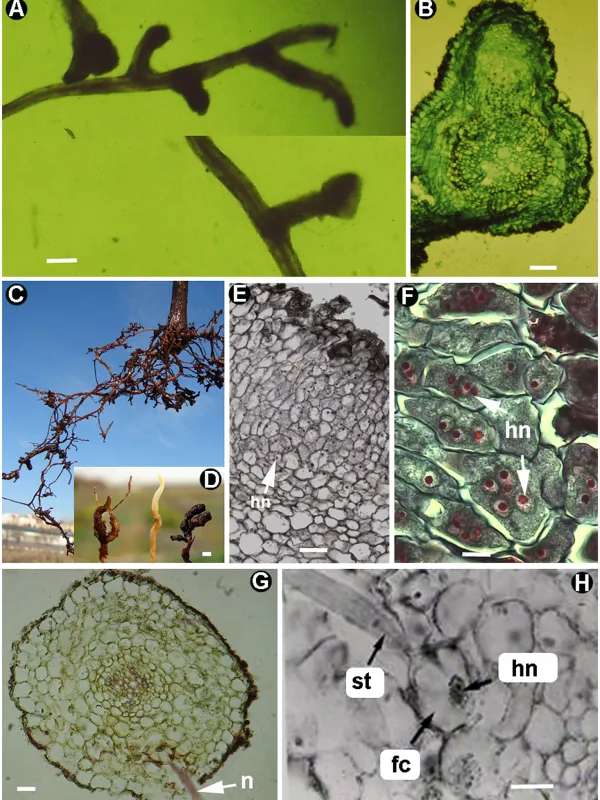
Description
How to identify
The Mediterranean cyst nematode (Heterodera mediterranea) is a sedentary endoparasitic nematode that primarily affects woody perennials. Belonging to the family Heteroderidae, it is characterized by its distinct cyst stage, which serves as a protective casing for eggs in the soil.
The life cycle begins with the second-stage juvenile (J2), which hatches from the cyst and actively searches for a suitable root system. Once inside, the juvenile establishes a feeding site, known as a syncytium, by inducing changes in the host plant's vascular tissue.
Females undergo a dramatic transformation, swelling into a lemon-like shape as they become engorged with eggs. They eventually die and their cuticle hardens into a tough, brown cyst, ensuring the survival of the next generation even in harsh soil conditions.
Males remain vermiform and are highly motile, moving through the soil pore spaces to locate and fertilize the sedentary females. This sexual reproduction contributes to the genetic diversity of the population within the plantation.
Accurate identification of this species is critical, as it requires specialized taxonomic analysis of cyst morphology. Nematology laboratories examine the vulval cone and other anatomical features to confirm the presence of this specific pathogen.
What it damages
The primary host for Heterodera mediterranea is the pistachio tree (Pistacia vera). This nematode is recognized as a significant threat to commercial nut production, particularly in Mediterranean climates where pistachio cultivation is intensive.
While pistachio is the main target, the nematode has been documented affecting other plants within the Anacardiaceae family and potentially some related woody species. This broad host range makes crop rotation difficult to implement as a standalone management strategy.
The economic damage is caused by the disruption of the root system's ability to transport water and essential mineral nutrients to the canopy. This physiological stress restricts overall tree vigor and reduces the photosynthetic capacity of the foliage.
In mature orchards, infestation results in stunted growth, reduced annual yields, and poor quality of the nuts produced. The trees become chronically weak, making them susceptible to secondary stressors like drought or wood-boring insects.
When young nurseries are infested, the impact is devastating, leading to high mortality rates of seedlings and significant financial loss for the producer. The loss of growth potential during the early years is rarely recovered later in the tree's life.
Signs of infestation
Symptoms of infestation often appear as a general decline in the health of the orchard. Foliar chlorosis and sparse canopy development are common, signaling that the roots are failing to support the plant's metabolic demands.
Growth measurements typically show a decrease in the shoot length and overall tree height compared to healthy specimens. This stunting is a clear indicator that the underground root system is compromised by nematode feeding.
Upon examination, the root systems of infected trees appear damaged, with shortened lateral roots and reduced fine root density. In some cases, small, pinhead-sized cysts can be observed attached to the root surfaces.
Yield reduction is a hallmark sign, characterized by small, poorly filled nut shells and reduced kernel weight. These quality defects lead to significant downgrading during post-harvest sorting and processing.
Often, the symptoms are patchy, appearing as distinct "hot spots" within an orchard where growth is significantly worse than in the surrounding area. These spots tend to expand over time as the nematode population spreads.
Control measures
The most effective management strategy is the prevention of infestation through the use of certified nematode-free planting material. Strict quarantine procedures for nurseries are essential to avoid introducing the nematode into new soil.
Cultural practices, such as maintaining soil health and vigor, can help trees better tolerate nematode pressure. Additionally, controlling weeds that serve as alternative hosts is vital for reducing the baseline nematode population in the field.
Chemical control involving nematicides is rarely a long-term solution due to high costs, environmental concerns, and the difficulty of applying chemicals to deep root zones. It is typically reserved for nursery environments where strict control is needed.
Biological control methods are gaining interest, utilizing naturally occurring soil fungi and bacteria that parasitize nematodes. These tools, when integrated into a broader pest management program, provide sustainable suppression of populations.
Future management increasingly relies on the breeding of resistant rootstocks. Developing cultivars that can inhibit nematode reproduction within the roots is the most sustainable way to protect the industry from long-term economic damage.
Taxonomy
- Latin name
- Heterodera mediterranea
- Order
- Nematodes
- Family
- Heteroderidae
- EPPO code
- HETDMD
Discussion
No discussions yet — be the first.