
Alfalfa cyst nematode
Heterodera medicaginis
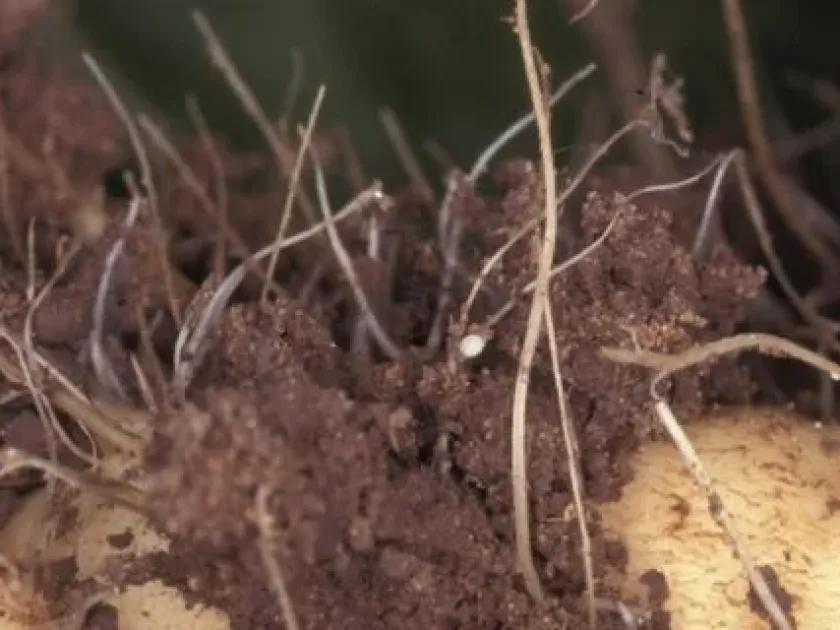
Description
How to identify
The Alfalfa cyst nematode (Heterodera medicaginis) is a specialized soil-borne parasite belonging to the order Tylenchida and the family Heteroderidae. These microscopic worms are recognized by the transformation of mature females into protective, lemon-shaped cysts.
The female nematode anchors herself into the host root, where she eventually becomes a tough, brown, cyst-like body filled with eggs. These cysts provide a robust survival mechanism, allowing the species to persist in the soil for years, even in the absence of a suitable host plant.
The second-stage juveniles (J2) are the primary invasive form of the nematode. They are vermiform in shape and possess a mobile nature, allowing them to navigate through the soil moisture to locate and penetrate the roots of alfalfa plants.
Male nematodes remain mobile and are significantly smaller than the females, retaining a slender, worm-like morphology throughout their life cycle to facilitate the search for stationary, root-embedded females.
Laboratory identification involves the extraction of these cysts from soil samples using specialized flotation techniques, followed by microscopic examination of the cyst wall patterns and stylet structure of the larvae.
What it damages
The primary host for this nematode is alfalfa (Medicago sativa). The damage is fundamentally physiological, as the parasite extracts essential nutrients and water from the host roots, leading to a decline in plant vigor and overall crop development.
Nematode feeding disrupts the root vascular tissues, causing stunting and abnormal growth patterns. This injury limits the plant's ability to maintain healthy root mass, which is critical for winter survival and regeneration after repeated harvesting cycles.
The destruction of root tissue also facilitates the entry of soil-borne pathogens, including bacteria and fungi, which can lead to root rot. Consequently, nematode infestations often manifest as part of a complex disease syndrome that severely weakens the crop.
Infested alfalfa fields typically show a gradual decrease in yield, especially after the first harvest of the season. As the infestation intensity increases, the plant population density decreases, leaving patches that may be encroached upon by weeds.
The long-term impact on productivity can be substantial, resulting in significant economic losses for farmers. Once established in a field, the persistence of the cyst stage makes eradication extremely difficult, requiring long-term management strategies.
Signs of infestation
The presence of Heterodera medicaginis is typically signaled by the appearance of patches of stunted and yellowing plants. These patches often expand in size over several years if host crops are continuously cultivated.
In addition to stunted growth, affected plants often show signs of severe moisture stress even under favorable irrigation conditions. This occurs because the damaged root systems are no longer capable of efficient water and nutrient uptake.
When carefully excavated, the root systems of infected plants often appear underdeveloped or deformed, with excessive branching. Tiny, spherical cysts may be visible on the root surface, though their small size often makes them difficult to distinguish without a hand lens.
After each cut, the regrowth of the infested alfalfa is significantly slower compared to adjacent healthy areas. This delay in recovery cycle is a key indicator that the root system is being compromised by soil-borne parasites.
Over time, the thinning of the crop canopy allows for increased weed competition. The visual combination of stunted alfalfa and patchy growth is a strong warning sign for producers to conduct a thorough nematode soil analysis.
Control measures
The most effective management strategy is a well-planned crop rotation scheme. Avoiding the cultivation of alfalfa or other susceptible legumes for at least four to five years helps to deplete the nematode population in the soil.
Sanitation is equally critical. Cleaning machinery and agricultural equipment between fields prevents the spread of soil-borne cysts. Additionally, using clean, nematode-free seeds or planting material is vital for maintaining field biosecurity.
Improving soil health through the incorporation of organic matter can bolster the plant's resilience. In some cases, biological control agents or cover crops with nematicidal properties may be utilized to reduce the number of viable cysts.
Deep plowing can occasionally help manage populations by disrupting the upper soil layers, though this is rarely sufficient as a standalone method. The combination of varied management practices is the most reliable approach for long-term population suppression.
- Strict adherence to long-term crop rotation cycles.
- Systematic field monitoring for patchy or stunted crop growth.
- Usage of resistant alfalfa cultivars where available and recommended.
Taxonomy
- Latin name
- Heterodera medicaginis
- Order
- Nematodes
- Family
- Heteroderidae
- EPPO code
- HETDME
Discussion
No discussions yet — be the first.