
Cereal cyst nematode
Heterodera mani
Description
How to identify
The cereal cyst nematode (Heterodera avenae) belongs to the order Tylenchida and the family Heteroderidae. It is a microscopic soilborne pest characterized by the development of lemon-shaped white to brown cysts on the roots of host plants.
Adult females are sessile, attaching themselves to root tissue to feed, while males are vermiform and motile, allowing them to travel through the soil profile to locate and fertilize the females.
The cysts are essentially the tanned bodies of dead females containing hundreds of viable eggs. This stage is extremely resilient, allowing the nematode to persist in the soil for several years even in the absence of a host crop.
Field identification is challenging because the nematode itself is microscopic. Precise diagnosis often requires laboratory examination of root systems and soil samples to distinguish H. avenae from other cyst-forming species.
Specialized methods such as extraction and microscopy are essential for quantifying nematode populations, which helps agronomists determine the risk level for upcoming cereal plantings.
What it damages
Cereal cyst nematodes primarily attack small grain crops, including oats, wheat, barley, and rye. Oats are particularly susceptible, often suffering the most severe yield losses when infested.
The nematodes feed by inserting their stylets into root tissues, causing the formation of syncytia. This feeding disrupts the plant's vascular system, leading to stunted roots and reduced uptake of water and essential nutrients.
Above-ground symptoms include patches of stunted, yellowing plants that often look like they are suffering from nutrient deficiency or drought stress, despite adequate field conditions.
Economic damage manifests as reduced tillering, delayed head emergence, and the production of shriveled, low-quality grain, which significantly decreases total harvest output.
Infestations often pave the way for secondary fungal infections, as the weakened root systems are more vulnerable to opportunistic soil pathogens that accelerate plant senescence.
When it appears
The nematode's life cycle is strictly synchronized with the cereal growing season. Juvenile larvae emerge from cysts in the spring when soil temperatures reach approximately 10-12 degrees Celsius and moisture levels are adequate.
Peak infection occurs during the early seedling and tillering stages of the host plant. Once inside the roots, the larvae begin their sedentary parasitic life, causing the characteristic root symptoms.
By the time the cereal crop reaches maturity, a new generation of cysts is formed within the soil. In most regions, Heterodera avenae completes only one generation per year.
During the off-season, the cysts remain in a state of diapause, waiting for the presence of a susceptible host root system to initiate the next cycle of infection.
Monitoring seasonal population dynamics is crucial, as continuous monocropping of cereals often leads to a rapid buildup of cyst numbers in the upper soil layers.
Signs of infestation
Visual symptoms in the field include irregular patches of weak, chlorotic plants. These patches often show poor growth and uneven development compared to the rest of the crop.
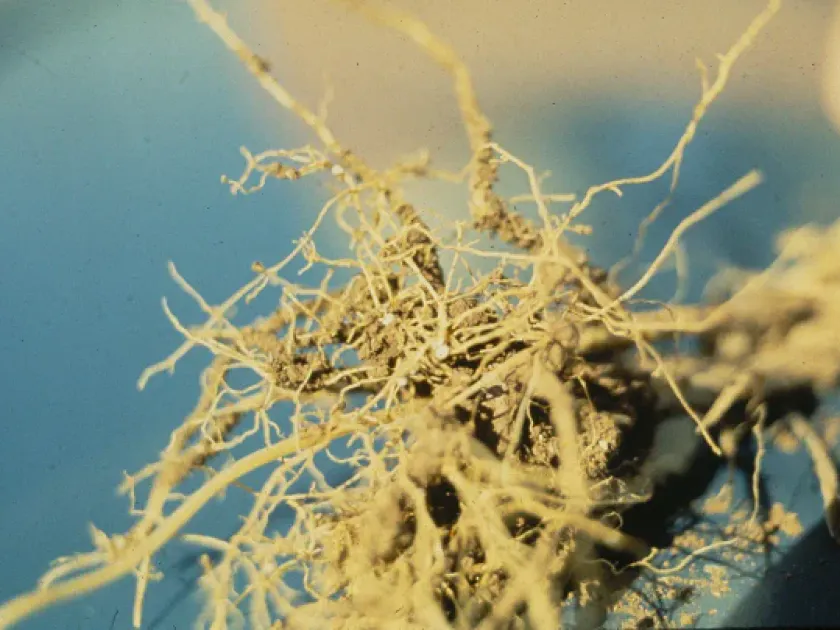
A primary diagnostic sign is the presence of an excessively branched, stunted root system known as "root proliferation" or "bunchy roots," which is a classic response to nematode feeding.
Plants affected by significant nematode populations exhibit poor tillering and may fail to produce viable spikes, leading to thin stands and reduced harvest density.
In cases of high infestation, careful examination of roots using a hand lens may reveal small, pearly-white or dark-brown lemon-shaped cysts attached to the root surface.
These patches can expand slowly over successive seasons if susceptible cereals are planted repeatedly, eventually leading to large zones of total crop failure within a field.
Control measures
The most effective strategy for managing cereal cyst nematodes is the implementation of a diverse crop rotation, incorporating non-host crops such as legumes, oilseeds, or potatoes to break the life cycle.
The use of genetically resistant cereal cultivars is highly recommended, as it provides a robust and environmentally friendly defense against nematode population buildup.
- Maintaining high soil fertility to support root regeneration.
- Early planting to allow plants to establish before peak larval emergence.
- Rigorous control of volunteer cereals and weeds that serve as hosts.
- Sanitation of farm equipment to prevent the transport of infested soil to clean fields.
Nematicides can be used in extreme cases, though their application is often restricted due to environmental concerns and cost-effectiveness limitations in broad-acre cereal production.
Regular soil sampling and laboratory testing are essential to keep track of infestation levels and to guide the selection of appropriate management strategies for each specific field.
Taxonomy
- Latin name
- Heterodera mani
- Order
- Nematodes
- Family
- Heteroderidae
- EPPO code
- HETDMN
Discussion
No discussions yet — be the first.