
Beet cyst nematode
Heterodera betae
Description
How to identify
The beet cyst nematode Heterodera betae is a microscopic soil-borne parasite belonging to the family Heteroderidae, order Tylenchida.
The life cycle involves eggs, four larval stages, and sedentary adults. The females swell and burst through the root surface, eventually forming a protective cyst.
Cysts are actually the hardened, darkened bodies of dead females, which can hold hundreds of eggs that remain viable in the soil for several years.
The larvae are active in the soil and use chemical cues released by plant roots to locate suitable hosts for their development.
Accurate identification usually requires specialized soil sampling and extraction procedures performed by agricultural laboratories.
What it damages
The primary hosts include sugar beet, fodder beet, and table beet, as well as various Chenopodiaceae species and certain cruciferous weeds.
Larvae penetrate the roots, inducing the formation of specialized feeding sites. This parasitic activity deprives the plant of nutrients and water.
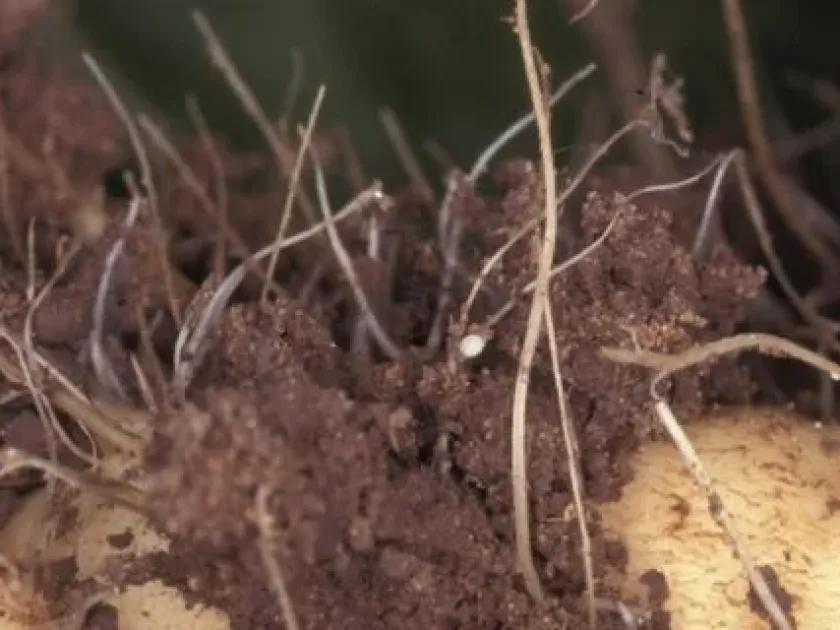
A hallmark symptom is excessive branching of the lateral roots, often described as 'hairy root' syndrome, which severely stunts plant growth.
Infested plants suffer from significantly reduced yields and lower sucrose content, impacting the overall profitability of the harvest.
Furthermore, root damage facilitates the entry of soil pathogens, leading to rotting and increased susceptibility to other root-associated diseases.
When it appears
Larval emergence begins when soil temperatures rise in the spring, typically reaching 10–12°C, which triggers activity in the soil profile.
The nematode undergoes multiple generations per season, with the timing of population peaks coinciding with the active growth stages of the sugar beet.
Environmental moisture and temperature are critical factors that influence both the speed of the life cycle and the success of the larval search for roots.
As the season comes to an end and host plant activity decreases, the nematodes transition into their dormant cyst stage to survive the winter.
Continuous cropping of susceptible hosts allows for rapid buildup of cyst density, making seasonal timing and field history highly important.
Signs of infestation
Symptoms often appear as patches of stunted or chlorotic plants scattered across the field, which become more obvious as the season progresses.
Leaf wilting during hot afternoon hours is a common observation due to the impaired root system's failure to maintain sufficient hydration.
A clear diagnostic indicator is the presence of small, lemon-shaped white or brown cysts visible on the exterior of the plant roots upon careful inspection.
Plants may show severe growth retardation, with the main taproot appearing stunted and the overall plant foliage lacking vigor and color.
Uniformly poor growth in specific sections of the field usually points to a high level of long-term soil infestation by the nematode population.
Control measures
- Implement a strict crop rotation schedule, excluding host crops for at least 4-6 years.
- Utilize nematode-resistant sugar beet cultivars to minimize population reproduction.
- Maintain effective weed control, specifically targeting Chenopodium species that act as alternative hosts.
- Incorporate trap crops or green manures that stimulate larval emergence without allowing successful reproduction.
- Enhance soil health and fertility to improve the crop's natural vigor and tolerance to stress.
Taxonomy
- Latin name
- Heterodera betae
- Order
- Nematodes
- Family
- Heteroderidae
- EPPO code
- HETDBT
Discussion
No discussions yet — be the first.