
Cereal cyst nematode
Heterodera avenae
Description
How to identify
The cereal cyst nematode (Heterodera avenae) belongs to the phylum Nematoda, order Tylenchida, and family Heteroderidae. It is a highly specialized endoparasite that creates cysts in the roots of cereal crops.
Female nematodes develop a lemon-shaped body which later matures into a tough, protective brown cyst containing eggs. Males are vermiform and motile, playing a role in reproduction within the soil environment.
Second-stage juveniles (J2) are the infectious stage of the nematode. They emerge from the cyst in response to root exudates and actively search for host plant roots to penetrate using their stylet.
The life cycle is closely synchronized with the growing season of cereal crops. This specialization makes Heterodera avenae a resilient and persistent inhabitant of agricultural soil systems.
Identification typically requires laboratory analysis of soil and root samples. The presence of tiny, pin-head-sized cysts on roots is a diagnostic feature used by agronomists to confirm the infestation.
What it damages
The primary hosts for the cereal cyst nematode include oats, wheat, barley, and rye. Some wild grass species can also act as alternate hosts, sustaining the population.
Damage occurs when larvae penetrate the root system, causing severe metabolic disturbances. The nematodes interfere with nutrient and water uptake, directly leading to stunted plant growth.
Infested plants often display reduced tillering, yellowing of leaves, and a generally weak appearance. In severe cases, the entire plant may wither before producing any grain.
Patches of stunted or dead crops in a field are a common observation when infestation levels are high. These areas result in significant yield losses and lower quality of the harvested grain.
Beyond direct damage, the entry wounds caused by nematodes expose the root system to soil-borne fungi and bacteria, which can lead to complex root rot diseases.
When it appears
This nematode is monocyclic, meaning it completes only one generation per year. Its activity is triggered by soil moisture and temperature conditions favorable for crop seed germination.
In early spring, as cereals start to germinate, larvae emerge from the dormant cysts in the soil. They migrate towards the emerging roots to establish a feeding site.
As the cereal crop grows throughout the spring and summer, the nematodes develop inside the root tissue. By the time the crop matures, the females form new cysts containing the next generation of eggs.
These cysts enter diapause and remain in the soil through the autumn and winter months. Their tough outer cuticle provides excellent protection against low temperatures and desiccation.
Dispersal is passive, primarily occurring through the movement of infested soil stuck to farm machinery, cultivation equipment, or via wind and water erosion across fields.
Signs of infestation
The most visible sign of an infestation is the appearance of patchy growth within the field. These affected areas often look like irregular spots where the crop is underdeveloped.
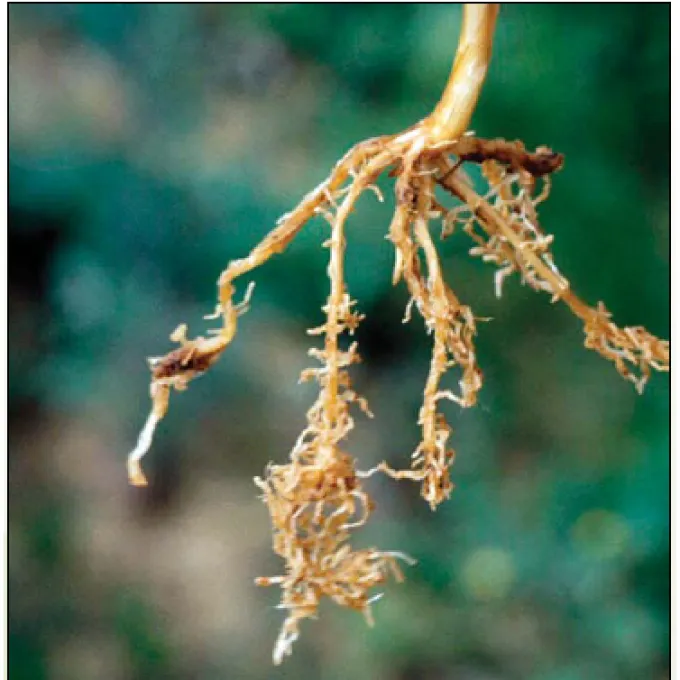
Exposed roots of affected plants typically show a characteristic "nematode root system" which is stunted, branched, and often clubbed. The roots may appear shorter and lack proper fine root development.
Careful inspection of the roots during the mid-season may reveal small, white or yellow globose bodies. These are the developing females partially protruding from the root tissue.
Symptoms often mimic nutrient deficiency symptoms, such as nitrogen starvation or moisture stress, making field diagnosis without confirmation sometimes misleading.
A consistent trend of decreasing yield in specific areas of the farm over consecutive cropping years is a strong indicator of an accumulating nematode population.
Control measures
Crop rotation is the most effective cultural practice. Growing non-host crops like legumes or oilseeds for several years can significantly reduce the number of viable cysts in the soil.
The use of resistant cereal varieties is the cornerstone of integrated pest management. Breeding programs have developed wheat and barley cultivars that prevent nematode development.
Good agricultural practices, such as controlling grassy weeds and ensuring optimal fertilization, help plants compensate for minor root damage and maintain productivity.
Biological control agents, including certain nematophagous fungi, are being researched and utilized in some regions to naturally suppress nematode populations in the soil.
Sanitation is critical to prevent the spread of the pest. Cleaning machinery and equipment before moving from infested fields to healthy ones is essential to curb the migration of cysts.
Taxonomy
- Latin name
- Heterodera avenae
- Order
- Nematodes
- Family
- Heteroderidae
- EPPO code
- HETDMA
Discussion
No discussions yet — be the first.