
Oat cyst nematode
Heterodera arenaria
Description
How to identify
The oat cyst nematode (Heterodera arenaria) is a microscopic parasitic worm belonging to the family Heteroderidae. It is a highly specialized plant pest that completes its life cycle within the root systems of host plants.
The female nematodes undergo a metamorphosis, developing into a lemon-shaped structure. After fertilization, the female body becomes a hardened, brown cyst that protects eggs and larvae from adverse environmental conditions, allowing survival for years.
Male nematodes remain vermiform and mobile, capable of moving through soil pores to seek out females for reproduction. Their life span is relatively short compared to the dormant cyst stage.
Detection of the nematode usually requires professional soil testing and extraction of cysts. Field diagnostics are challenging because the microscopic nature of the pest often leads to misdiagnosis as nutrient deficiencies or drought stress.
The life cycle is tightly regulated by soil temperature. In the spring, larvae emerge from the cysts and migrate through the soil to locate and penetrate the root tips of suitable cereal hosts, initiating the infection process.
What it damages
This nematode primarily targets small grain cereals, with oats being the most susceptible host. Wheat and barley can also be significantly impacted, leading to major yield reductions in infested fields.
Once inside the roots, the nematodes feed on the plant's vascular tissue. This feeding interferes with the plant’s ability to take up water and nutrients, resulting in stunted growth and poor crop establishment.
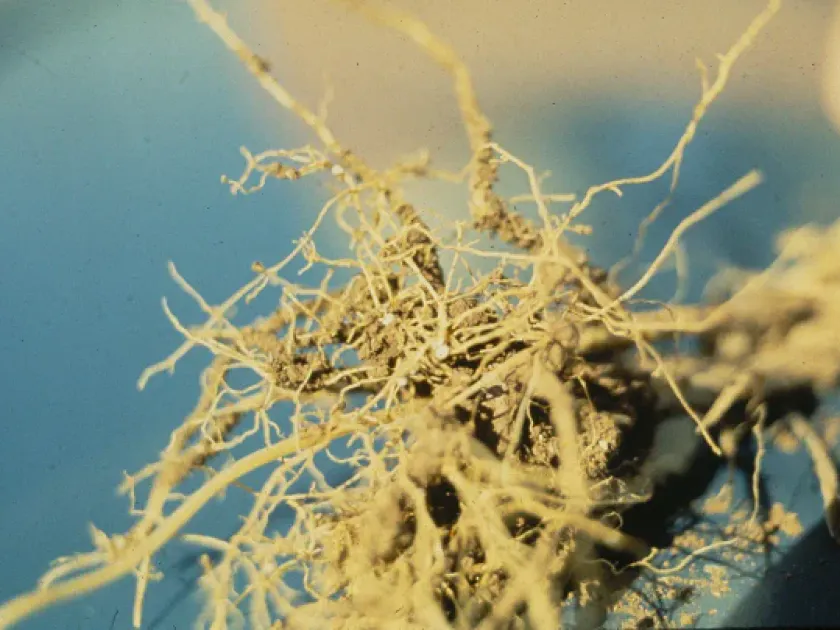
A characteristic symptom of the damage is the development of a dense, stunted, and highly branched root system, often referred to as "root bearding." This is an attempt by the plant to compensate for the loss of primary root function.
Heavy infestations lead to significant yield losses. The crops may show uneven patches of stunted growth, thin stands, and a reduced number of productive tillers, which directly lowers the total grain harvest.
The nutritional quality of the grain is also negatively affected, as the limited nutrient uptake results in smaller, shriveled kernels with reduced protein content, lowering the final market value of the crop.
Signs of infestation
The most visible sign in the field is the appearance of irregularly shaped patches where the crop exhibits poor vigor and stunted growth. These areas often appear pale or yellowish, mimicking symptoms of nitrogen deficiency.
Careful examination of the root system during the growing season may reveal small, white or brown cyst structures attached to the roots. These cysts are the reproductive bodies of the nematode population.
Infected plants are often prone to premature wilting, especially during periods of water stress. Because the roots are damaged, they cannot support the water requirements of the plant during hot or dry conditions.
Reduced tillering is a common indicator. Infected plants produce fewer stalks, resulting in visible thinning of the crop canopy in the affected areas, which allows more weeds to proliferate.
If the infestation persists over several seasons, the patches may gradually increase in size as the nematode population builds up in the soil, unless appropriate management strategies are implemented.
Control measures
Crop rotation is the most effective management tool. Incorporating non-host crops, such as legumes, brassicas, or other broadleaf crops, for at least three seasons can significantly deplete the soil-borne cyst population.
Utilizing resistant or tolerant crop varieties is critical for sustainable production. Modern breeding programs have developed varieties capable of suppressing nematode reproduction within the roots, protecting overall yield.
Agronomic practices play a vital role in control. Ensuring healthy soil, balanced fertilization, and timely seeding helps the plants develop a robust root system that is better able to withstand nematode attack.
Chemical control with nematicides is generally expensive and difficult to apply effectively on a large scale. Therefore, biological control agents, such as specific soil fungi that parasitize cysts, are increasingly being explored.
Sanitation practices are also important. Cleaning farm machinery between fields is essential to prevent the spread of soil containing cysts, while deep tillage may help manage populations by incorporating crop residues.
Taxonomy
- Latin name
- Heterodera arenaria
- Order
- Nematodes
- Family
- Heteroderidae
- EPPO code
- HETDAR
Discussion
No discussions yet — be the first.