
Hesperotettix
Hesperotettix
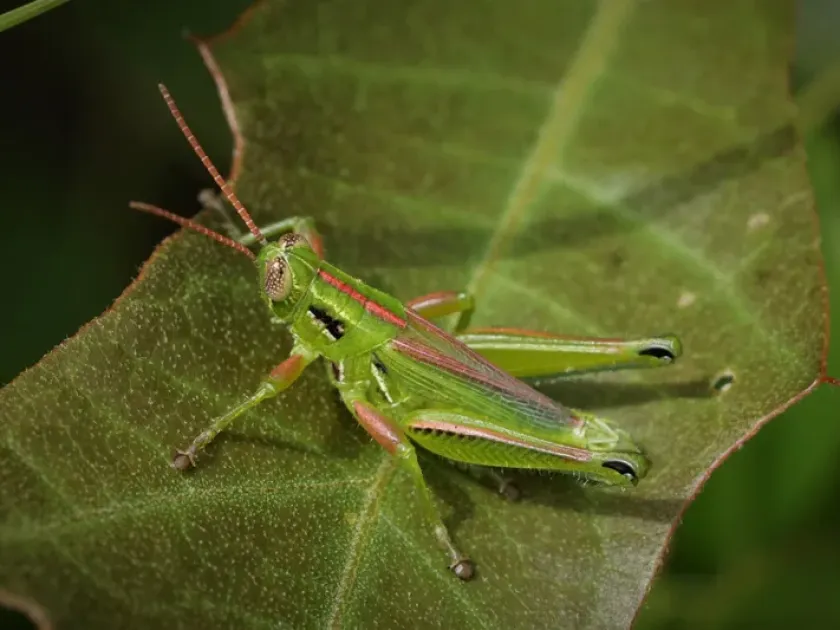
Description
How to identify
Hesperotettix is a genus of short-horned grasshoppers belonging to the family Acrididae, order Orthoptera. These insects are known for their distinctively colorful patterns that act as camouflage in their natural habitats.
Adults typically feature a streamlined body shape and strong hind legs designed for jumping, which helps them escape from predators in grassland environments.
The taxonomic identification relies on specific characteristics of the pronotum and terminal abdominal structures, distinguishing them from other members of the subfamily Melanoplinae.
They are primarily diurnal insects, thriving in open, sun-drenched areas where they bask to regulate their body temperature for active feeding and movement.
Their life cycle consists of three stages: egg, nymph (with five distinct instars), and adult, which is the standard developmental progression for this group of insects.
What it damages
Unlike many generalist grasshoppers, many Hesperotettix species are specialists that prefer feeding on plants within the Asteraceae family.
When populations reach high densities, they can cause economic damage to pastures, rangelands, and specific forage crops by consuming foliage and shoots.
The damage manifests as uneven, ragged holes in the leaves, or in severe cases, total defoliation, which severely limits the photosynthetic capacity of the plants.
Such feeding stress reduces the overall vigor of the host plant, potentially leading to stunt growth and making the plant susceptible to secondary pathogens.
The impact is most notable in regions where the preferred host plants dominate, as these insects can quickly strip the vegetation in localized areas.
When it appears
The active season for these grasshoppers begins in late spring, triggered by the warming of the soil which initiates the hatching of overwintering eggs.
Nymphs mature throughout the summer months, with peak feeding and movement occurring during the hottest part of the year when metabolic rates are highest.
Adult populations typically peak from mid-summer through early autumn, which coincides with the time of mating and egg-laying for the next generation.
Soil moisture levels play a critical role in the success of the egg-laying process, as excessively wet or dry conditions can impact egg survival rates.
By late autumn, adults finish their life cycle after depositing eggs into the soil, ensuring the species survives the winter as dormant eggs.
Signs of infestation
The presence of Hesperotettix is often first noticed by the characteristic ragged damage patterns on the foliage of host plants near field margins.
Visual confirmation is relatively easy as the insects are active jumpers and will quickly flee when vegetation is disturbed, revealing their presence.
Small, pellet-like frass (excrement) found on leaves or at the base of plants is a clear indicator that a feeding colony is established in the area.
During the early morning or late afternoon, individuals can often be found congregating on top of stems or leaves to maximize solar exposure.
In cases of heavy infestation, a noticeable sound of movement and occasional stridulation can be heard in the vegetation during the daytime.
Control measures
Integrated pest management starts with cultural control, such as managing field margins and removing preferred weed hosts to reduce breeding habitats.
Tilling the soil in late autumn or early spring can physically destroy egg beds, significantly reducing the nymph population for the upcoming season.
If economic thresholds are exceeded, targeted applications of approved insecticides can be used to mitigate damage in high-value or highly susceptible areas.
Encouraging natural predators, including various bird species and predatory insects, can help keep population numbers below the economic threshold.
- Routine field scouting during late spring.
- Management of pasture vegetation height.
- Application of biological insecticides if necessary.
Taxonomy
- Latin name
- Hesperotettix
- Order
- Orthoptera (locusts)
- Family
- Acrididae
- EPPO code
- HESPSP
Discussion
No discussions yet — be the first.