
Egyptian mongoose
Herpestes ichneumon
Description
How to identify
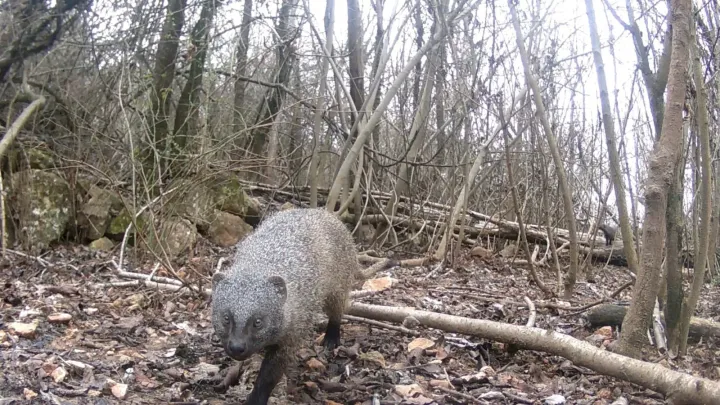
The Egyptian mongoose, or ichneumon (Herpestes ichneumon), is a medium-sized carnivore belonging to the Herpestidae family. Adults typically reach a body length of 60 cm, accompanied by a tail of similar length.
The animal possesses a long, low-slung body with short limbs, covered in coarse, speckled grey-brown fur. This coloration provides excellent camouflage within scrublands and agricultural field margins.
Possessing highly developed senses of sight, smell, and hearing, the Egyptian mongoose is an elusive predator that is notoriously difficult to track or capture in the wild.
They reach sexual maturity by the end of their first year. Breeding occurs in well-hidden burrows, rocky crevices, or dense vegetation, ensuring the survival of the offspring.
Primarily diurnal, they are known to exhibit crepuscular behavior when operating near human settlements to avoid direct confrontation with farm personnel.
What it damages
While the Egyptian mongoose is primarily a predator, its presence in agricultural areas creates significant issues for farmers, especially regarding livestock management.
They are known to infiltrate poultry farms, causing severe losses by attacking birds, chicks, and eggs, which often leads to substantial economic damage for smallholders.
In arid regions, they may damage high-moisture crops such as watermelons, melons, and grapes, consuming the fruit to quench their thirst during drought conditions.
Their predatory nature extends to beneficial birds that typically help control insect populations, leading to an ecological imbalance that may trigger secondary pest outbreaks.
By disrupting the food chain and reducing the population of natural pest predators, the mongoose indirectly forces farmers to rely more on chemical pesticides.
When it appears
The Egyptian mongoose remains active throughout the year, as it does not hibernate and requires a consistent intake of food to maintain its metabolic functions.
During the spring breeding season, the pressure on food sources increases, prompting the animals to expand their foraging range toward farmyards and orchards.
In the peak of summer, they gravitate towards irrigated fields and plantations, where the combination of water availability and succulent crops attracts them.
Autumn is a period of intensive foraging as the animals accumulate fat reserves to endure the winter months, leading to higher risks for poultry farms.
Even in winter, they maintain a presence near human-influenced habitats, utilizing stored food sources or lingering prey populations to sustain themselves.
Signs of infestation
Identifying a mongoose presence involves spotting their distinctive five-toed tracks, commonly found along irrigation ditches or soft soil paths bordering agricultural fields.
Evidence of predation, such as destroyed nests, fragmented bird eggshells, or partially consumed fruit left near field boundaries, are strong indicators of their activity.
Poultry owners often detect their presence through the sudden disappearance of stock, even in enclosures that might seem secure to human eyes.
The sighting of scats containing fur, bones, or insect remains along trails is a common sign used by gamekeepers to map the territory of a resident mongoose.
A noticeable decline in ground-nesting bird activity in a specific patch of the farm can often be traced back to the hunting habits of this predator.
Control measures
Exclusion is the most effective strategy; securing poultry houses with fine-mesh wire fencing is essential to prevent entry into coops.
Implementing biological control, such as using guardian dogs, can successfully deter mongooses from entering cultivated fields and farmyards.
Maintaining a clean farm environment by removing debris and controlling rodent populations minimizes the attractions that lure mongooses into agricultural settings.
Motion-activated deterrents, including lights and acoustic alarms, can be effective in discouraging their frequent passage through specific zones of the farm.
Habitat modification, such as clearing dense brush and overgrown vegetation along the perimeter, forces the animals to move away from the protected area.
Taxonomy
- Latin name
- Herpestes ichneumon
- Family
- Herpestidae
- EPPO code
- HRPSIC
Discussion
No discussions yet — be the first.