
Dwarf mongoose
Helogale
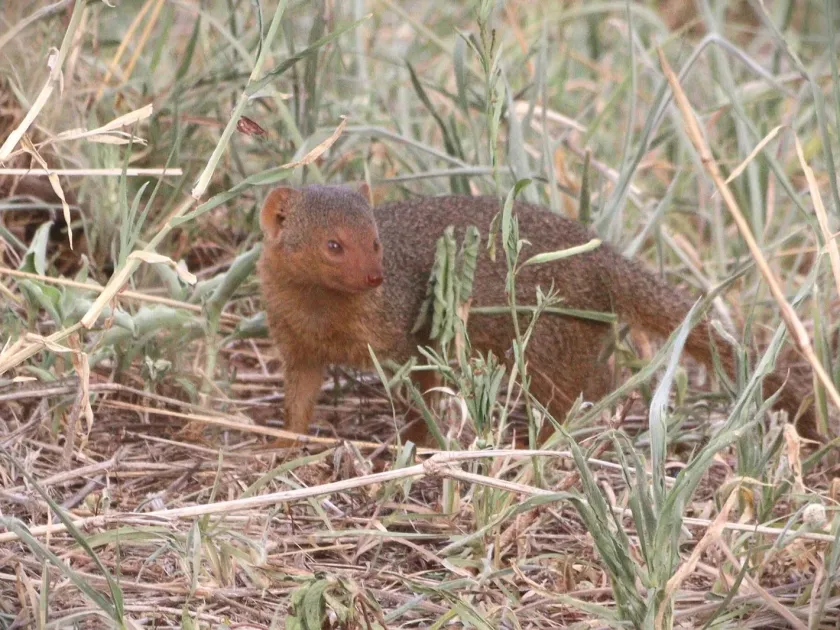
Description
How to identify
The dwarf mongoose (Helogale) is a small carnivore belonging to the Herpestidae family. It is one of the smallest species of mongooses, typically weighing between 200 and 350 grams.
These animals are highly social, living in groups led by a dominant breeding pair. Their behavior is characterized by constant communication and coordinated foraging activities throughout the day.
Their biology is centered around high-energy lifestyles. They utilize abandoned termite mounds or dig their own extensive burrow systems, which serves as a core part of their daily survival strategy.
They are primarily insectivorous, feeding on beetles, larvae, and other invertebrates. Occasionally, they consume small reptiles, rodents, and eggs, which classifies them as generalist predators.
Reproductive success is high, allowing for rapid population stabilization. Understanding their group dynamics is essential for any management strategy involving these mammals in rural environments.
What it damages
The dwarf mongoose is not a consumer of plant material and therefore does not cause direct crop damage such as fruit biting or foliage consumption.
The damage caused is purely physical and related to their excavation behavior. Tunneling can result in significant structural disturbance to the root zones of trees and horticultural crops.
Soil instability is a secondary effect, as repeated burrowing can lead to localized erosion and the formation of cavities that interfere with irrigation systems and soil aeration.
In intensive farming, their presence can create safety hazards for machinery due to the collapse of burrow entrances, which often become hidden beneath crops or vegetation.
Furthermore, their activity on plantation sites may disturb natural mulch layers, causing drying of the topsoil and impacting the efficiency of organic matter decomposition.
Control measures
Direct intervention is rarely recommended for dwarf mongooses because they provide a valuable service by controlling rodent and insect pest populations in the ecosystem.
Exclusion is the most effective management tool. Burying metal mesh fencing to a depth of at least 40 cm prevents these animals from accessing sensitive areas like nurseries or gardens.
Modifying the habitat by clearing piles of rocks, dense brush, or old logs eliminates potential denning sites, naturally encouraging the mongoose colony to move elsewhere.
If they become a nuisance near infrastructure, olfactory repellents or natural deterrents may be applied, though their long-term efficacy is often inconsistent.
Consult local wildlife regulations before attempting any control measures, as these species may be protected or occupy a crucial role in maintaining regional biodiversity.
Taxonomy
- Latin name
- Helogale
- Family
- Herpestidae
- EPPO code
- HLGESP
Discussion
No discussions yet — be the first.