
Fungus beetle
Henoticus serratus
Description
How to identify
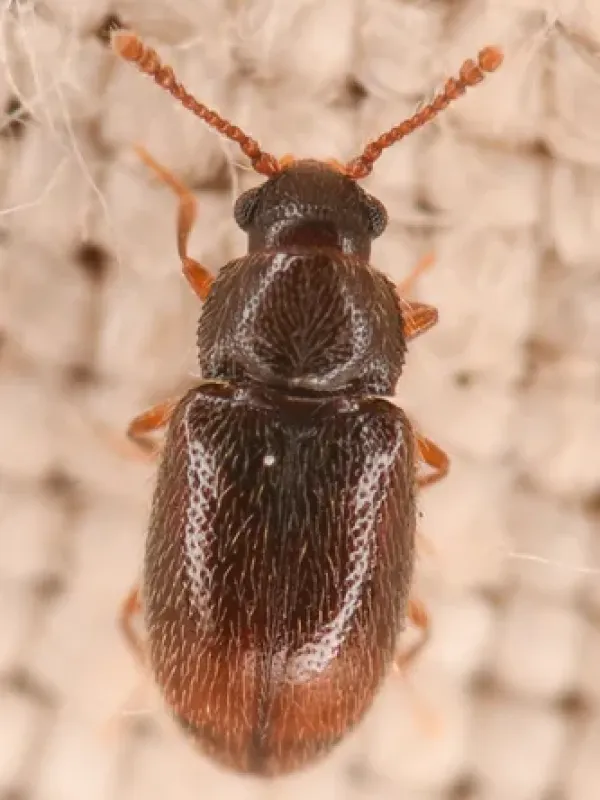
The fungus beetle, Henoticus serratus, belongs to the family Cryptophagidae within the order Coleoptera. These are small insects, typically measuring 2 to 3 mm in length, known for their reddish-brown to rust-colored appearance.
The most distinctive morphological feature of this species is the presence of small, serrated edges on the sides of the pronotum, which makes them identifiable under magnification.
The body of the beetle is covered with fine, short hairs, giving it a somewhat matte texture. The larvae are small, light-colored, and possess well-developed mouthparts for feeding on fungal mycelium and organic debris.
Adult beetles have functional wings and are capable of active flight, which allows them to infest grain stores or food processing facilities quickly.
These beetles are highly adapted to environments with high humidity and the presence of micro-fungi, which are essential for their development and successful reproduction.
What it damages
Henoticus serratus is primarily considered a secondary pest, as it thrives in stored commodities that have already begun to deteriorate due to moisture and mold growth.
They infest a wide range of stored products, including cereals, grains, oilseeds, flour, animal feed, and sometimes dried fruits, causing significant contamination.
The damage caused by these beetles is particularly harmful to seed lots, as they often target the germ part of the seed, directly reducing its viability and germination potential.
Their presence promotes the accumulation of moisture and increases the temperature of the grain mass, which accelerates the growth of spoilage fungi and leads to grain heating.
Large infestations lead to significant grain contamination with excrement, larval exuviae, and dead insect bodies, rendering the product unfit for consumption or processing.
When it appears
While fungus beetles can be found in warehouses year-round if the conditions are favorable, their peak activity occurs during warmer months or in heated storage facilities.
Optimal development usually occurs at temperatures between 20°C and 25°C, provided the grain moisture content is high enough to support fungal growth.
In field conditions, these insects can survive in straw stacks, debris, or left-over grain remnants, moving into indoor storage facilities as ambient temperatures drop.
The lifecycle duration is highly dependent on ambient temperature and food availability; under optimal conditions, a full generation can be completed in about 40–50 days.
They are particularly active in the spring and summer, when they can fly into open warehouses and colonize fresh batches of stored products if sanitation levels are poor.
Signs of infestation
The first indication of an infestation is often a characteristic musty or moldy odor emanating from the grain piles, suggesting active fungal growth and insect presence.
Visual inspection often reveals adult beetles clustered in damp patches where mold is visible on the grain kernels or packaging surfaces.
Damage signs include the presence of fine dust, larval cast skins, and irregular feeding patterns on the surface of seeds, especially around the germ area.
Spontaneous heating of the grain mass, detected by temperature monitoring systems, is a strong indicator of an underlying pest population and mold-induced fermentation.
Standard sieve analysis of grain samples is the most reliable way to identify adult beetles and confirm the level of infestation within a stored batch.
Control measures
Effective management relies heavily on moisture control; keeping grain moisture levels below 14% significantly reduces the likelihood of fungal growth and beetle colonization.
Maintaining high standards of sanitation within warehouses is crucial to prevent the accumulation of dust and spilled grain that serve as breeding grounds for the pests.
- Regular cleaning of all equipment and floors to remove organic residues.
- Applying residual insecticides to warehouse surfaces before loading new grain.
- Implementing automated temperature and moisture monitoring systems.
- Using fumigation with phosphine-based products to treat heavily infested commodities.
Proper aeration of stored grain helps maintain a cool and dry environment, making it unattractive to Henoticus serratus and other stored grain pests.
Taxonomy
- Latin name
- Henoticus serratus
- Order
- Coleoptera (beetles)
- Family
- Cryptophagidae
- EPPO code
- HENOSE
Discussion
No discussions yet — be the first.