
Broad-headed fungus beetle
Cryptophagus laticlavus
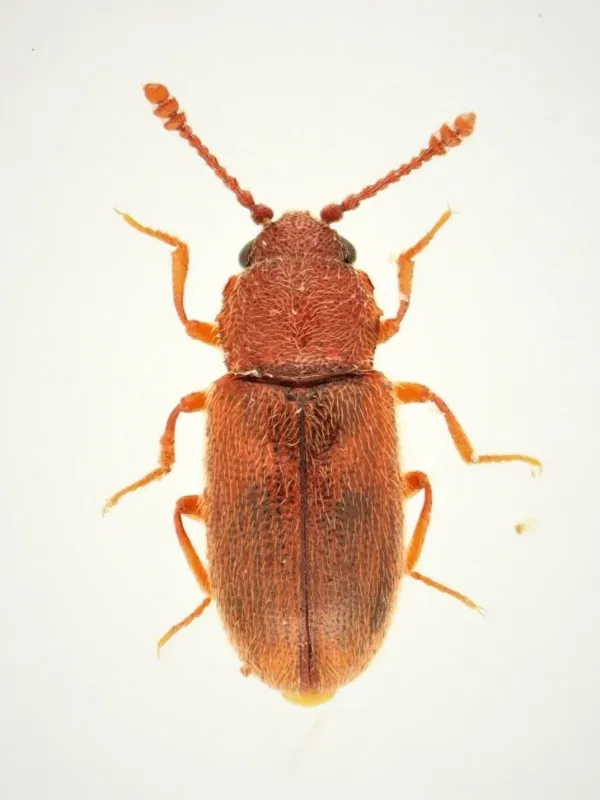
Description
How to identify
The broad-headed fungus beetle (Cryptophagus laticlavus) is a small coleopteran insect belonging to the Cryptophagidae family. Adult beetles typically measure 2–3 mm in length and feature an oval-shaped, brownish body covered with fine hairs.
The species is distinguished by its relatively broad head and specific shape of the pronotum, which features distinct lateral edges. These morphological characteristics are vital for accurate identification by entomologists.
Larvae are elongated and light-colored, possessing mouthparts adapted to feeding on plant residues, dust, and microscopic fungal hyphae found in damp storage environments.
Adults are highly mobile and capable of flight, allowing them to disperse effectively between buildings or from surrounding fields into granaries, especially during warmer months.
They are primarily found in environments where humidity and fungal growth provide a stable food source, making them significant pests in agricultural and food processing facilities.
What it damages
This beetle primarily targets stored grain products, oilseeds, flour, animal feed, and dried fruits, often acting as a secondary pest that follows initial damage by other insects.
The larvae and adults feed on the germ of the seeds, which significantly reduces the germination rate of seed grain and compromises the quality of milling grains.
By carrying fungal spores on their bodies, these beetles exacerbate the contamination of stored goods, leading to the rapid development of mold and overall degradation of the product quality.
In addition to direct feeding, their activity creates hot spots within grain bulks, leading to self-heating processes that can ruin entire tons of grain if not managed properly.
Economic losses result from weight loss of the stored goods, increased costs for cleaning, re-drying, and the necessity of expensive chemical treatments to eliminate the infestation.
When it appears
In heated or climate-controlled storage facilities, the broad-headed fungus beetle can continue its life cycle throughout the year, producing multiple generations.
Under natural conditions or in unheated warehouses, adults survive the winter by hiding in wall cracks, beneath floorboards, or within piles of debris, becoming active again in spring.
Peak activity and population growth occur during the warmer periods when ambient temperatures and humidity levels favor rapid development from eggs to adult beetles.
New harvest storage periods are particularly risky if the grain is not dried to the proper moisture content, as this creates ideal conditions for the beetles to establish new colonies.
While temperatures below 10°C slow down their activity, these insects are resilient and can survive periods of cold until conditions improve, resuming feeding once the temperature rises.
Signs of infestation
The presence of adult beetles on the surface of grain bulks, especially near damp corners or structural defects in the warehouse, is a primary indicator of infestation.
A distinct musty or moldy odor often accompanies the presence of these beetles, reflecting the secondary growth of mold that the insects introduce or feed upon.
Visible damage to individual grains, characterized by irregular holes and feeding marks—especially around the germ area—indicates the presence of larval activity.
Laboratory examination of grain samples will typically reveal the presence of fine debris, excrement, and cast larval skins, which are reliable signs of an active infestation.
Increases in grain temperature or the emergence of self-heating clusters within the grain pile are common signs that pest activity is occurring deep within the storage mass.
Control measures
The most critical prevention strategy is maintaining stored grain at a moisture content below 14%, which naturally inhibits the beetles' ability to feed and reproduce.
Strict sanitation protocols must be enforced, including the thorough removal of dust, spilled grain, and debris from all machinery and floor areas before loading new supplies.
When an infestation is detected, professional fumigation with approved chemicals (such as phosphine-based products) is the standard method for deep penetration and total eradication.
Active aeration systems should be utilized to cool the grain bulk and reduce humidity, which effectively creates an inhospitable environment for the beetles.
Ongoing monitoring programs using pheromone traps and regular manual inspection of samples allow operators to detect and address infestations before they spread to the entire stock.
Taxonomy
- Latin name
- Cryptophagus laticlavus
- Order
- Coleoptera (beetles)
- Family
- Cryptophagidae
- EPPO code
- CRYGLA
Discussion
No discussions yet — be the first.