
Cryptophagus laticollis
Cryptophagus laticollis
Description
How to identify
Cryptophagus laticollis is a small beetle belonging to the family Cryptophagidae (silken fungus beetles) within the order Coleoptera.
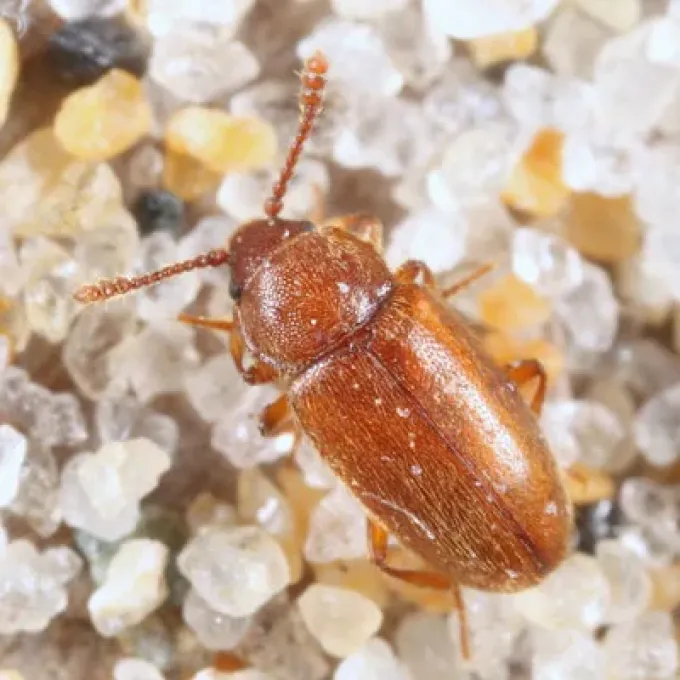
The adult beetle typically measures between 2 and 3 mm in length and is characterized by a light brown to dark brown coloration.
Its body is covered with fine, dense hairs, giving it a somewhat matte appearance under magnification, which helps distinguish it from other storage pests.
The pronotum features distinctive lateral margins, a key morphological characteristic used by entomologists for precise identification of the species.
The larvae are pale, elongated, and highly active, possessing well-developed mandibles suitable for feeding on dry organic matter and fungal spores.
What it damages
This beetle is primarily a pest of stored grain, flour, cereal products, animal feed, and other dry vegetable substrates.
It shows a strong preference for damp commodities or those that have started to deteriorate due to moisture-related fungal growth.
By feeding on the germ of the grain, Cryptophagus laticollis significantly reduces both the nutritional value and the germination potential of seeds.
In warehouses, these beetles often thrive in accumulations of grain dust and debris, turning these areas into focal points for broader infestation.
While often considered secondary to primary pests, they significantly contribute to the overall quality degradation and economic loss of stored crops.
When it appears
In temperature-controlled storage facilities, Cryptophagus laticollis can breed continuously throughout the entire year.
The optimal development conditions require temperatures between 20°C and 25°C and adequate moisture levels in the stored products.
While their activity slows down during winter months in unheated storage, they are quite resilient and can survive in both larval and adult stages.
Population spikes typically occur during the warmer spring and summer months when external conditions facilitate faster life cycles and dispersal.
Multiple generations can be produced annually under favorable conditions, making regular monitoring of grain stocks essential to prevent outbreaks.
Signs of infestation
The most common sign of infestation is the presence of adult beetles found during physical inspection or sieving of grain samples.
A musty or moldy odor often indicates the presence of this beetle, as it is intrinsically linked to the development of micro-fungi in storage.
Visible physical damage to the grain includes hollowed-out embryos and small surface abrasions caused by larval feeding.
Accumulated debris, including insect exuviae (molted skins), fecal pellets, and fine silken webbing, are common indicators of established infestations.
Increased moisture content and localized heating of the grain bulk often occur in areas where these beetles and accompanying fungi are active.
Control measures
Preventative management is centered on maintaining low moisture levels in stored grain (ideally below 14%) to inhibit fungal growth.
Strict sanitation protocols, including the regular removal of grain dust, spills, and old residues, are fundamental to depriving the pest of habitat.
Empty storage facilities should undergo thorough wet disinfection using appropriate contact insecticides before the intake of new harvest.
If a severe infestation occurs, professional fumigation may be required to treat the affected bulk grain effectively and safely.
Utilizing active aeration systems helps maintain uniform temperature and moisture levels, creating an environment unsuitable for Cryptophagus laticollis.
Taxonomy
- Latin name
- Cryptophagus laticollis
- Order
- Coleoptera (beetles)
- Family
- Cryptophagidae
- EPPO code
- CRYGLT
Discussion
No discussions yet — be the first.