
Atomaria psallioticola
Atomaria psallioticola
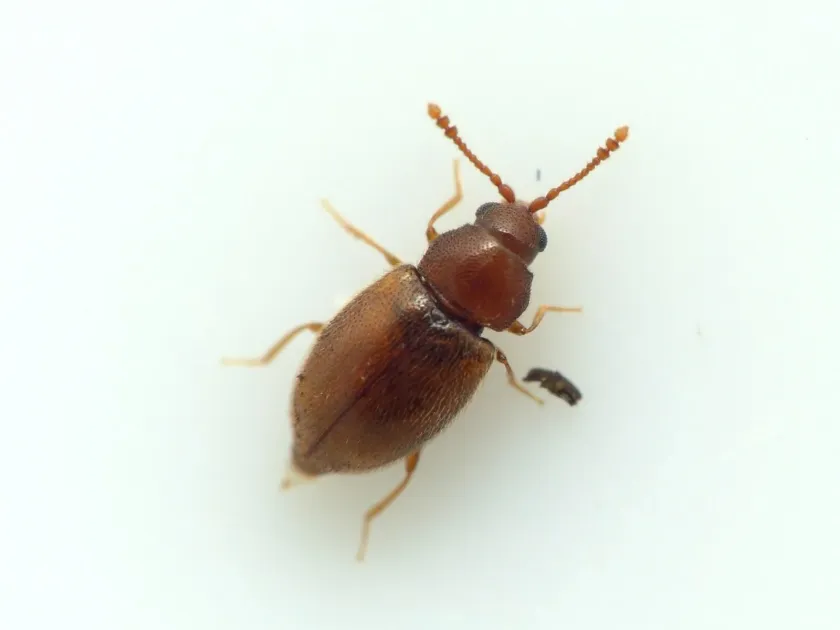
Description
How to identify
Atomaria psallioticola, commonly known as a type of fungus beetle, belongs to the order Coleoptera and the family Cryptophagidae. These are extremely small insects, usually measuring between 1.5 to 2 mm in length.
Adult beetles are oval-shaped and typically brown to reddish-brown in color, possessing a shiny appearance. Their minute size allows them to hide easily within the crevices of mushroom growing beds.
The larvae are small, elongated, and whitish, often remaining buried within the substrate or inside the fungal tissue itself, which makes them very difficult to spot during routine inspections.
Their biological cycle is highly dependent on environmental conditions, particularly high humidity and temperatures ranging from 20 to 25 degrees Celsius, which accelerate their development.
Due to their mobility, adults can easily move between mushroom production rooms, spreading the infestation rapidly throughout a facility if not contained early.
What it damages
This species is a specialized pest primarily affecting cultivated mushrooms, such as the white button mushroom (Agaricus bisporus). It is a significant concern for commercial mushroom growers worldwide.
Both adult beetles and larvae feed on the mushroom mycelium, disrupting the growth of the fungal network and depleting the nutrients in the substrate, leading to lower yields.
The larvae cause structural damage by tunneling into the base of the stems and the caps of developing mushrooms. This tunneling renders the mushrooms unmarketable and aesthetically unappealing.
Infestation sites are often prone to secondary infection by bacteria, which can cause soft rot and rapid deterioration of the mushrooms after harvesting.
Large populations can lead to severe crop losses, as the beetles can destroy the mycelial network to an extent where the production of fruit bodies ceases entirely in affected areas.
Signs of infestation
The most visible signs are tiny, needle-like holes on the stipes (stems) or caps of the mushrooms. These often hide deeper tunnels inside the fruit body created by the larvae.
A thin or eaten appearance of the surface mycelium on the casing layer is a classic indicator of beetle feeding activity. The mycelium may look frayed or depleted.
Adult beetles can be spotted moving quickly over the surface of the casing layer, especially during low light or when the surface is disturbed during picking or inspection.
The presence of fine, sawdust-like frass on the surface of the mushroom substrate is a clear sign of high insect activity and damage to the underlying mycelial structure.
Deformation of fruit bodies, such as uneven growth, stunted caps, or premature opening, often occurs as a result of the damage caused to the developing primordia.
Control measures
Strict hygiene and sanitation are the cornerstones of managing Atomaria psallioticola. Regular cleaning of rooms and tools prevents the accumulation of organic debris that beetles feed on.
Effective pasteurization of the compost is critical. Ensuring that the substrate reaches the required temperature throughout the entire mass is the best way to kill eggs and larvae present in the raw materials.
Screening all ventilation intakes with fine-mesh filters prevents the entry of flying adult beetles into the cultivation area from the outside environment.
Biological control methods, such as the application of entomopathogenic nematodes, can be used to target and reduce larval populations within the casing soil safely.
- Monitor populations using yellow sticky traps placed near beds.
- Ensure complete removal of all mushroom waste and debris after each crop cycle.
- Use professional-grade disinfectants for equipment and surfaces between cropping cycles.
Taxonomy
- Latin name
- Atomaria psallioticola
- Order
- Coleoptera (beetles)
- Family
- Cryptophagidae
- EPPO code
- ATOMPS
Discussion
No discussions yet — be the first.