
Henoticus
Henoticus
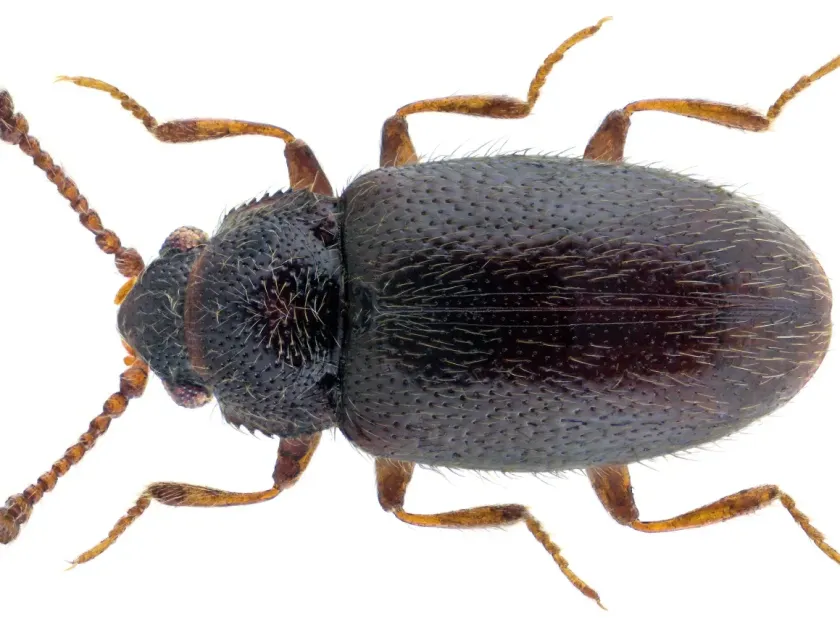
Description
How to identify
Henoticus is a genus of small beetles belonging to the family Cryptophagidae. The adults are generally very small, measuring between 2 to 3 millimeters in length.
Their bodies are elongated and slightly flattened, typically covered with fine hairs, which is a common characteristic of this beetle family.
The head features 11-segmented antennae with a distinct club at the tip, which is a key diagnostic feature for species identification.
Larvae are worm-like and highly mobile, often developing hidden within the food substrate, which makes early detection quite challenging.
Adult beetles possess fully functional wings and are capable of active flight, facilitating their spread throughout storage facilities and silos.
What it damages
Henoticus is known as a stored product pest that primarily attacks plant-based materials kept under conditions of high humidity.
It causes significant damage to stored grain, seeds, flour, and cereal products, especially in warehouses with inadequate ventilation.
These beetles are strongly associated with the presence of mold, as fungal spores serve as an essential part of their nutritional intake.
The beetles feed on the embryo of the seeds and facilitate the spread of pathogenic mold spores throughout the grain mass.
Massive infestations lead to grain caking, increased heating of the grain bulk, and a general decline in the quality and safety of the stored product.
When it appears
In temperature-controlled warehouses, Henoticus can continue its life cycle and breed throughout the entire year without interruption.
The optimal conditions for rapid population growth include temperatures ranging from +20 to +25 degrees Celsius and high grain moisture levels.
In natural environments, these beetles inhabit forest litter and bird nests, from which they are often introduced into warehouses via contaminated machinery or transport.
Development is significantly slowed down by lower temperatures, although the beetles can survive in cool environments for extended periods.
The highest activity of adult beetles is typically observed during warmer months, when they can actively migrate into storage areas from the outside.
Signs of infestation
The presence of Henoticus is often first detected by spotting small beetles on the surface of grain heaps or near equipment used for storage.
A persistent musty or moldy odor emanating from the storage facility is a strong indicator of both beetle activity and fungal contamination.
Inspection of grain samples reveals debris, frass, and cast-off larval skins, confirming that the pest is actively feeding and developing within the mass.
Visible damage includes hollowed-out seeds, particularly with the embryo area consumed, which is critical for maintaining seed germination quality.
Monitoring using pheromone-based or adhesive traps is an essential method for early detection before the infestation becomes widespread.
Control measures
The primary control measure is maintaining grain moisture content below 13-14 percent, which creates an unfavorable environment for both fungi and beetles.
Strict sanitation protocols, including the removal of dust and spilled grain from the warehouse, are essential to eliminate breeding sites.
For infested batches of grain, fumigation using phosphine-based products is the most effective method for complete pest eradication.
Preventive treatment of empty silos and warehouse structures using contact insecticides before loading new stock helps prevent early infestation.
- Maintain low moisture storage conditions.
- Use hermetic storage bags or containers.
- Conduct regular monitoring with insect traps.
Taxonomy
- Latin name
- Henoticus
- Order
- Coleoptera (beetles)
- Family
- Cryptophagidae
- EPPO code
- HENOSP
Discussion
No discussions yet — be the first.